If the fat won’t kill you, the salt will…

CB005661

Dining out used to be such a big deal.  When I was a little girl growing up in St. Catharines, a rare family outing to our neighbourhood Chinese noodle house was as exciting as life could possibly get.

Today, Canadians spend over 30% of our food budget at restaurants (compared to 42% for our American friends!)   The average household goes out for a meal, snack or beverage an average of 11 times every two weeks. Of all the money spent on food in Canada, 40% is spent in some of our 62,000+ food service outlets. But with the growing popularity of drive-thru, take-out and delivery services, 60% of restaurant-prepared items are now consumed elsewhere. And on any given day, 30% of kids living in North America visit a fast food restaurant.

That’s a whole lot of fast food, and a whole lot of salt.   Continue reading “If the fat won’t kill you, the salt will…”

Heart attack misdiagnosis in women

by Carolyn Thomas  ♥  @HeartSisters

A woman attending one of my heart health presentations told me of her recent trip to the Emergency Department of our local hospital, and an overheard conversation between the (male) doctor and the (male) patient in the bed next door beyond the curtain:

“Your blood tests came back fine, your EKG tests are fine – but we’re going to keep you for observation just to rule out a heart attack”.

A male patient is thus admitted to hospital for observation in spite of ‘normal’ cardiac test results – as current treatment guidelines require.  But I and countless other females in mid-heart attack are being sent home from Emergency following ‘normal’ test results like his, and with misdiagnoses ranging from indigestion to anxiety or menopause.  Why is this?       click to continue reading

20 things women don’t know about FAT

food transfat label

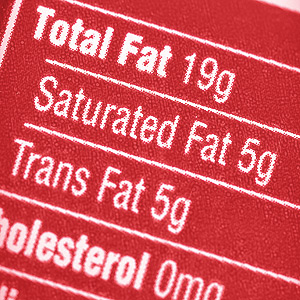
Of all the types of fat we consume — saturated, polyunsaturated, monounsaturated and trans fat — the two that increase our risk of coronary artery disease are:

  • saturated fat (found in beef, butter, cheese, milk, coconut or palm oils) 
  • trans fat (deep-fried fast foods, most bakery pastries, packaged snack foods, margarines and crackers)

In fact, according to Mayo Clinic, trans fat may be worse than saturated fat because, unlike saturated fat, it both raises your low-density lipoprotein (LDL or “bad” cholesterol), and lowers your high-density lipoprotein (HDL or “good” cholesterol).  Here’s more about fat:   click to continue reading

‘Knowing & Going’ – act fast when heart attack symptoms hit

RLM067

by Carolyn Thomas  @HeartSisters

I finally realized that I was in big trouble during a five-hour flight from Ottawa to Vancouver.  But I’d been told emphatically by an Emergency Department physician two weeks earlier that my problem was just acid reflux – not a heart attack.

So for two weeks, I’d endured increasingly debilitating attacks of chest pain, pain radiating down my left arm, sweating and nausea.  But hey! – at least I knew it wasn’t my heart.  A man with the letters M.D. after his name had told me so.

I suffered two more attacks in the Ottawa airport before boarding, and two more during that endless flight to Vancouver.  At no time did I consider saying anything to the Air Canada flight attendants about my growing distress.  I sure didn’t want to be one of those passengers they have to turn the plane around for because of a medical emergency. How embarrassing would that be – and all just for indigestion? click to continue reading