
How doctors discovered that women have heart attacks, too

Woman.pasja1000PIXABAYby Carolyn Thomas     @HeartSisters

Following my heart attack, my family doctor told me that when she was in medical school, the type of heart attack that I’d had was called awidowmaker‘.

This was apparently because a full blockage like mine in this particular coronary artery was usually fatal, thus making the patient’s wife an instant widow. Please note the gender imbalance: men – the ones who could ‘make’ a ‘widow’  – were considered to be the ones suffering this kind of heart attack. Doctors don’t, for example, call it the widower maker . . .

Alas, there are still doctors who are unaware that, since 1984, more women than men die of heart disease each yearAn American Heart Association survey found that only 8% of physicians (and an even more appalling 17% of cardiologists!) actually knew that heart disease kills more women than men annually.

So I was intrigued to run across this chronological overview on Gender and Cardiovascular Disease showing how since 1970, the medical profession has gradually – and I do mean gradually – wisened up to the reality that heart disease is a woman’s disease, too.  Continue reading “How doctors discovered that women have heart attacks, too”

Eggs: good or bad for your heart?

by Carolyn Thomas     @HeartSisters

“I cannot lay an egg, but I am a good judge of omelettes.”

George Bernard Shaw

Eggs were once vilified for their high cholesterol content and were thought to be a major contributor to heart disease.

According to Harvard University’s Harvard Heart Letter, however, it is not the cholesterol in eggs or other food that’s a major culprit. It’s saturated and trans fats (which our bodies may convert to artery-clogging cholesterol). Here’s how Harvard cardiologists unscramble the dietary facts and myths about the egg.

Fact: Eggs are a good source of nutrients. One egg contains six grams of protein and some healthful unsaturated fats. Eggs are also a good source of choline, which has been linked with preserving memory, and lutein and zeaxanthin, which may protect against vision loss.

Myth: Eating eggs is bad for your heart. The only large study to look at the impact on heart disease of eating up to six eggs per week (reported in the April 2008 issue of the American Journal of Clinical Nutrition) found no connection between the two. In people with diabetes, though, egg-a-day eaters were slightly more likely to have developed heart disease than diabetics who rarely ate eggs.  (Ed. note: Quelle surprise . . . this study was done on men only). UPDATE January 2015: A new study (Katz et al) on egg consumption in heart patients also found no significant link between eating eggs and heart disease; Quelle surprise . . . study was funded by the American Egg Board (a minor improvement: this study included six women!) Continue reading “Eggs: good or bad for your heart?”

How does your province rank among heart-healthy Canadians?


Well, since February is Heart Month, I was pretty darned chuffed to read that my own westernmost province of British Columbia has placed first overall in the Heart and Stroke Foundation’s annual Canadian report card this year. We were also first in the Smoke Free and Healthy Weight categories. We took second place in Physical Activity  just behind those rugged fitness freaks of the Yukon, and we tied for second with Alberta in the Fruit & Veggie Consumption category (the Quebecois ranked first here, despite that poutine et tarte au sucre stereotype!)  

And who fared worse?  Alas, the 30,000+ citizens of Nunavut, Canada’s largest territory high in the Arctic, were 13th overall out of 13 combined health behaviours, including 13th in Smoke-Free, Physical Activity and Fruits & Veggies.   This is a very serious concern for health care professionals, and here’s why:

The Heart and Stroke Foundation warns that this report card is a “perfect storm” of heart disease looming on our horizon, not only for Nunavut but for all Canadians.

“In a very short time, the face of heart disease in Canada has changed to include groups that have historically been immune to the threats of heart disease,” says Dr. Beth Abramson, cardiologist and spokesperson for the Heart and Stroke Foundation. “But the combination of new groups at-risk of heart disease and the explosion of unhealthy habits across Canada have accelerated the impact of these threats which are now converging and erasing the progress we’ve made in treating heart disease over the last 50 years.”   Continue reading “How does your province rank among heart-healthy Canadians?”

How the Bee Gees can save your life during a cardiac arrest

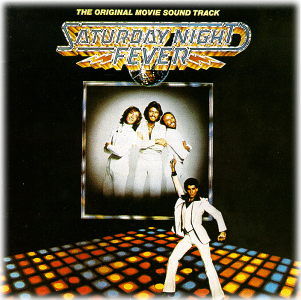
The Bee Gees’ disco smash hit ‘Stayin’ Alive is more appropriately titled than anyone could have realized. Did you know that this 1977 song’s beat is apparently the ideal speed at which to perform chest compressions in cardiac arrest victims? Having practised cardiopulmonary resuscitation (CPR) with the song, research study participants could maintain the ideal rhythm weeks later by simply thinking about the tune as they performed the procedure.

Research from the University of Illinois, presented during an American College of Emergency Physicians’ scientific assembly in Chicago, found that at 103 beats per minute, the song Stayin’ Alive is almost the same pace as the recommended 100 chest compressions per minute for hands-only CPR.   Continue reading “How the Bee Gees can save your life during a cardiac arrest”