Tai chi for women’s heart health

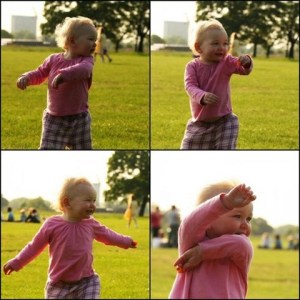
baby tai chi

Tai chi is often described as “meditation in motion,” but it might well be called “medication in motion.”
There is growing evidence that this mind-body practice, which originated in China as a martial art, has value in treating or preventing many health problems. And you can get started even if you aren’t in top shape or the best of health.
In this low-impact, slow-motion exercise, you go without pausing through a series of motions named for animal actions — for example, “white crane spreads its wings” — or martial arts moves, such as “box both ears.” As you move, you breathe deeply and naturally, focusing your attention — as in some kinds of meditation — on your bodily sensations.

by Carolyn Thomas    @HeartSisters

.

At Mayo Clinic last fall, those of us attending the annual WomenHeart Science & Leadership Symposium worked very hard for five days. (Well, as hard as a bunch of heart attack survivors can collectively work, that is). The intensity of world-class cardiology lectures on women’s heart disease was interrupted by lovely mind-body breaks like Meditation or Pilates or (my favourite) Tai Chi for Heart Health.

Tai chi is often described as “meditation in motion” but it might well be called “medication in motion.” There is growing evidence that this mind-body practice, which originated in China as a martial art, has value in treating or preventing many health problems, including heart disease. Continue reading “Tai chi for women’s heart health”
Wanted: volunteers to eat chocolate every day for U.K. study

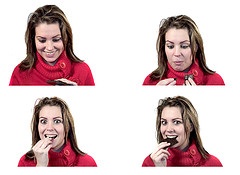
chocolate woman collage 4

Now here’s my kind of research study:  a U.K. university is looking for 40 women to find out if eating Belgian chocolate every day might help diabetics ward off heart disease.

The University of East Anglia, in its first round of this project, studied 150 women to assess the potential health benefits of eating dark chocolate.

Dr. Peter Curtis, of the UEA’s School of Medicine, says: “Our first volunteers are about to return for their final visit to see if the markers of heart health, such as blood pressure and cholesterol levels, have changed. A successful outcome could be the first step in developing new ways to improve the lives of people at increased risk of heart disease.” Continue reading “Wanted: volunteers to eat chocolate every day for U.K. study”

Don’t buy any food you’ve ever seen advertised

by Carolyn Thomas

Eat food, not too much, mostly plants.” That is the supremely simple healthy eating advice from In Defense of Food: An Eater’s Manifesto by Michael Pollan.

“Another piece of advice from my book is: don’t eat any food that comes with a health claim,” adds Pollan, a journalism professor at the University of California at Berkeley.

“It sounds counter-intuitive, but if you’re worried about your health, that is not the healthy food. The healthy food is in the produce section. It’s sitting there very quietly, without budgets for marketing, without packages to print health claims on. ”

My favourite heart-smart advice from Pollan:

“Simply don’t buy any food you’ve ever seen advertised. The broccoli growers don’t have money for ad budgets. So the real food is not being advertised.” Continue reading “Don’t buy any food you’ve ever seen advertised”

When you’re having a terrible, horrible, no good, very bad day

by Carolyn Thomas  ♥   @HeartSisters

Lately, I’ve been nostalgically contemplating two classic books.  The first is a children’s story I used to read to my kidlets when they were little.

You may know it: Judith Viorst‘s wonderful book,  Alexander and the Terrible, Horrible, No Good, Very Bad Day, in which poor little Alexander has one of those days when everything goes from very bad to much worse as the hours go by.

To this day, my now-grown children will sometimes phone me and wail:

“Mum, I’m having a Terrible, Horrible, No Good, Very Bad Day today!”

The second book I’ve been reading is Harold Kushner’s 1981 book When Bad Things Happen To Good People, which is recommended to patients and families facing death and bereavement at the Hospice where I worked since the year 2000. Rabbi Kushner wrote this book after the death of his 14-year old son. It’s a useful guide for those desperately trying to make sense out of life events that make no sense at all.

The “Why?” question can easily morph into the Why me?” question, inviting an avalanche of self-pity, isolation, anger and depression, especially for those of us with a diagnosis of heart disease. Continue reading “When you’re having a terrible, horrible, no good, very bad day”