
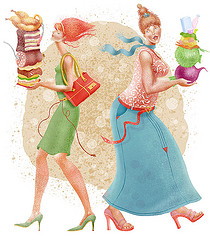
De-junk your kitchen to start heart-smart eating

by Carolyn Thomas  @HeartSisters

Here’s a quick way to start eating in a more heart-healthy way literally overnight: do a pantry makeover.  Start by getting rid of every food item in your kitchen that has either of these two characteristics:  too little nutritional value (fibre, vitamins, minerals, protein) or  too much fat, sodium or sugar.  This includes all junk food of course, but also almost all processed foods in your pantry.  

When I first got home from hospital after my heart attack, for example, I became an obsessive grocery label reader.  I couldn’t believe the sodium content in a can of refried beans!  That stuff will kill you.

If you put unhealthy food in your grocery cart, you’ll eat it.  If you don’t, you won’t. Very simple.

When you go shopping, bring a list.  Don’t shop on an empty stomach. Choose most foods from around the perimeter of the grocery store, where the healthiest food tends to be located. And most important – read those labels.  But meanwhile, if you’re feeling ruthless, start tossing out anything in your pantry right now that fits those two criteria  – and then let’s look at re-stocking basic heart-healthy pantry must-haves:

Continue reading “De-junk your kitchen to start heart-smart eating”
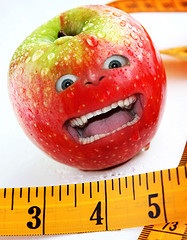
Finally! The truth about what causes women’s heart attacks!

food diet apple

by Carolyn Thomas     @HeartSisters

Finally, scientists have definitive numbers proving the clear link between our diet and heart attacks.  It’s a relief to know the truth after all those conflicting nutritional studies.

1. Japanese eat very little fat and suffer fewer heart attacks than North Americans do.

2. Mexicans eat a lot of fat and suffer fewer heart attacks than their North American counterparts.

3. Chinese drink very little red wine and suffer fewer heart attacks than North Americans.

4. Italians drink a lot of red wine and suffer fewer heart attacks than North Americans.

5. Germans drink a lot of beer and eat lots of sausages and fats, and suffer fewer heart attacks than North Americans.

CONCLUSION:

Eat and drink what you like. Speaking English is apparently what kills you.

I laughed out loud when I first heard this, but it also, sadly, reinforces for me the dilemma of interpreting all cardiac research. Continue reading “Finally! The truth about what causes women’s heart attacks!”

Medical ghostwriting scandal: doctors sign their names to drug company marketing lies

I had to go have a little lie-down after I read the The New York Times story this week about the scandalous practice of medical ghostwriting. Here’s how Danish researcher Dr. Peter Gøtzsche describes medical ghostwriting: “Ghostwriting occurs when someone makes substantial contributions to a manuscript without attribution or disclosure. It is considered bad publication practice in the medical sciences, and some argue it is scientific misconduct. At its extreme, medical ghostwriting involves pharmaceutical companies hiring professional writers to produce papers promoting their products –  but hiding those contributions and instead naming academic physicians or scientists as the authors.

Here’s an extreme example of extreme medical ghostwriting. The New York Times has outlined recent court documents revealing that ghostwriters paid by drug giant Wyeth Pharmaceuticals played a major role in producing 26 scientific papers published in medical journals that backed the use of hormone replacement therapy in women. That supposed medical consensus benefited Wyeth directly, as sales of its HRT drugs Premarin and Prempro soared to nearly $2 billion by 2001.

Continue reading “Medical ghostwriting scandal: doctors sign their names to drug company marketing lies”

Live long and prosper – by eating responsibly

Kentucky cardiologist Dr. Melissa Walton-Shirley is worried about what she calls our ‘obesity epidemic’, and she points to the unlikely inspiration of Star Trek to address this epidemic:  the very Vulcan-like philosophy that “logic must prevail”.

Dr. Walton-Shirley thinks that North Americans have a bizarre obsession with food instead of a healthy appreciation of it.

“Our obsession with overloaded plates of value-meal goodies has led to an epidemic of diabetes, sleep apnea, hypertension, stroke, heart disease and death – while the medical community as a whole has largely stood by and done nothing.”

Continue reading “Live long and prosper – by eating responsibly”