
by Carolyn Thomas ♥ @HeartSisters
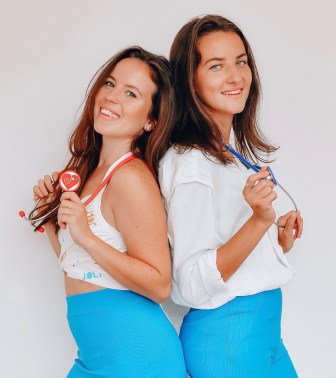
As part of our occasional “Dear Carolyn” series of personal patient perspectives shared by my readers, today I’m introducing you to the 13th of our series: two young Florida women, Bethany and Hannah Keime, sisters diagnosed four days apart with a serious cardiac condition called hypertrophic cardiomyopathy (HCM). As described by Mayo Clinic cardiologists, HCM is defined as a heart muscle that becomes thickened, making it harder for the heart to pump blood.
Some people with HCM have few if any warning symptoms, while others may experience palpitations, shortness of breath, fainting or chest pain (especially during exercise) or changes in the heart’s electrical function. Those changes can result in dangerous irregular heart rhythms or sudden death. Because HCM is usually genetic (but not always – Mayo Clinic suggests that “not everyone with HCM has a currently detectable gene mutation”), people with one parent diagnosed with HCM have a 50% chance of having the genetic mutation. Parents, children or siblings of anybody diagnosed with hypertrophic cardiomyopathy should ask their doctor about screening for this disease. Here’s how the Keime sisters individually explained their shared diagnosis:
.
.
.
“I am Hannah Keime. I am writing to you on the eve of the 10th anniversary of my receiving my diagnosis of hypertrophic cardiomyopathy the first month of my being in high school in my hometown of Cutler Bay, Florida, in Miami-Dade County. Of course such a significant event will come with a social media post (@heartcharged on Instagram) – the place where I document my journey and feelings and now share with others in the community I’ve helped to create. As a film school graduate, I am a visual storyteller and the preparation has included rifling through my scrapbooks and photo boxes and scouring devices for pictures and videos from that fateful year.
“It has been a pleasant experience to walk down memory lane, but it also brought on somewhat of a mental crisis. I thought I was so grown up. I was truly a child. Now I’ve become reacquainted with that child who spent the prior carefree year as an 8th grader who danced during school and after. I choreographed and starred in the opening number of the school show. I was a starting 5 on my school’s undefeated championship varsity basketball team. I traveled to New York and Atlantic City and went to camp with the young women’s group from church that summer. Yes, that child was tired. But she thought it was her demanding schedule and not the fatigue that was starting to set in.
“This is all in stark contrast to the girl who emerged on the other side of that diagnosis. On the very day of the diagnosis, my doctor – noting my schedule – said, “I don’t know how you haven’t dropped dead yet.” She said my dancing and sports days were over. I had to wear the huge old-school heart monitors to school. Each teacher at my new school had to be told about my proclivity for fainting and sudden cardiac arrest. An alert signal was made. Camp no longer welcomed me, and TV and naps filled the void in my after-school schedule.
“On this side of that diagnosis a year later, I had an ICD (implantable cardioverter defibrillator) implanted in my chest because my condition quickly and significantly progressed. Just months after that when I was 17, I went into sudden cardiac arrest in my sleep, and, 3 a.m. one morning, that ICD jolted me (twice) back to life.
“Now I live on the other side of death. And it’s a constant part of my thought process. That makes it even more interesting to go back and try to recapture the days when all I had to think about was living.
“Amongst my memorabilia, I found a video of a spoken word performance I gave at my school months after being diagnosed. My dancing days having ended, my performance relied on my words instead. My braces and expander were new and my voice still squeaked of youth. But boldly I shared that I had hypertrophic cardiomyopathy and called myself lucky to know I had it “before anything got too serious.” I hope to always remember how lucky I am and to continue to work so more people will be just as lucky.
“Last summer, I learned of another 17-year-old who went to bed one night and suffered sudden cardiac arrest, but she didn’t wake up in the morning and her family faced the unfathomable. I only wish I could have made that not happen.
“And I hope you can tell by my actions that I am trying for just that. I opened my mouth as a newly-diagnosed little girl and shouted as far and wide as my voice could carry to warn people of the risks of cardiac death, especially in young people. I know everyone doesn’t want to publicly share their story, but I do. This last school year – no longer wearing braces – I spoke to 5,000 students at schools. Through social media, I’ve found I can amplify my voice of warning while welcoming new friends from across the world. Finding others who understand means many have come to accept their needed treatments. My next goal is to add to the efforts of my organization, HeartCharged, which I am very proud of. I will do this by putting my film degree to work to bring authentic representation of heart patients to mainstream media. And that will bring even bigger change.”
♥ ♥ ♥ ♥ ♥
.
.
“I am Bethany Keime. My diagnosis came four days after my sister Hannah’s. Both our diagnoses came because our aunt was diagnosed with hypertrophic cardiomyopathy (HCM). Learning it could be genetic, she quickly told my mother to have us nine children tested. My mother called for a pediatric cardiologist appointment, but could only get one appointment for six months later due to our “not having symptoms”. She made the appointment for Hannah. Once Hannah was diagnosed, Mom cried and got the next appointments quicker. But those initial six months were a long wait until that beginning of the end, the end of our lives as we knew them, the end of being ‘normal’ or ‘typical’ or naive about the harsh realities in life. But sad as that may seem, that very naivety could have been the death of us, so we embrace it passionately.
“It’s said the first symptom of HCM is often death. We think warning signs are dismissed by both medical and non-medical people who don’t grasp the prevalence of cardiac conditions in young people. We thought we didn’t have symptoms, but we had six of the seven warning signs, including fainting, chest discomfort, and abnormal heart rates. We reported these to our pediatrician. He didn’t think we had HCM symptoms either. Thankfully our mother bypassed him after hearing from our aunt.
“During the wait, Hannah tried to pray not to have HCM. She’d start, but never be able to finish. During my four-day wait after Hannah was diagnosed, I too tried hard every day to pray not to have it as well. I couldn’t. It’s been said that you “can’t pray a lie.” I knew I’d have it, but also that it would be okay.
“Our being diagnosed led to our mother being diagnosed – and that explained many incidents she had experienced but which were also dismissed. So despite there being a blow, we believe in diagnoses, which hopefully bring treatments and mean a longer, better life. For many families, one diagnosis turns to many, that being better than starting with one death, and that also being a reason we accept ours.
“But what about the repercussions of those diagnoses? I qualified for an implanted defibrillator a few years after Hannah. I knew hers saved her life, removing hesitation but also qualifying me sooner after my repeated syncope (fainting) episodes. Without a family history, I might not be a bionic babe today.
“My implanted defibrillator is an S-ICD, one which is implanted generally on the side and has the wire going around – instead of into – the heart. The doctors chose this because it was supposed to enable a more active lifestyle. At the time of surgery, I was a dance major in college. (Side note from Bethany: the defibrillator may have allowed for a more active lifestyle, but after these few years, my heart’s condition has put an end to my dancer dreams.) I lived in leotards, worried about weight, and blemishes were a concern. I am also 5’ tall and the first thing I heard after surgery was that the doctors didn’t realize how petite I was, and they had to be creative in placing the debrillator device. Whoa! The bandages took six weeks to come off. During that time, I prayed I could live with the new me. These prayers I finished, and when the time came and I saw the scars that were my new reality, I smiled. And yes, it’s uncomfortable to sleep with most nights, and it doesn’t work that well with bras, and I can’t wear corsets, and people have thought I had an extra muscle there. But I still smile.
“I co-founded and run @heartcharged. There I even flaunt what once I might have considered an imperfection. I try to show I’ve embraced me, and let people know to be mine, they’ll need to embrace all of me. I just needed to do that first.
“Hannah and I talk about having our own children. And our doctor recently mentioned genetic choices when that happens. We were both appalled and intrigued. Our mother never would have wished HCM on us, but we’d never wish we didn’t have it. It’s a big part of who we are today, and we like that who.
“So would we keep the chance of HCM from our own children? Is it something to avoid or embrace?”
HeartCharged hugs,
Q: Have you or somebody you love been diagnosed with hypertrophic cardiomyopathy?
♥
NOTE FROM CAROLYN: I wrote more about cardiac issues like hypertrophic cardiomyopathy and sudden cardiac arrest in my book A Woman’s Guide to Living with Heart Disease. You can ask for this book at bookstores (please support your local independent booksellers!) or order it online (paperback, hardcover or e-book) at Amazon, or order it directly from my publisher Johns Hopkins University Press (use their code HTWN to save 30% off the list price when you order).
See also:
-The Keime sisters’ terrific website is HeartCharged – or you can follow them on Instagram
–Carolyn’s jargon-free, patient-friendly glossary of weird cardiology terms
–Is sudden cardiac arrest the same thing as a heart attack?
 Heart Sisters
What a complete honor to be able to share a part of our story here. Thank you, Carolyn. We look forward to connecting with more Heart Sisters. You’re always welcome @heartcharged on Instagram too, where you can see more of our ponderings come to life.
LikeLike
You’re so welcome, Bethany and Hannah! Thank YOU for getting in touch with me – I’m so glad you did.
HCM is a condition that’s still not adequately understood by many, but thanks to your heroic educational efforts to improve health and save lives of young people (e.g. increasing the number of AEDs along with recommendations for early screening) – fingers crossed that very soon, more people (including our physicians) will become as informed and passionate about this cause as you are.
Take care – keep up the fantastic work you do! ♥
LikeLike
Well, I just learned a lot and am absolutely blown away at what these women have gone through as well as their vitality.
LikeLiked by 1 person
Hi Sara – I had exactly the same reaction when I read these two amazing letters from Hannah and Bethany! They’ve gone through so much and at such an early age, and are putting that trauma to good use by educating other young people (and their physicians!) about this serious cardiac condition.
I hope you’re feeling better day by day since your ablation procedure, Sara. Take care. . .♥
LikeLiked by 1 person
🥰🥰
LikeLike
Thank you so very much, Sara. We appreciate your words.
Much love.
LikeLike
Although HCM is considered an inherited disorder, some 50% of those diagnosed clinically with HCM do not have a genetic cause identified when undergoing genetic testing. I am one of those 50%.
I guess I feel that is important to know for many of the same reasons that you talk about women being under-diagnosed with heart disease in general. Our symptoms are real, even if no one else in our family has the disease and we can’t let people, even trained professionals, talk us out of them.
I began having symptoms when I was a very active 28 year old but was mis-diagnosed by a cardiologist as having a common female heart issue: mitral valve prolapse.
I continued to be un-diagnosed for 30 yrs as my symptoms progressed. Finally diagnosed in 2006 the cardiologist said he couldn’t believe how high the pressures in my heart were and how I was still as active as I was – and predicted I would eventually need surgery to remove some of the thickened heart muscle obstructing the blood flow out of my heart.
He was right, eventually medication alone was no longer effective. I had 2 open heart surgeries 2013 and 2014 to remove obstructing heart muscle and I’m doing fairly well right now on medications.
HCM was given very little attention 30 years ago when I was in the thick of things. General Practitioners knew very little about what to look for or when to send someone with certain symptoms on to a cardiologist.
Much has changed in recent years as advocacy groups such as the HCMA have spread the word and the AHA/ACC have set up standards for screening and care of HCM patients. Recently, new drugs have been approved that may in the future eliminate the need for open heart surgery in some obstructed HCM patients.
It is the ongoing advocacy of the next generation of heart patients that will keep our health care providers on their toes.
Thank You for the interesting diaries of these young women.
LikeLike
Hi Jill – I’m so glad you weighed in on this topic given how extensive your own personal experience living with this condition has been (both pre- and post-diagnosis). It’s appalling to me that you had to wait 30 years before being appropriately diagnosed with HCM! I’m not sure of the availability of genetic testing back then compared to today, but do you think doctors dismissed that diagnosis specifically because you did not have the genetic test results they might have been looking for? Or were they even looking?
I also wonder if that incorrect mitral valve prolapse diagnosis was likely more common back then, as a number of older studies have discussed a pattern of geometrical changes of the mitral valve “leaflets” that seemed to also be observed in HCM.
Thanks for the reminder that, although most often described in the literature as a genetic condition, that’s not always 100% the case. Mayo Clinic suggests “Hypertrophic cardiomyopathy is usually passed down through families (inherited) but not everyone with HCM has a currently detectable gene mutation.” I’ve now added that line to my original text above.
Thanks again Jill – and take care! ♥
LikeLiked by 1 person
Just to speak to a couple of things you mentioned. During those thirty years I was diagnosed and treated for “asthma” along with mitral valve prolapse, both of which mimic several HCM symptoms.
I didn’t have genetic testing done until after I was finally diagnosed with HCM by a cardiologist that understood the disease and the importance of identifying any family members that might be affected.
They now have coined a term “Non-Familial HCM” and are starting to learn some of the differences between the two sub-types.
The not so tricky part about diagnosing HCM is that a 12-lead ekg cannot be used to diagnose it. Even a standard stress test, which again relies on 12-lead ekg changes, cannot diagnose it. It must be diagnosed by an echocardiogram and specifically in cases like mine, an echocardiogram with a Valsalva maneuver or a stress echocardiogram.
I know this NOW, but I did not know it then, and neither did my primary care physicians. I was given the wrong tests and told there was nothing wrong with my heart. Until I went over the general docs head and referred myself to a good Cardiologist who did the right tests.
I also did not know that one really needs a heart surgeon that does Ventricular Septal myectomies frequently, in order to get the best results. thus I ended up getting the surgery done twice. Once by a surgeon who was not proficient, and then 1 year later by an expert. Dr Joseph Dearani at Mayo Clinic Rochester.
But I guess that’s how life evolves. We live, we learn, we pass on our knowledge. . . hoping the next person can go thru a bit less suffering than we did.
Happy Sunday, Take Care.
LikeLiked by 1 person
Hi again Jill – so sadly predictable: unless a patient gets the appropriate cardiac tests (e.g. diagnostic tests that can actually identify their diagnosis), there will be no correct treatment plan, and worse, that patient is highly likely to be told, as you were, that there’s “nothing wrong with your heart”. It sounds almost miraculous that you managed to keep yourself alive all those years waiting to be seen by that cardiologist who knew what the right tests were.
I do remember you mentioning that trip to Mayo for your second surgery to essentially get it done right by an actual expert, because shortly afterwards I’d described your experience to a friend, advising her to find out from the surgeon scheduled for her upcoming heart surgery how many times he had personally done that procedure. Such knowledge may have spared you the distress of going through surgery that should have been done correctly the first time.
♥
LikeLiked by 1 person
Agreed. Good job keeping yourself alive while looking for the answers.
LikeLike
To Jill: Wow, we just learned a lot and we promise to try and put it to good use.
Very interesting about the Echo. Would love to understand that better.
Also adding this to our personal experience of why we should go over a primary care physician’s head. Thank you for taking the time to share for the next generation.
There really is so much that could help if it was passed along, and often patient-to-patient seems to be the effective way.
LikeLike
Hi Hannah & Bethany – I agree! So much depends on the individual physician that you happen to have. As I always tell my Heart-Smart Women audiences: “You KNOW your body! You KNOW when something is just not right!” and if a diagnosis doesn’t make sense, don’t suffer politely!
Until we face a life-altering medical diagnosis (as all heart patients have done), we tend to simply trust that our own doctor (or the specialist our own doctor refers us to) knows what needs to be known about our condition – whether that is the reality or not.
As in Jill’s case (misdiagnosed and treated for asthma & mitral valve prolapse for THIRTY YEARS!), I can add that, after hearing from thousands of women who share their own experiences both good and not-so-good here on HEART SISTERS – there are skilled and brilliant physicians out there, and there are others who are not quite so skilled or so brilliant.
Personally, I’ve gratefully learned from the brilliant ones, but I’ve also learned from so many women like me who actually have first-hand lived experience of what I’m going through, too. This was especially important in the early freshly-diagnosed stage when I had so many of those “Is it normal to feel _____?” questions. A resource that I describe as a lifesaver for me back then (you’re likely already familiar with it) was the WOMENHEART CONNECT online support site – over 60,000 members, all women, living with every imaginable cardiac diagnosis, available 24/7 and free to join.
The patient-to-patient education that you two are doing is SO important! That “next generation” of young people you mention will relate to what YOU TWO say and do far more than some dusty pamphlet in their doctor’s waiting room.
So thank you and keep educating! ♥
LikeLike
Jill – It’s been amazing just to see the advances in the last 10 years! You have seen miracles!
I know we touch on this above, but our aunt had a valve replacement and ablation about 25 years ago. But then it wasn’t until 10 years ago that the cardiologists said she had an actual condition – HCM.
We’re sorry it took you so long to get some answers. We understand that in a much smaller way. Yours was a long journey and probably one where you felt a sort of insanity. Our family has felt that anyway. Knowing something’s wrong, but having no idea what.
We promise to keep health care providers on their toes!
LikeLike