“Heart Failure: it’s time to finally change the F-word”: my Editorial in BMJ Open Heart

by Carolyn Thomas    ♥   @HeartSisters

I’m pleased to share with my Heart Sisters readers some terrific news:  the British Medical Journal (known everywhere as the BMJ) invited me early in 2023 to write an Editorial for BMJ Open Heart about an important cardiology issue that I’ve been lobbying, writing and speaking about over many years – and that Editorial has now been published.

I’m thrilled of course with this level of international interest.  (Note to my American readers: you’ll notice British spellings throughout e.g. organise, minimise, etc. Do not be alarmed. They’re not mistakes). Here’s the text content, FYI:   Continue reading ““Heart Failure: it’s time to finally change the F-word”: my Editorial in BMJ Open Heart”
In 2000, only 2 studies published on this mystery heart attack; 10 years later: 300+

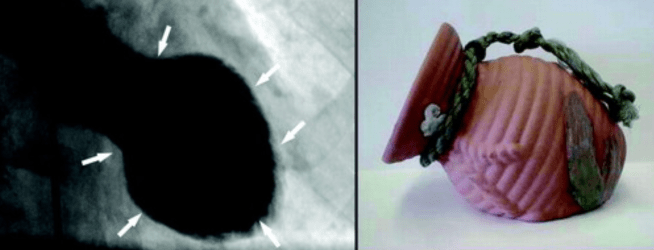
L:  X-ray of the heart during a contraction in a Takotsubo patient.   R:  Ceramic Japanese Takotsubo pot

by Carolyn Thomas    ♥   @HeartSisters   

Last week, we explored the love affair between researcher Dr. Sian Harding (a leading authority in cardiac science) and the tiny heart muscle cells called cardiomyocytes  that she first met over 40 years ago through the lens of her lab microscope.  Yes, a love affair! – as she writes in her wonderful book, The Exquisite Machine: The New Science of the Heart  published by MIT Press last year, in which she explains simply:

Once upon a time, I fell in love  – with a cell.”

This week, we’re exploring another chapter of her book, which has the curious title, “Can You (Not) Die of a Broken Heart?”  This chapter looks at a cardiac syndrome that Dr. Harding believes is actually far more widespread than our cardiologists first believed. And for me personally, it’s particularly intriguing during this particular week.        .     Continue reading “In 2000, only 2 studies published on this mystery heart attack; 10 years later: 300+”

Falling in love – with a tiny heart muscle cell

by Carolyn Thomas   ♥  @HeartSisters   

Her book starts off with a gripping description of the human heart:

“When I look at the human heart beating in the chest during surgery, or lying in a dish when removed for transplant, it just looks like a glistening lump of meat. It’s hard to associate that solid muscle with Valentine’s Day decorations, or the romantic literary description of hearts soaring, bursting, sinking and breaking.

But once upon a time, I fell in love  – with a cell.”

The object of Dr. Sian Harding’s affection was a cardiomyocyte, a single heart muscle cell, just 1/10 of a millimetre long, and about the width of a human hair.       .        Continue reading “Falling in love – with a tiny heart muscle cell”

Congenital Heart Disease: the poor cousin of childhood diagnoses?


by Carolyn Thomas   ♥   @HeartSisters

I know that every cardiac diagnosis is frightening, but I suspect that congenital heart disease (CHD) may be the most frightening if the patient is your own child. The word “congenital” means “present at birth” – although sometimes the problem doesn’t show up until babies  are older, even into adulthood. When I first wrote about CHD here on Heart Sisters, I learned that there are now more adults than children living with CHD. Like many people, I’d associated congenital heart disease with photos of tiny babies recuperating from open heart surgery. Cardiac researchers in Texas called this growing adult population “the product of the astounding success of pediatric cardiac surgery.”1

Surgical advancements have indeed kept little heart patients alive far beyond the early days of pediatric surgeries. But what’s still missing from this good news is the reality that little heart patients grow up to be big heart patients – with one remarkable difference. Unlike in other cardiac diagnoses, people who were born with CHD are far less likely than the rest of us to receive the ongoing cardiac follow-up care that I and other heart patients take for granted.
Continue reading “Congenital Heart Disease: the poor cousin of childhood diagnoses?”