
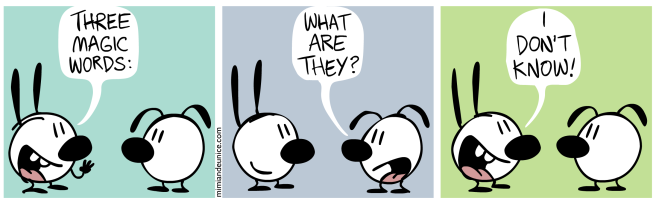
When doctors can’t say: “I don’t know”

Mimi and Euniceby Carolyn Thomas     @HeartSisters

Pity the poor Emergency Department physician who first studied the results of my cardiac diagnostic tests. Despite my textbook heart attack symptoms of central chest pain, nausea, sweating and pain radiating down my left arm, all of my test results that day appeared to be “normal”. So instead of admitting this puzzling discrepancy, the doc seized upon an alternative hypothesis as he pronounced confidently to me:

“You are in the right demographic for acid reflux!”

I was sent home from hospital that morning (feeling very embarrassed about having made a fuss over nothing) with his directions to make a follow-up appointment with my family physician to get a prescription for antacid drugs (to treat what turned out to be a misdiagnosis of indigestion).

Part of the problem with this scenario is the reluctance of some physicians to admit that they just do not know. Continue reading “When doctors can’t say: “I don’t know””
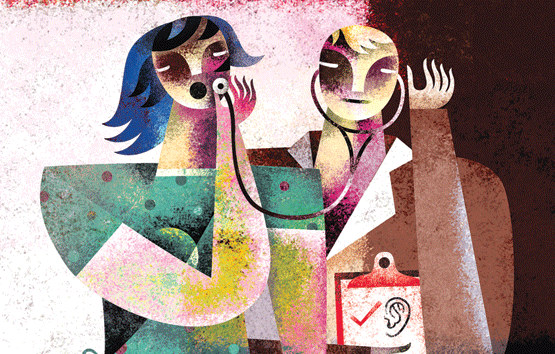
“We are all patients.” No, you’re not.

by Carolyn Thomas  @HeartSisters

patientI read recently about a conference on breast reconstructive surgery following mastectomy, to which not one single Real Live Patient who had actually undergone breast reconstructive surgery following mastectomy was invited to participate. This is, sadly, yet another example of “Patients Excluded” health care conferences – in stark contrast to the growing number of notable conferences that have garnered the “Patients Included” designation.*
The result of attending a “Patients Excluded” conference is just as you might imagine: hundreds of people working in healthcare getting together to talk at each other about caring for people who aren’t even at the table. Or, as one physician arguing for  “Patients Excluded” conferences protested:

“I already hear patients’ stories all day long in our practice. Why should I have to listen to patients at my medical conferences?”

Continue reading ““We are all patients.” No, you’re not.”

Don’t touch those magazines in the waiting room

by Carolyn Thomas  @HeartSisters

Several years ago while sitting in a management team meeting, I was suddenly stricken with symptoms of a particularly hideous strain of an outbreak of  norovirus that had been spreading through the hospital where I worked. Because those infected with a norovirus illness shed billions of the dreaded virus particles in their stool and vomit, the hospital protocol during this outbreak was to immediately call in a specially-trained housekeeping team wearing what looked like Hazmat suits to scrub down the staff washroom I’d just used.  Even the calendar and paper posters pinned up on the washroom’s little bulletin board were removed and destroyed.

Until then, I thought I was the only one who felt creeped out by touching paper in any public waiting room. These rooms – particularly in hospitals and doctors’ offices – are jam-packed with sick people, people!  At the best of times, I don’t like sitting in a patient waiting room, never mind voluntarily picking up any reading material while I’m there. Even people who are not coughing, hacking, snorting, sneezing or wiping dripping mucous from their inflamed noses with unwashed bare fingers can still be transmitting bacteria and viruses onto every page of those waiting room magazines.  Continue reading “Don’t touch those magazines in the waiting room”

When patients are seen as “The Enemy”

by Carolyn Thomas  @HeartSisters

My daughter loves her career as a probation officer. She is very good at what she does, and finds the work both challenging and rewarding. Yet her client case load includes some of the most unsavoury of individuals, found guilty by the courts of child abuse, domestic violence, sexual assault or worse, many of them  living with added complexities like addictions or mental health issues. She’s been insulted and screamed at by distraught clients. Police are sometimes dispatched to her workplace to intervene in potentially dangerous crises. Few of us could even imagine working in her office every day.

Yet whenever I ask my daughter what kind of day she’s had today, I marvel at her continuing ability to truly care about the work she does, despite the many challenges of working within the criminal justice system, dealing with an often-desperate clientele, and an almost overwhelming legal bureaucracy.

Contrast that perspective with the collective unrest among physicians who seem to hate their jobs.  Continue reading “When patients are seen as “The Enemy””