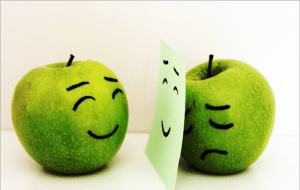
Listen up, ladies: 16 things I’ve been meaning to tell you

by Carolyn Thomas

I always ask women in my Heart-Smart Women presentation audiences what they imagine I would have done had it been my daughter Larissa suffering the same heart attack symptoms that I’d been doing my best to ignore while on that cross-country flight from Ottawa.

Would I have patted her nicely on the head and urged her to just hang in there for nine more hours?  No, my heart sisters, you can rest assured that I would have been screaming blue murder to get immediate help for her.  Yes, even if it meant turning the damned airplane around during this medical emergency.

I was lucky. I managed to survive a heart attack that night on that plane – despite my very foolish determination to “not make a fuss”.  Ever since, I’ve been trying my best to bonk women on the head with reminders to put themselves first on their priority lists, and to be their own best health advocates. But this is an uphill battle that is being waged throughout all levels of women’s health care. Apparently, not even surviving a cardiac crisis is enough to convince some women that they need to start carving out “me-time” every day for the sake of their physical and mental health.   Continue reading “Listen up, ladies: 16 things I’ve been meaning to tell you”
Does surviving a heart attack make you a better person?

by Carolyn Thomas  ♥  @HeartSisters

Here’s what happens when a PR person (like me, for instance) survives a heart attack, but is no longer well enough to return to work. During extended medical leave, that PR person continues to do just what she knows how to do: she writes, she does public talks, she looks stuff up.  She  launches a blog and gets invited to attend cardiology conferences to speak or to write about the proceedings for her blog readers.

And all around her, people then respond by gushing things like:

“You have taken this catastrophically bad thing and turned it into a wonderfully good thing!”

The late Dr. Jessie Gruman would have likely recognized this not-so-subtle expectation that good patients will somehow take the lemons that life curveballs at them and make deliciously noble lemonade.  Continue reading “Does surviving a heart attack make you a better person?”

In praise of solitude after a heart attack

by Carolyn Thomas  @HeartSisters


“Others inspire us, information feeds us, practice improves our performance, but we need quiet time to figure things out, to emerge with new discoveries, to unearth original answers.”

This wise counsel is from Dr. Ester Buchholz, author of The Call of Solitude.  She describes solitude like this as “meaningful alone-time” – a powerful need and a necessary tonic in today’s rapid-fire world. Indeed, she maintains that solitude “actually allows us to connect to others in a far richer way”.

She likely didn’t write that as specific advice for those of us living with heart disease, but it struck me when I read her words that, although they are probably very true for all women, they are especially applicable to heart patients.

Indeed, maybe our heart health would actually improve if we were more determined to carve out more ‘me-time’ during the average day.  Continue reading “In praise of solitude after a heart attack”

How humour can help – or hurt – your heart disease recovery

by Carolyn Thomas  @HeartSisters

“My hubby is stuck with me for another 15 years as long as I keep following doctor’s orders.”

“I told my family that I now had a pig valve in my heart – but I was disappointed when the doctor told me I couldn’t keep the bacon.”

“I am determined to outlive my husband – because I want to clean out his garage!”

Heart patients often use humour like this to distract themselves from the high levels of stress and fear often associated with a life-altering diagnosis like heart disease – such as upcoming surgery, diagnostic tests, or even the ongoing awareness of significantly increased risk of future cardiac events. So reports Nicholas Lockwood, whose research focused on how heart patients use humour to help them cope with such a frightening condition – but ended up showing some surprising results.  Continue reading “How humour can help – or hurt – your heart disease recovery”