
Bereavement eating: does grief cause carb cravings?

by Carolyn Thomas  @HeartSisters

(originally published here shortly after my mother’s death four years ago today on February 21, 2012)
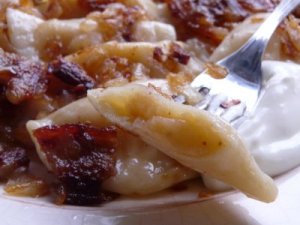
I’ve heard it said that some people experience a loss of appetite during stressful times like a death in the family.  These people are not my relatives. Indeed, in our Ukrainian family tradition, we eat when we’re happy, we eat when we’re upset, and we eat during all possible emotions in between.

Every family gathering surrounding my mother’s death was no exception.

For example, the delicious lunch following her funeral service was a true labour of love prepared by the women of my mother’s church, just as the women of churches, mosques, temples, synagogues and neighbourhoods around the world have been doing for mourners since time began. Continue reading “Bereavement eating: does grief cause carb cravings?”

Want the truth about what we eat? Ask our girlfriends…

by Carolyn Thomas    @HeartSisters

More reports from the Department of the Bleedin’ Obvious, my heart sisters. Last year, a group of 45 international nutrition scientists launched a campaign to end the use of one of their most commonly-used research tools: the self-reported food diary.(1)  These scientists now claim that “dietary recall is skewed towards healthier behaviour.”

In plain English, it means this: people participating in nutrition studies lie to researchers about what they actually eat, preferring instead to enter foods into their daily food diary like “kale” and “quinoa” before submitting their self-reports.

And let’s face it, a person who has volunteered for a nutrition study may be too embarrassed to officially record for posterity something like: “I ate half a box of Turtles today just to get them out of the house.”*  (And really, I can’t be the only woman to ever admit to this, can I?)   Continue reading “Want the truth about what we eat? Ask our girlfriends…”

No, really – patient education that’s actually useful!

by Carolyn Thomas  ♥  @HeartSisters

I think I’ve seen just about every “healthy lifestyle” informational brochure out there. You’ve seen them, too:  Eat better! Lose Weight! Quit Smoking! Get More Exercise! BlahBlahBlah!  None that I’ve found so far, however, mention anything that we don’t already know. Behaviour change is notoriously challenging – otherwise we’d all be doing it already.  It seems to me that the issue is not so much about raising awareness of something that isn’t well understood (Really? Smoking is bad for us?) but more about presenting information in a way that seeks to somehow meaningfully interact with the reader.

In my eternal quest for good solid take-home resources to hand out to the audiences at my women’s heart health presentations, I happened upon one – at last! – that caught my eye.  It’s called Living Well, simply sub-titled “tips for health and happiness”.
Continue reading “No, really – patient education that’s actually useful!”

Flexible restraint: it’s what’s missing from all fad diets

by Carolyn Thomas    @HeartSisters

My long ago high school years were spent at Mount Mary Immaculate Academy, a convent boarding school up on the mountain overlooking Hamilton, Ontario. (Keep in mind, of course, that I’m using the Ontario definition of the word “mountain”, and not the more scenic, snow-capped, high-altitude British Columbia definition of something that actually looks like a real mountain out here).

But I digress . . .  Our Mount Mary classmates included a significant number of “Spanish girls”. These were the exotic international boarders from Mexico or Guatemala or other Spanish-speaking nations whose wealthy parents had sent their daughters north to Canada for a year or two of boarding school to help perfect their English. Our Spanish girls needed to become fluently bilingual in time for their über-extravagant celebrations back home called the quinceañera, a girl’s traditional fifteenth birthday party to mark the important passage to womanhood.

Skinny or pudgy, every Spanish girl was obsessed about her weight. They talked non-stop about dieting as the year-long countdowns to their quinceañera parties began. And whenever our Spanish girls were even remotely upset with their Canadian dormitory mates for any reason at all, the worst possible insult they could spit out at us was the only Spanish word I knew back then:

“Gorda!”

Fat.

And that’s about the time I started dieting.

Continue reading “Flexible restraint: it’s what’s missing from all fad diets”