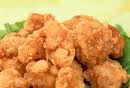
Chicken nuggets: tasty treat, cardiac nightmare

Here’s a news flash for you.  Those deep-fried chicken nuggets your kids love have “minimal nutritional value”, according to a new investigation by Consumer Reports Health.  UK chef and food activist Jamie Oliver justifiably calls these chicken nuggets “fake food” – a creepy concoction of mechanically processed carcass, chicken skin and bread crumbs. Watch Jamie explain to a group of school children just what’s inside chicken nuggets in this must-see two-minute video.

Whether purchased in frozen packages at the grocery store or hot from fast food chains like McDonald’s, chicken nuggets pack a wallop of coronary artery-damaging fat and sodium, Consumer Reports Health says in a news release about their study.  And the brand of nuggets that ranked lowest in fat and sodium ( ‘Health is Wealth’) rated dead last in taste.

What’s more, many brands make claims that are misleading, using terms like “whole grain,” “all natural,” or “organic” –  a trick that makes some people think of the little chicken bites as healthy dinner choices, the report says.   Continue reading “Chicken nuggets: tasty treat, cardiac nightmare”
How eating simple carbs raises heart risks for women – but not for men

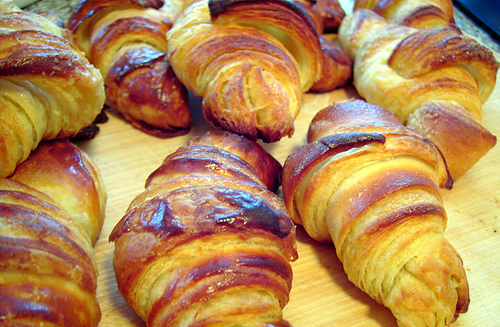
Do you love a flaky croissant along with your morning coffee? A diet that’s rich in simple carbohydrates like that croissant (quickly transformed into sugar in your bloodstream) raises the risk of heart disease for women, a new Italian study has found.

The same effect, however, is not seen in men, according to the report, published April 12, 2010 in the Archives of Internal Medicine.

The study, by researchers at Italy’s National Cancer Institute, looked not only at total carbohydrate intake but also at what is known as the glycemic index of those carbohydrates — a measure of how quickly and to what extent blood sugar rises after intake of specific carbohydrates.

Dr. Victoria Drake, director of the Micronutrient Information Center at the Linus Pauling Institute of Oregon State University explains:

“A high glycemic index is known to increase the concentration of triglycerides in the blood and lower the concentration of HDL (good) cholesterol. Those adverse effects make it a stronger risk factor for heart disease.”

Surprisingly, no effect from total carbohydrate consumption or consumption of foods with a high-glycemic index was seen in men in the Italian study, a pattern also seen in other studies, Dr. Drake added.  “There is definitely a gender difference.”  Continue reading “How eating simple carbs raises heart risks for women – but not for men”

Mindless eating: 8 reasons women eat when we’re not even hungry

by Carolyn Thomas

Cornell University researcher and food psychologist Dr. Brian Wansink knows that there are other reasons to eat besides just being hungry.

Dr. Wansink, author of Mindless Eating: Why We Eat More Than We Think, a book described by CBC television as the “Freakonomics of Food“, says:

“If we knew why we ate the way we do, we could eat a little less, eat a little healthier, and enjoy it a lot more.”

He is talking about that bag of corn chips your hand keeps dipping into while you watch TV, or that big 13-inch dinner plate you load up – whether you’re hungry or not.

He says that we make about 200 food decisions a day, like:

  • Should I have coffee?
  • Should I put milk in it?
  • Whole or skim?
  • Should I butter my toast before I spread the peanut butter on?
  • Do I pour my orange juice into a short, wide glass (you’ll drink more)
  • or a tall, narrow glass (you’ll drink less)?

He also cites these eight factors that can influence what goes into our mouths that have nothing at all to do with hunger. Do any of these sound familiar to you?   Continue reading “Mindless eating: 8 reasons women eat when we’re not even hungry”

Heart-smart food rules: your dietary dos and don’ts

by Carolyn Thomas  @HeartSisters

Author and foodie Michael Pollan asked and answered this question of his New York Times readers last year:

“How did humans manage to choose foods and stay healthy before there were nutrition experts and food pyramids or breakfast cereals promising to improve your child’s focus or restaurant portions bigger than your head?

“We relied on culture, which is another way of saying: on the accumulated wisdom of the tribe.”

Curious about the wisdom of other people’s tribes, Pollan asked his NYT readers to send him their own favourite rules for eating well. Within days, he received over 2,500 responses, including gems like:

“If you are not hungry enough to eat an apple, then you are not hungry.”

Here are just 20 of the food rules he liked best.

What’s your best food rule for eating well?  Share it with us!