Cardiovascular ‘shadow diseases’: two ailments for the price of one

by Carolyn Thomas  @HeartSisters

For some time, doctors have observed that some diseases seem to come in pairs. The known link between migraines and cardiovascular disease is one example of these shadow diseases.

Further linked ailments are being investigated, and researchers are zeroing in on why some diagnoses appear to travel in pairs. In some cases, one disease creates damage that causes the second illness. In others, troublesome genes or poor lifestyle behaviours may trigger one problem, and then the other.

Some likely cardiovascular ‘shadow diseases’ include:  Continue reading “Cardiovascular ‘shadow diseases’: two ailments for the price of one”

Tai chi for women’s heart health

baby tai chi

Tai chi is often described as “meditation in motion,” but it might well be called “medication in motion.”
There is growing evidence that this mind-body practice, which originated in China as a martial art, has value in treating or preventing many health problems. And you can get started even if you aren’t in top shape or the best of health.
In this low-impact, slow-motion exercise, you go without pausing through a series of motions named for animal actions — for example, “white crane spreads its wings” — or martial arts moves, such as “box both ears.” As you move, you breathe deeply and naturally, focusing your attention — as in some kinds of meditation — on your bodily sensations.

by Carolyn Thomas    @HeartSisters

.

At Mayo Clinic last fall, those of us attending the annual WomenHeart Science & Leadership Symposium worked very hard for five days. (Well, as hard as a bunch of heart attack survivors can collectively work, that is). The intensity of world-class cardiology lectures on women’s heart disease was interrupted by lovely mind-body breaks like Meditation or Pilates or (my favourite) Tai Chi for Heart Health.

Tai chi is often described as “meditation in motion” but it might well be called “medication in motion.” There is growing evidence that this mind-body practice, which originated in China as a martial art, has value in treating or preventing many health problems, including heart disease. Continue reading “Tai chi for women’s heart health”

What overweight women may have in common with drug addicts

by Carolyn Thomas    @HeartSisters

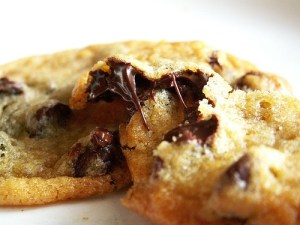
My daughter Larissa and I have sometimes marvelled at a very strange packaging concept: re-sealable bags of chocolate chips.   Are there actually people out there, we wondered, who open a bag of these chips, pour out only the 3/4 cup they need for their cookie recipe, and then put the re-sealed bag back into the cupboard?

The August issue of the American Journal of Clinical Nutrition will help to explain this odd phenomenon for us. Apparently, some women don’t scarf down the entire bag on the spot – just because it’s been opened! When researchers at the State University of New York at Buffalo gave similarly sinful snacks to both overweight and healthy-weight women, the healthy-weight women wanted less of the treat over time, but the overweight women kept wanting more.

In an earlier study, the same research team found that ‘food reinforcement’ (the term used to describe our motivation to eat) decreased in healthy-weight women but increased in overweight women when both groups were asked to consume large amounts of snack foods like M&M candies, potato chips or cookies for days at a time. Women in the overweight group shared characteristics like obesity and diabetes – both serious heart disease risk factors. Continue reading “What overweight women may have in common with drug addicts”

Get over yourself: how to stop boring others with your heart attack story

by Carolyn Thomas

I was a distance runner for 19 years, before a brutal case of plantar fasciitis dashed my Olympics dream forever.  I’m kidding about that last part.  My running group (motto: ‘No pace too slow, no course too short!’) had a useful running rule.  The first ten minutes of every training run were devoted to whining.

“My quads hurt. I’m so tired. I think I’m getting a blister.”

But at precisely the ten minute mark, the rule was: no more whining. Let’s face it, my heart sisters: nobody is that interested.

Upon ruminating on the wisdom of Dr. Martin Seligman‘s book Learned Optimism that I’ve been enjoying lately (see Even Heart Patients Can Learn to be Optimists), I can’t help but notice a proliferation of gloom, doom, pessimism, criticism, complaining, blaming and a whack of running negative commentary around lately. And other people besides me are grumpy, too . . .  Continue reading “Get over yourself: how to stop boring others with your heart attack story”