
The 5 stages of “What the hell just happened to me?”

by Carolyn Thomas   ♥  @HeartSisters

Kathy Kastan’s bookFrom the Heart” was hot off the press when I survived a misdiagnosed heart attack in 2008. Hers was the first book I found that focused specifically on women and heart disease. Here’s how her own story was described on the book’s cover:

“After undergoing emergency coronary bypass surgery at age 42, Kathy Kastan found her world shifting in unexpected ways. Everything – her sense of well-being, relationships, daily routine, even her body image – seemed to change. Doctors helped her recover physically, but she had to find new methods to recover emotionally and create a happy, healthy life.”  

While I read this back then, my own world was crazily shifting, too. Continue reading “The 5 stages of “What the hell just happened to me?””

The symptomatic tipping point during heart attack

by Carolyn Thomas  @HeartSisters

I’ve been fascinated by studies on why women wait so long to get medical help despite heart attack symptoms ever since the spring of 2008 when I spent way too long before seeking help for my own increasingly debilitating signs.  I sometimes replay that two-week experience in my little peabrain, and I ask myself the same question being asked by a team of Harvard researchers in a new study:

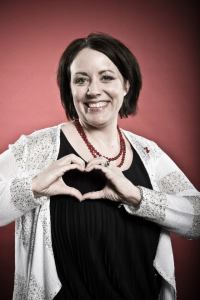
“Why do women wait longer than men before seeking help even when they’re in the middle of a frickety-frackin’ heart attack?”

Continue reading “The symptomatic tipping point during heart attack”

The day I made peace with an errant organ

by Carolyn Thomas    ♥  @HeartSisters

Here’s my theory: few health crises in life are as traumatic as surviving a cardiac event. I developed this theory while I was busy having my own heart attack in the spring of 2008.

For starters, cardiac symptoms often come out of the blue (in fact, almost two-thirds of women who die of coronary heart disease have no previous symptoms.(1)  Having a heart attack can feel so unimaginably terrifying that almost all of us try desperately to dismiss or deny cardiac symptoms. And according to a report published in Global Heart, the journal of the World Heart Federation, women are twice as likely to die within one year even if they do survive a heart attack compared to our male counterparts.(2)

So if – and each of these is still, sadly, a great big fat IF for too many women – we survive the actual cardiac event, and if we are near a hospital that’s able to provide an experienced team of cardiologists/cardiovascular surgeons/cardiac nurses, and if we are correctly diagnosed, and if we receive timely and appropriate treatment, and if the resulting damage to our oxygen-deprived heart muscle is not too severe, we get to finally go home, safe and sound.

And that’s where the real trauma starts.   Continue reading “The day I made peace with an errant organ”

The weirdness of Post-Heart Attack Stun

by Carolyn Thomas  @HeartSisters

Jodi JacksonI‘m laughing right out loud as I type this post, although I am the last person you’d think would ever laugh at another person’s heart attack story.  Usually. . .  But I love Jodi Jackson’s concept of “Post-Heart Attack Stun” – and I just had to laugh at her delicious examples of this concept at work, both during and after her heart attack at age 42.

Although I didn’t realize until I read about Jodi that there was even an official name for this cardiology concept, I sure knew what she was talking about.   

Post-Heart Attack Stun is what Jodi calls the period following a heart attack where everything seems so surreal that you really don’t absorb what has just happened.    Continue reading “The weirdness of Post-Heart Attack Stun”