The communication magic of “Caring Bridge”

by Carolyn Thomas   ❤️   Heart Sisters (on Blue Sky)

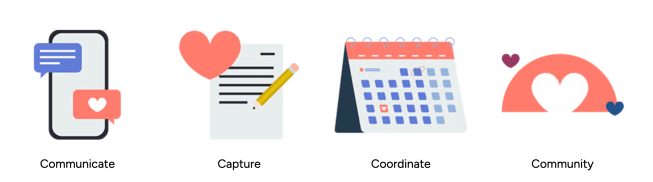
Last week, I responded to a comment here from one of my longtime Heart Sisters  readers, which reminded me of a remarkable patient resource site called Caring Bridge  Her comment took me back in time to my own experience with Caring Bridge – not as a patient, but as a person who just wanted to help out a friend. My response to that comment reminded me, dear reader, that I had not ever mentioned this useful site to my own readers. That’s about to change today!

Here’s how the Caring Bridge site may help you and/or your family:  Continue reading “The communication magic of “Caring Bridge””

Cathy’s stroke: “Nobody noticed my husband”

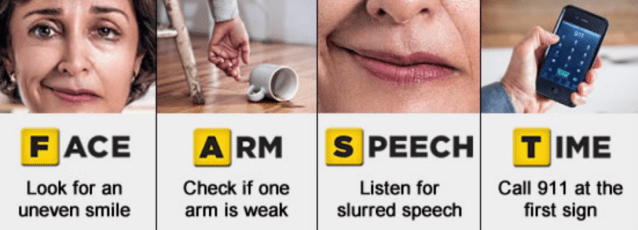
                                   What to look for during a stroke

Guest post by Cathy Aumack-Bandy *

We all know someone who has had a stroke. For many, it’s a friend. For some, a relative. A spouse? A partner? A parent? Maybe even a child.

Stroke is one of those events that most people fear – and rightly so. Maybe it’s because so many times, it seems to come out of nowhere. It strikes a person down without warning. And, once it makes an appearance, stroke shows no mercy. It leaves much in its ruin. It changes people. It changes lives forever – and that’s even in the best case scenario. Continue reading “Cathy’s stroke: “Nobody noticed my husband””

Which patients does the “patient voice” represent?

by Carolyn Thomas  ♥  @HeartSisters

There are patients. And then there are patients.  Let’s consider, for example, two friends of about the same age, same height, same size, same socioeconomic demographic – each one (in an amazingly freakish coincidence) a survivor of a similarly severe heart attack, admitted to the same hospital on the same day. Let’s call these two made-up examples Betty (Patient A) and Boop (Patient B).

Betty is diagnosed promptly in mid-heart attack, treated appropriately, recovers well, suffers very little if any lasting heart muscle damage, completes a program of supervised cardiac rehabilitation, is surrounded by supportive family and friends, and is happily back at work and hosting Sunday dinners after just a few short weeks of recuperation.

Boop, on the other hand, experiences complications during her hospitalization, recuperation takes far longer than expected, her physician fails to refer her to cardiac rehabilitation, she has little support at home from family, her cardiac symptoms worsen, repeat procedures are required, she suffers longterm debilitating consequences, and is never able to return to work.

Yet despite these profound differences, physicians would still describe both of these women with the same all-inclusive descriptor, “myocardial infarction” (heart attack).  Continue reading “Which patients does the “patient voice” represent?”

“We are all patients.” No, you’re not.

by Carolyn Thomas  @HeartSisters

patientI read recently about a conference on breast reconstructive surgery following mastectomy, to which not one single Real Live Patient who had actually undergone breast reconstructive surgery following mastectomy was invited to participate. This is, sadly, yet another example of “Patients Excluded” health care conferences – in stark contrast to the growing number of notable conferences that have garnered the “Patients Included” designation.*

The result of attending a “Patients Excluded” conference is just as you might imagine: hundreds of people working in healthcare getting together to talk at each other about caring for people who aren’t even at the table. Or, as one physician arguing for  “Patients Excluded” conferences protested:

“I already hear patients’ stories all day long in our practice. Why should I have to listen to patients at my medical conferences?”

Continue reading ““We are all patients.” No, you’re not.”