
 by Carolyn Thomas ♥ @HeartSisters
Many of my Heart Sisters readers have told me over the years that they can precisely recall, word for word and even decades later, how doctors delivered bad news about a medical crisis. And these bad news conversations are recognized by medical researchers as “distressing and highly emotive tasks” for our physicians, too.(1)
An interesting study on this topic involved surveying young doctors at two Boston universities. Researchers asked the doctors to describe their first ever experience of breaking bad news to a patient.(2) I found some of these responses alarming!
For example:
-most (73%) of the medical trainees surveyed had first delivered bad news to a patient while still a medical student
-for this first encounter, most (61%) knew the patient for just hours
-fewer than 60% engaged in any planning for this encounter
-a more senior physician was present in only 5-10% of the first encounters
-65% percent debriefed with at least one other person after that first encounter, frequently with a lesser-trained physician or a member of their own family
-the most frequent type of bad news described included fatal diagnosis, serious diagnosis, death of a patient or failure of treatment
Personally, I was stunned by the percentage whose first experience of breaking bad news was when they were still med students. While some students may be intuitively compassionate and skilled communicators (and equally importantly, have had enough supervised training and life experience), horror stories like the one described by the late Dr. Kate Granger can tell a far different story.
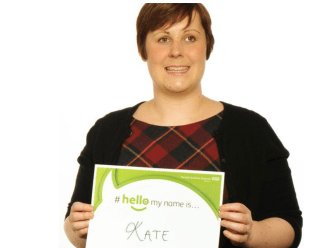 Dr. Kate was a young physician in England whose practice focused on taking care of elderly people. She was diagnosed with cancer, and sadly, she died on July 23, 2016 – five years after her diagnosis. But during those years, she not only went through cancer treatments, but also left a legacy directly sparked by the doctor who told her that her cancer was incurable.
Here’s how she described those terrible moments:
“Imagine my position: I’m 29 years old, I know I’ve got cancer, I think it’s confined to my abdomen so I’m expecting to have an operation, maybe some chemotherapy and possibly a cure. I’m in pain and alone.
“A junior doctor comes to talk to me about the results of the MRI scan I’d had earlier in the week. I’d never met this doctor before. He came into my room, he sat down in the chair next to me, and then looked away from me. Without any warning or asking if I wanted anyone with me, he just said, “Your cancer has spread.”
“He then could not leave the room quickly enough, and I was left in deep psychological distress. I never saw him again.”
Dr. Kate was so disturbed by this doctor’s behaviour that she launched a campaign she called #HelloMyNameIs, which ultimately spread worldwide. Her goal was so simple: to encourage her medical colleagues to introduce themselves to their patients. It seems odd that intelligent, educated professionals need reminding about basic common courtesy – but her own experience compelled her to remind them all.
My own worst experience of hearing bad news from a doctor was not just the unexpected shock of learning about my Dad’s incurable cancer, but also the venue chosen to deliver that news – a setting so inappropriate that it’s forever seared in our family’s memory.
My father had been hospitalized for some time with what we were told was persistent pneumonia. We all expected him to fully recover and come home. But our family was suddenly informed of a revised diagnosis: terminal Stage 4 lung cancer which had already spread to his brain, liver, and bones. (He was, by the way, one of the 10-20% of people with lung cancer who are “never-smokers”). My mother, my siblings and I learned this news from a young man who met us near Dad’s room. Like Dr. Kate’s doctor, he didn’t introduce himself. He ushered all of us into a cramped housekeeping storage closet at the end of the hall. (YES! A closet – filled with push brooms and wet mops). Dad died nine hours after we learned our bad news. He was 62.
This was many years ago. Since then, most medical schools have adopted lessons on teaching clinicians how to break bad news based on the work of the late Dr. Robert Buckman at Toronto’s Princess Margaret Hospital.(3) His manual outlines a simple six-step protocol he called S.P.I.K.E.S. – ideally, to be taught, supervised and practised before med students or interns are told to handle this sensitive communication on their own. Here’s how the Ethics in Medicine team at the University of Washington describes the S.P.I.K.E.S protocol:
Dr. Robert Buckman’s Six-Step Protocol for Teaching Healthcare Professionals How To Break Bad News (or S.P.I.K.E.S.)
S: Setting – Getting started
The physical setting should be private, with both physician and patient comfortably seated (unlike the shockingly dreadful mop closet my own family was squeezed into). Introduce yourself by name and job title. Ask who else should be present, and let the patient decide – studies show that different patients have widely varying views on what they want. *
P: Perception – Finding out how much the patient knows
By asking a question such as, “What have you already been told about your illness?” you can begin to understand what the patient has already been told (“I have lung cancer, and I need surgery”), or how much the patient understood about what’s been said (“the doctor said something about a spot on my chest x-ray”), or the patients level of technical sophistication (“I’ve got a T2N0 adenocarcinoma”) or the patient’s emotional state (“I’ve been so worried, I haven’t slept for a week”).
I: Invitation – Finding out how much the patient wants to know
It’s useful to ask patients what level of detail you should cover. For instance, you can say, “Some people want me to cover every medical detail, but other people want only the big picture – what would you prefer now?” This establishes that there is no right answer, and that different patients have different styles.
K: Knowledge – Giving medical facts
Decide on the agenda (diagnosis, treatment options, prognosis, supports) before you sit down with the patient, so that you have all the relevant information at hand. Give information in small chunks. Be sure to stop between each chunk to ask the patient and/or family if they understand (“I’m going to stop for a minute to see if you have any questions”). Long lectures are overwhelming and confusing. Translate all medical terms into plain English See also: Medical Jargon: Do You Need a Translator?
E: Explore emotions with empathy – Responding to the patient’s feelings
If you don’t understand the patient’s reaction, you will leave a lot of unfinished business, and you will miss an opportunity to be a caring physician. Learning to identify and acknowledge a patient’s reaction is something that improves with experience if you’re attentive, but you can also simply ask “Could you tell me a bit more about what you are feeling?”.
S: Strategy or Summary – Planning and follow-through
At this point, you need to blend patient/family concerns and the medical issues into a concrete plan that can be carried out in the patient’s system of health care. Outline and explain a step-by-step plan, and discuss the next steps. Be explicit about your own next contact with the patient (“In two weeks, I’ll see you in clinic”) or the fact that you won’t see the patient (“In two weeks, you will see Dr. Diaz in clinic”). Give the patient a way to contact the relevant medical caregiver if anything arises before the next planned contact.
And a final reminder to all patients and family members: if a healthcare professional you haven’t yet met enters your hospital room and begins talking about your condition without introducing himself/herself, immediately interrupt to ask: “Who are you?”
♥
1. Studer, R. et al. “Physicians’ psychophysiological stress reaction in medical communication of bad news: A critical literature review.” International Journal of Psychophysiology, Volume 120, 2017, 14-22.
2. Orlander JD et al. “Medical residents’ first clearly remembered experiences of giving bad news.” J Gen Intern Med. Nov 17 (11): 825-31.
3. Mirza RD et al. “Assessing Patient Perspectives on Receiving Bad News: A Survey of 1337 Patients With Life-Changing Diagnoses.” AJOB Empir Bioeth. 2019 Jan-Mar;10(1):36-43.
Two hands image: Harish Sharma, Pixabay
* Diagnostic Non-Disclosure: Remember that some patients were raised in a culture with longstanding traditions of not sharing medical details – even a diagnosis with the patient – but instead with a senior family member (the eldest son, for example) who will then decide on behalf of the family what, when and if to tell the patient. Learn more about tools for handling a family’s diagnostic non-disclosure preferences here.
NOTE FROM CAROLYN: I wrote much more about doctor-patient communication in my book, A Woman’s Guide to Living with Heart Disease. You can ask for it at your local bookshop (please support your favourite independent booksellers!) or order it online (paperback, hardcover or e-book) at Amazon, or order it directly from my publisher, Johns Hopkins University Press (use their code HTWN to save 30% off the list price).
♥
Q: Have you had the experience of a doctor breaking bad news to you or your family? What do you remember most – good or bad about that encounter?
 Heart Sisters
Yes! This sure resonated.
I remember vividly when I was told I had breast cancer and one of the things seared on my brain is the tie my doctor was wearing! He had a tie with Donald Duck printed on it, and all I could see as he delivered the diagnosis was images of Donald Duck repeated in front of my eyes.
Marie Ennis O’Connor
LikeLike
Hello Marie – thank you for sharing that experience. I think it’s very common during such profoundly stressful moments to focus on sights or sounds that may seem bizarre at the time – like that Donald Duck tie. PTSD studies suggest that our minds process and store the memory of life-altering moments differently than we store ‘regular’ experiences – especially sensory information associated with those moments like smells, sights, sounds, tastes and feel.
I’m guessing that even now, seeing images of Donald Duck might remind you of that frightening moment of hearing that breast cancer diagnosis.
Take care – thanks again Marie ❤️
LikeLike
Please can you change my email.
LikeLike
Hi Sheila – if you have changed your email and would like to keep up your notifications of new posts, just click on the Follow Heart Sisters on the right sidebar and enter your new email there. Good luck! ❤️
LikeLike
I really liked this post. Can you imagine – being in a broom closet when given that information?!!! How insensitive. This reminded me of when my dad was in hospital following removal of his bladder for cancer, and the female oncologist across the room in the gym called out “and you won’t be driving again!”
My stalwart father was so upset. I wish I had taken the time to discuss this with her. I never even knew her name…😰
LikeLike
Oh dear… Calling out personal patient information across the room is NOT what’s mentioned in the late Dr. Buckman’s 6-step Protocol on How to Break Bad News to Your Patient. So unprofessional. So unnecessarily rude.
Honestly, what are people thinking when they decide this is an appropriate way to behave?!?!?!? Yoiks…
LikeLike
Really important stuff here — thank you for writing this. In my health care system, biopsy results now often come to me via the electronic medical record before I hear them from my provider. Sometimes I understand what I’m reading and sometimes I don’t. Treatment options may come a day or more later via provider.
My first breast cancer diagnosis came via phone call from the surgeon who did the biopsy. He invited me to come to his office that day with a support person and gave me a copy of Susan Love’s Breast Book. I was so glad my son was with me then. And subsequently. He remembered things I simply couldn’t take in at the time. That was 2010.
Second breast cancer was this spring and I think I got the results via electronic record. I wasn’t surprised after the radiologist looked at me saying, “the ultrasound is very concerning…” Fortunately both times a lumpectomy and radiation, this is behind me.
I highly recommend Kate Bowler’s book, Everything Happens for a Reason and Other Lies I’ve Loved. Written after a stage 4 colon cancer diagnosis as a young mother. She discusses the clumsy or god-awful delivery of bad news quite directly and has a wicked sense of humor.
LikeLike
Hi Sara – I love your story of the first breast cancer diagnosis and the phone call – and giving you Susan Love’s book?!? That is awesome! I don’t love this trend for biopsy results to come via electronic record, which strikes me as the modern equivalent of being scrunched into a dank mop closet in the hospital. I’d really *hate* to learn bad news about a cancer biopsy on my laptop screen – some things in life require basic human communication. A simple phone call from the doctor should be the bare minimum in delivering that kind of news – electronic records or not.
I don’t have electronic records here, aside from being able to access routine lab test results via my local lab (is my potassium still too low? More bananas needed!)
Thanks for the recommendation of Kate Bowler’s book (I love her title, by the way – those trite platitudes like “everything happens for a reason” or “what doesn’t kill you makes you stronger” make me sick because they are so often simply untrue.
I believe that sometimes there is NO reason behind human suffering. Sometimes what doesn’t kill you is so awful, you wish it had. My wonderful lively and brilliant friend survived a massive stroke that left her unable to move for five days on her bedroom floor before finally being rescued. She spent the next 10 years of her life trapped in a 5-bed longterm care hospital room (one of her roommates lay there moaning “help meeeee….. help meeee…..” FOR TEN YEARS. Can you imagine that kind of torment? We watched her slowly deteriorate, day by day and year by year; she often told us when we visited: “I wish they hadn’t saved me in time…”
Another terrific book with a great title is Nancy Stordahl’s fantastic “Cancer Was Not a Gift and Didn’t Make Me a Better Person.”
LikeLike