
by Carolyn Thomas ♥ @HeartSisters
Last week, we explored the love affair between researcher Dr. Sian Harding (a leading authority in cardiac science) and the tiny heart muscle cells called cardiomyocytes that she first met over 40 years ago through the lens of her lab microscope. Yes, a love affair! – as she writes in her wonderful book, The Exquisite Machine: The New Science of the Heart published by MIT Press last year, in which she explains simply:
“Once upon a time, I fell in love – with a cell.”
This week, we’re exploring another chapter of her book, which has the curious title, “Can You (Not) Die of a Broken Heart?” This chapter looks at a cardiac syndrome that Dr. Harding believes is actually far more widespread than our cardiologists first believed. And for me personally, it’s particularly intriguing during this particular week. .
Dr. Harding begins, as she does delightfully throughout this book, with a story. It’s a story that starts after the catastrophic 1990 earthquake in Japan:
“Hospitals were inundated, not only the the injured from the earthquake damage, but also a wave of people with suspected heart attacks – the cause of which was a mystery. Doctors had seen this mysterious heart attack on occasion, but the difference was that Japan was a country with many high-tech hospitals. For example, they now had diagnostic tools that could show the shape of the heart as it contracts, and in one group of people, they saw two things that amazed and puzzled them.”
“First, there was no blockage in any coronary artery despite all the chest pain, ECG changes and cardiac enzyme blood markers that all pointed to a heart attack.
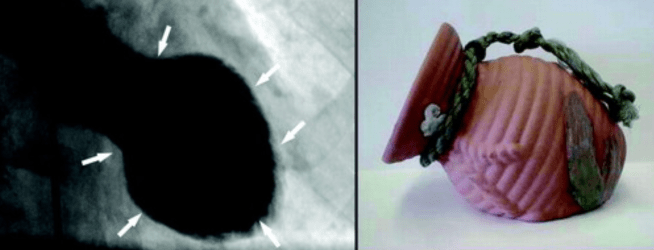
“Second, every time the heart contracted with each heartbeat, it showed a shape that cardiologists had never seen before – the top of the heart contracting extremely vigorously while the bottom of the heart (or apex) was almost immobile. On an x-ray, this produced a shape like a balloon that reminded the Japanese doctors of the Takotsubo pots that are used to trap octopus.
“This is why the condition is now known as Takotsubo syndrome, also called stress cardiomyopathy – or Broken Heart syndrome.”
There were two other features that surprised the Japanese doctors: first, 80-90 per cent of the Takotsubo group were women (this seemed quite unusual, she says, for heart disease in general).
But even more striking was how many of these patients went from an Emergency admission with severe chest pain and acute heart failure to walking out of the hospital disease-free, sometimes in a matter of days.
Not all Takotsubo patients survive, of course; the mortality rate is close to that of patients treated for acute coronary syndrome (the precursor to almost all blocked-artery heart attacks).
In fact, if it hadn’t been for the “bizarre contractions and shape of their hearts”, Dr. Harding believes that women suffering from Takotsubo syndrome were probably routinely dismissed as “hysterical” or “malingering” before modern medical imaging was possible. She also wonders now how many women with panic attacks who say: “I thought I was having a heart attack, but I was fine after a while” were actually suffering with Takotsubo.
At first, doctors considered Takotsubo syndrome to be a Japanese disease – and a rare Japanese disease at that. For example, Dr. Harding tells us that in the year 2000, only two scientific papers on Takotsubo syndrome were published. By 2010, just a decade later, over 300 papers had been published.
Now, she adds, we know that natural disasters resulting in catastrophic stress almost always see a rise in both Takotsubo syndrome and cardiac arrest among survivors.
And just like those earthquake victims in Japan, we know now that extreme psychological stress has often been associated with cardiac events.
It’s not a joke that watching sports turns out to be a prime example of this. Dr. Harding’s book includes studies that found deaths due to heart attack or stroke increase when a local sports team plays at home.(1) When Germany hosted the World Cup, the incidence of cardiac emergencies was three times higher than the normal rate for men – regardless of the final score, because the effect was the same whether the team won or lost. It was apparently all about the “tension of the game.”(2)
And stress caused by extreme physical exertion may also be a danger point. Other triggers include emotional arguments, or bereavement grief (especially the death of a child or spouse) or even an “anniversary reaction” when a heart attack happens around the anniversary date of a past traumatic event.
And some researchers cited by Dr. Harding have found that even happy events may trigger Takotsubo syndrome: surprise birthday parties, for example, or the wedding of a grown child, or other events that elicit mixed emotions, both happy and not-so-happy.(3)
Next came reports of drug-induced Takotsubo syndrome. Energy drinks that contain caffeine and taurine seem to be a trigger, for example, or “male-enhancer” pills with pre-Viagra drugs, or dental injections of local anaesthetic, or asthma drugs – in one study, 44 per cent of Takotsubo patients had asthma.(4)
Dr. Harding found that even some hospital tests and therapies have unexpectedly induced a Takotsubo-like syndrome, e.g. multiple reports of the stress test for cardiac function when a stimulant called dobutamine is infused to see how well the heart can respond.(5) She also learned that even a single injection from an EpiPen used to treat or prevent anaphylactic shock has been seen to precipitate cases of Takotsubo syndrome in some recipients.
This feels utterly overwhelming, doesn’t it? By the time I finished this chapter of her book, I wondered if there’s anything out there that does NOT cause Takotsubo syndrome!
I first wrote about this syndrome in 2010 (the year when there were suddenly hundreds of new studies on the syndrome. And because I’ve been aware for years of the connection between extreme stress and Takotsubo, recent personal stressors this past week (your basic harrassment nightmare involving an unhinged neighbour, police involvement, and a temporary move to my daughter’s home for safety) have suddenly made me monitor ongoing cardiac symptoms far more carefully (these are usually “normal” in patients like me diagnosed with coronary microvascular disease). I feel like I’m spending every waking hour with my right hand instinctively covering my poor little heart, somehow willing it to just hang on until the nightmare is resolved.
So it seems ironically serendipitous that I started reading Chapter 7 of Dr. Harding’s wonderful book this week, where emerging research reports that the stress hormone adrenaline (or the class of its related compounds) might be one of the common denominators of the mechanism causing Takotsubo. Dr. Harding cites research that found even a single injection from an EpiPen (which is used to self-administer epinephrine (adrenaline) to prevent anaphylactic shock) has been seen to precipitate cases of Takotsubo syndrome in some recipients.
But diseases or drugs that raise thyroid levels, and head injury and bleeding into the skull have also been linked to cases, too.(6) And the combination of increased body temperature following a surge of adrenaline is well-known among researchers as “emotional fever”. As Dr. Harding observes:
“An intriguing link to menopause is the ability of adrenaline to raise body temperature and produce something like a hot flash. It’s also known that Takotsubo syndrome is more likely to occur in summer (while most heart diseases spikes in winter).”
In animal studies, Dr. Harding has even observed that moving away from warmed beds during anaesthetic prevented the Takotsubo effect after an adrenaline injection. Further research is required, of course, but Dr. Harding wonders if these studies may just be pointing in the right direction.

So what happens to a person who is experiencing a heart attack caused by Takotsubo syndrome? The answer, warns Dr. Harding, depends entirely on whether the doctor that person turns to for help has heard of Takotsubo: “Knowledge is spreading, but while hospitals in major cities are expert in a wide variety of heart conditions, including this one, smaller local hospitals may have seen only a few Takotsubo cases.”
“By now, we have at least learned what NOT to do for the person diagnosed with Takotsubo. No adrenaline. No dobutamine stress test. Our plan is to screen as many people as possible for a Takotsubo-type pattern of cardiac function. We’ll start with people who have already had one attack because we know they are more likely to have another. Our study will equip them with wearable wrist monitors to record heart rate and physical signs of stress. We’ll look for patterns of high sensitivity to adrenaline (the trigger) followed by a dip in cardiac function (the signaling switch).
Dr. Harding closes the chapter on this “mysterious heart attack” on a hopeful and practical note:
“Scientists often get laughed at – and not just for their taste in clothes! We do experiments that seem pointless – because ‘everyone knows’ a particular fact and so it’s ‘just common sense’. Yet genetic differences between the sexes, and also the different behaviours, experiences and life events between men and women, can tell us so much about heart disease in all its complex aspects.”
Image: Dr Satoshi Kurisu, Hiroshima, Japan
♥
-
W. Kirkup, DW Merrick, “A Matter of Life and Death: Population Mortality and Football Results”. Journal of Epidemiology and Community Health 57 (2003: 429-432)
-
U. Wilbert Lampen et al, “Cardiovascular Events During World Cup Soccer”, New England Journal of Medicine, 2008. 358, 475-483
-
JR Ghadri et al. “Happy Heart Syndrome: Role of Positive Emotional Stress in Takotsubo Syndrome”, European Heart Journal 37 (2016). 2823-2829
-
A. Singh et al. “Stress Cardiomyopathy Induced during Dobutamine Stress Cardiography.” International Journal of Critical Illness and Injury Science” 10 (2020) 43-48
-
Singh A et al. “Stress cardiomyopathy induced during dobutamine stress echocardiography” Int J Crit Illn Inj Sci. 2020 Sep;10. 43-48.
-
N.A. Morris et al. “The Risk of Takotsubo Cardiomyopathy in Acute Neurological Disease”. Neurocritical Care 30 (2019) 171-176
♥
Q: Have you experienced a cardiac event following any of the psychological, physical or drug stressors mentioned here?
.
NOTE FROM CAROLYN: I wrote more about becoming a heart patient in my book, A Woman’s Guide to Living With Heart Disease (Johns Hopkins University Press). You can ask for it at your local bookshop (please support your favourite independent bookseller) or order it online (paperback, hardcover or e-book) at Amazon – or order it directly from my publisher, Johns Hopkins University Press (use their code HTWN to save 30% off the list price).
 Heart Sisters
Excellent article!
LikeLike
Thanks Lori – glad you enjoyed it…❤️
LikeLike
I think I posted this story before but . . .
Yes, one of the trifecta of heart issues in my life has been an episode of Takotsubo syndrome on 11/23/2011
I had been having low level chest pain for a couple days. . . I chalked it up to my Hypertrophic Cardiomyopath (HCM), though it was a more persistent pain. On the morning of 11/23, I checked my BP at home and it was 80/40 – very unusual but I chalked that up to the extra dose of medication I took during the night for my chest pain and went to work anyway.
I was working on hospital charts, so a pretty non-stressful situation. At 2pm I left work early to see a doctor before the holiday and after reading my EKG he sent me back to the hospital, a block away, in an ambulance.
My EKG was bizarre, my troponins were elevated and on the way to the Cath lab I heard the ER doc bet the cardiologist that it was Takotsubo syndrome – not an MI.
In the Cath lab, I watched the monitor and the cardiologist showed me my poor dear heart, stunned into ineffectiveness, coronary arteries clear.
The scariest part, to me, was seeing the giant blood clot that had formed in the bottom of my ventricle from it barely moving for several days. A blood clot that could have dislodged and gone to my brain!
I was started on blood thinners and went home from the hospital 2 days later. When I left the hospital my cardiac output was 30% but in a couple months it was back to normal.
After dozens of interns and friends and my nursing supervisor trying to find out why I was “so stressed” or what had “broken my heart”, I figured out it must have been the 2 weeks of 4x a day albuterol nebulizers for a cold and asthma exacerbation that caused the attack.
Albuterol acts as an airway dilator in the lungs but at the same time acts as a stimulant to the heart. For years, every time I felt a chest twinge or had to use my albuterol inhaler, I was sure it was happening again…but that fear has faded over time.
I hope you have been able to return to your home and feel safe again!
Blessings!
LikeLike
Hello Jill – what a dreadful experience! Yet also a couple strokes of luck:
1. the Emerg doc KNEW ABOUT Takotsubo! and
2. you left work early to see your doctor before the holiday! BTW, happy belated ’12th heartiversary’ of your Takotsubo experience!
It struck me while reading your comment that when we already have a cardiac diagnosis (in your case, HCM) then it’s very common to attribute ANY future cardiac symptoms to the same diagnosis we already have – which in your case (had you not left work early that fateful day) could have been a deadly assumption.
Glad you’re still here with us!
Take good care. . . ❤️
LikeLike