

by Carolyn Thomas ❤️ Heart Sisters (on Blue Sky)
We know that cognitive decline as we get older is a major public health concern that’s been linked to diminished quality of life. For example, I’ve been noticing small yet alarming changes in my own brain function – not only because I’m getting older every year, but now my breast cancer chemotherapy treatments have suddenly introduced the scary reality of what’s called chemo brain fog.
It’s real, and it’s awful.
Here’s an example of how an average family conversation might now sound.
I cannot avoid noticing that I have lately been “losing my nouns” – something that makes me feel overwhelmed and embarrassed – especially around my grown children. Sometimes I can barely string five words together in a coherent sentence (especially later in the day when my brain feels like a slowly deflating balloon with a tiny pin hole in it).
One day, I lost my nouns while grumbling to my son Ben about the mess I’d had to clean up after contractors had already left. I tried to demonstrate a little sweeping hand motion to Ben (by which I meant the dustpan brush sweeping debris into an imaginary dustpan – except I could not for the life of me recall the word “‘dustpan”. I could describe it (red), but just couldn’t recollect the actual word. Luckily, Ben was patiently willing to jump in to guess what my lost noun was, thanks to my minimal but still-barely-functioning charades skills. That effort to function as I’m used to – even temporarily – now seems fraught with flop sweat.
It’s not only talking that’s affected, however. Just writing (and rewriting) the draft of this blog article you’re reading, for example, required over 25 revisions. I know this because my blog host WordPress stops counting revisions after 25 edits.
And it’s not only talking and writing. It’s now affecting my public speaking ability, too.
This new reality has meant that I’m essentially no longer able to do my favourite “Heart Smart Women” public presentations. I started doing these free 90-minute talks back in 2008 (the year I graduated from the WomenHeart Science & Leadership Symposium for Women with Heart Disease at the world-famous Mayo Clinic). Mayo cardiologist Dr. Sharonne Hayes (founder of the Mayo Women’s Heart Clinic) knew that many of her female heart patients were shockingly unaware of their own cardiac risk factors or even common cardiac symptoms. Many women still tend to believe that heart disease is only a man’s problem – not theirs.
Dr. Hayes believed, however, that maybe women would be more engaged if the speaker onstage was a real live heart patient they could identify with. There are now hundreds of female heart patients like me who have completed that life-altering Mayo training. Most importantly, Mayo grads are indeed “changed for life”, as Dr. Hayes says, inspired to return to their own communities to share what they’ve learned about women’s heart disease with other women.
See also: WomenHeart Science & Leadership Symposium Featured in TIME magazine.
I couldn’t wait to get home and start booking presentations with as many women as I could possibly reach. That’s why I launched Heart Sisters – which started as just a small static website to streamline speaking requests coming in.
Those talks were once described by the Vancouver Coastal Health Research Foundation as:
“Part cardioloogy bootcamp – and part stand-up comedy!”
I loved that review. But then, enter COVID! The pandemic lockdown put an abrupt end to my busy calendar filled with in-person public speaking events.
After pandemic restrictions were lifted, and we could allow larger in-person speaking events once again, I was stunned to realize during my first in-person speaking invite from a women’s club that my presentation skills had somehow evaporated over those two years.
Instead of my normally confident speaking voice, I felt shaky and hesitant at the microphone as my poor brain seemed to be losing one noun after another while I desperately attempted to retrieve them. I even lost my place a few times, utterly forgetting how my next important topic should start. Exhausted by the sheer effort (during what had previously felt effortless to me), I rushed off the stage immediately after finishing my talk, and fretted all the way home. What was happening to me?
I knew my girlfriends were also worried about their own occasional loss of nouns. We laugh them off mostly, but it’s still a worry.
Now however, podcast interviews are what I like doing the most. These feel more conversational and relaxed – like chatting with an old (and smart) friend. (You can listen/watch one of my podcasts, called “Women, Heart Disease and Serious Illness“ hosted by retired cardiac nurse Connie Jorsvik on her excellent Patient Pathways site).
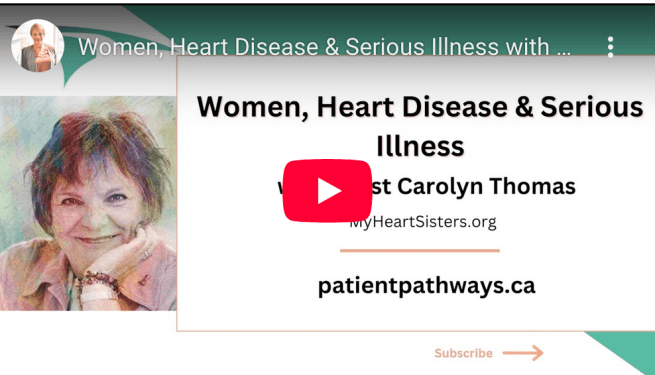 I loved doing those lively and interactive presentations for 17 years, and will always treasure memories of the thousands of women who have attended my heart talks. But I also realized after the stumbling performance at the women’s club that it might be time to pack up my lectern and move on. I couldn’t get myself out of there fast enough that day – and I haven’t booked a live presentation since.
What many of us might do when facing that scary loss of nouns is to seek out possible strategies to somehow slow down this cognitive decline – proven interventions like cutting back on alcohol and cigarettes, giving up highly processed foods, adopting a Mediterranean-type diet, improving sleep habits, and participating in regular exercise – all good things.
Or we might ask Dr. Google about unproven interventions – like expensive age-defying brain-boosting supplements promising miraculous cognitive improvements as advertised online.
I’d already been taking most of those proven steps for several years since my heart attack, so I was interested in recent research results endorsing a positive intervention as we age, with compelling evidence of a surprisingly effective impact on both physical and brain health.
This intervention improves cognitive decline as we get older – and it’s a fun one at that! One Swiss study team, for example, has followed up their research on the relationship between pet ownership and cognitive decline among adults aged 50 and older.
Here’s what they concluded about pet owners:
“When it comes to pet ownership in later age, it has been shown to have a positive effect on older adults’ well-being and feelings of companionship as well as on their physical health. The decline of all of these abilities was significantly slower than among non-pet owners. The key findings of our study were that we found notable differences between the pet species.”
In their article, published in the journal Scientific Reports, the Swiss authors tracked the distinct role of owning dogs, cats, birds or fish.
Their results?
“Dog and cat ownership was associated with slower cognitive decline compared to no pet ownership, but bird and fish ownership showed no such association.” (Sorry, bird and fish fans!)
Those findings suggest that dog and cat ownership specifically might actually act as a protective factor that can slow down cognitive decline, thus contributing to healthy cognitive aging. And the owners of certain types of pets experienced slower cognitive decline across three important areas of brain function compared to non-pet people in these same areas: verbal fluency, immediate recall and delayed recall.
The good news: pet ownership (especially if you have a dog or cat) seems strongly linked with remarkably “positive effects on older adults’ well-being, feelings of companionship, and physical health.”
♥
Q: Have you too experienced losing your nouns?
NOTE FROM CAROLYN: I wrote much more about becoming a patient (no matter the diagnosis!) in my book, “A Woman’s Guide to Living with Heart Disease” (Johns Hopkins University Press). Ask for it at your local library or bookshop. Please support your favourite independent neighbourhood booksellers, or order it online (paperback, hardcover or e-book) at Amazon – or order it directly from my publisher, Johns Hopkins University Press (use their code HTWN to save 30% off the list price).
 Heart Sisters
One thought on “Pet ownership vs. our lost nouns”
Comments are closed.