Revisiting the “widow maker” heart attack

by Carolyn Thomas       @HeartSisters

In 2018, many viewers of the hit NBC television drama “This Is Us”  learned the term “widow maker heart attack” for the first time when the beloved main character Jack Pearson was pronounced dead. As TIME magazine later reported, online searches for that term spiked more than 5,000 per cent in the hours after that episode aired. Some viewers took to social media to tell their stories about loved ones who had died from – or survived – their own cardiac events.

Television is so educational!           .    Continue reading “Revisiting the “widow maker” heart attack”

Diagnostic uncertainty: when we just don’t know

by Carolyn Thomas      @HeartSisters

The image above is all about uncertainty. It’s like a 5-step roadmap that you’d use when traveling an unfamiliar road to a new destination you know nothing about and do not want to visit.(1)  For people experiencing scary symptoms they fear might be heart-related, for example, uncertainty about what’s happening now and what will happen next is pervasive. But a new study published in the journal Patient Education and Counseling reminds us that patients aren’t the only ones facing uncertainty around a medical diagnosis: “Both patients and clinicians experience diagnostic uncertainty, but in different ways.”(2)        .        .   Continue reading “Diagnostic uncertainty: when we just don’t know”

New chest pain guideline: “atypical” is OUT!

by Carolyn Thomas    @HeartSisters

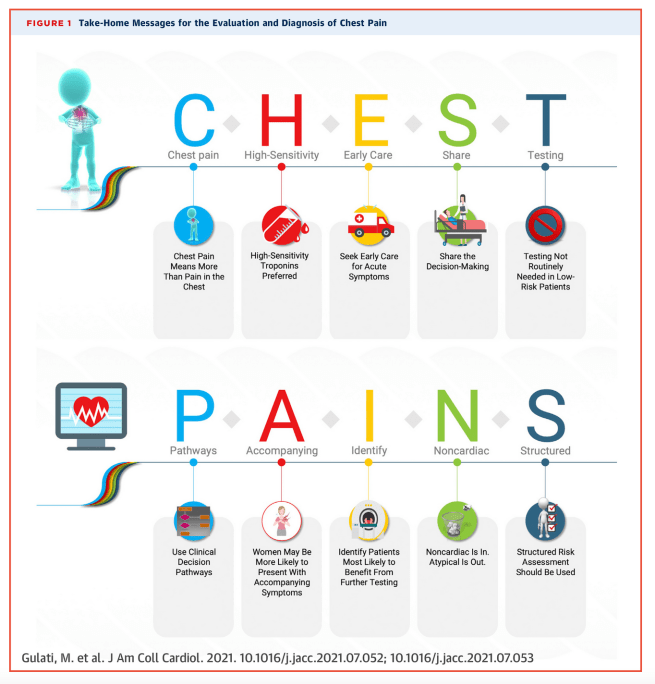
At last! This long-awaited first-ever Guideline for the Evaluation and Diagnosis of Chest Pain for physicians and their patients has done a deep dive to help improve accuracy in evaluating and diagnosing cardiac symptoms(1)  – a huge and overwhelming effort.  I’m hopeful that updated guidelines might represent a turning point for all women presenting with those symptoms – and for the physicians who diagnose them.  Here’s my take on the impressive new Chest Pain Guideline  – along with a few concerns:      .       .  Continue reading “New chest pain guideline: “atypical” is OUT!”

False hope: better than no hope?

by Carolyn Thomas      @HeartSisters

My former colleagues in palliative care often spoke about the concept of hope as being a fluid, ever-changing state of being. When we’re suddenly face-to-face with a frightening medical crisis, for example, we hope at first that maybe the diagnostic tests were wrong. When the diagnosis is confirmed, we hope that this treatment/this procedure/ this drug will be the cure. But if we’re not cured, we hope that our symptoms can be managed so we don’t suffer. If we do get worse, we hope that our suffering won’t become a burden to our families. Then we hope that after we’re gone, our loved ones will be taken care of.

There was never talk about “no hope”.  There is always hope.  But our hope changes.     .             . Continue reading “False hope: better than no hope?”