Why aren’t more doctors like Dr. Bernard Lown?

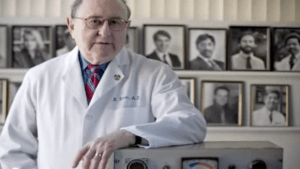
The late Dr. Bernard Lown was the author of The Lost Art of Healing: Practicing Compassion in Medicine, and was a practicing cardiologist for over 62 years. He’s also the co-founder of the medical organization called International Physicians for the Prevention of Nuclear War, which was awarded the 1985 Nobel Peace Prize.

Dr. Lown presented this talk at a Cambridge, Massachusetts medical conference called Avoiding Avoidable Care on April 26, 2012. The lofty goal of this unique conference was no less than the transformation of health care culture from one focused on volume and quantity to one centered on value and quality. Here’s the profoundly important message of Dr. Lown to his colleagues:   Continue reading “Why aren’t more doctors like Dr. Bernard Lown?”

11 fascinating facts about your heart

by Carolyn Thomas    @HeartSisters

1. Matters of the heart

The hardest-working muscle in your body is your heart, according to the Library of Science. It pumps out two ounces of blood at every heartbeat, adding up to at least 2,500 gallons daily. The heart has the ability to beat over 3 billion times in a person’s life.  See also: How Many Times Has Your Heart Beaten So Far?

2. Too much sitting or driving could be trouble

If you want to stay heart healthy, it might make sense to cut back on sitting down, driving and watching the tube. In one analysis of data from nearly 30,000 people in 52 countries, those who owned both a car and TV had a 27% higher risk of heart attack than those who owned neither. However, the researchers caution that lack of physical activity is the culprit, not just what you’re doing while sitting. See also: Are you reading this sitting down? Don’t! Continue reading “11 fascinating facts about your heart”

Khan Academy’s crash course on heart disease

Khan Academy

by Carolyn Thomas  @HeartSisters

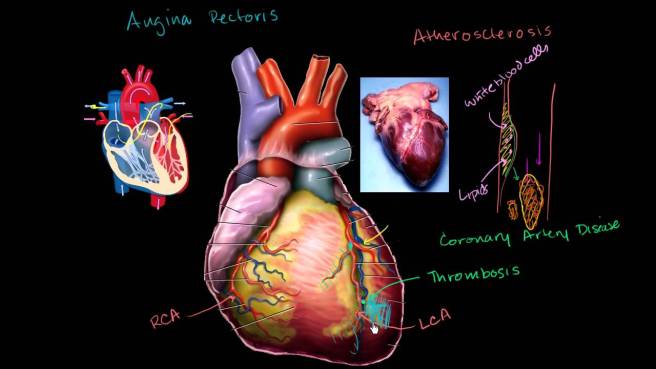
Sal Khan has done it again with this exquisitely simple yet compelling look at how a heart attack happens. This MIT graduate’s Khan Academy is a non-profit educational organization, created in 2006 with the stated mission of “providing a high quality education to anyone, anywhere”.

This video on heart disease is just one of over 3,000 brilliant (and free!) online micro-lecture tutorials at Khan Academy. So watch it already.

.

Q: Did you learn anything new from watching this video?

.

l

Taking aspirin at first sign of heart attack: good or bad advice?

To:      Dr. James M. Wright, MD PhD CRCP(C)  Editor-in-Chief, Therapeutics Letter, Therapeutics Initiative: Evidence-Based Drug Therapy*, University of British Columbia, Vancouver, BC Canada
From:  Carolyn Thomas, Heart Sisters

Dear Dr. Wright,

I’m a heart attack survivor and patient advocate who blogs about women and heart disease at Heart Sisters.

Recently, a well-known family physician who writes a syndicated medical column did a presentation on heart health to about 200 members of our local cardiac rehab alumni group. He told us about a new protocol to be followed at the first symptoms of a heart attack –  one that’s apparently superior to the current “Call 911 and chew one full-strength aspirin” patient recommendation.

Instead, he favours something new that he called “Axe the Aspirin”.  He waved a little plastic baggie with two pills in it as he spoke, adding that he carries this in his wallet at all times, “just in case”.  What he was waving overhead was a mega dose of the anti-platelet drug clopidogrel (Plavix 600 mg – about nine times the standard therapeutic dosage that heart patients take) along with the statin/cholesterol drug rosuvastatin (Crestor 20 mg) – to be taken together at the first symptoms of possible heart attack. He told us, quite emphatically:

“We used to recommend aspirin, but this Plavix/Crestor combo is better!” 

Continue reading “Taking aspirin at first sign of heart attack: good or bad advice?”