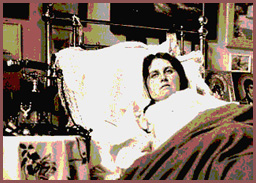

Does getting older mean getting happier?

by Carolyn Thomas  @HeartSisters

It is inevitable. The muscles weaken. Hearing and vision fade. We get wrinkled and stooped. We can’t run, or even walk, as fast as we used to. We have aches and pains in parts of our bodies we never even noticed before.  We develop chronic, progressive illnesses like heart disease.  We get old.

It sounds miserable, but apparently it is not. According to the New York Times, a large U.S. survey of over 340,000 people aged 18-85 has found that by almost any measure, people get happier as they get older, and researchers are not sure why.

The Times reported that in the study’s global measure of well-being, people start out at age 18 feeling pretty good about themselves.  But then, apparently, life begins to throw curve balls. They feel worse and worse until they hit 50. At that point, there is a sharp reversal, and people keep getting happier as they age. By the time they are 85, they are even more satisfied with themselves than they were at 18.  Continue reading “Does getting older mean getting happier?”

Last chance to apply for the WomenHeart Symposium at Mayo Clinic

 Are you a woman who has survived a cardiac event, and is at least six months past your last hospitalization? Do you have a burning desire to learn more about heart disease – our #1 killer – and then to help educate others about their own heart health? If your answers are YES, then I urge you to apply to attend this once-in-a-lifetime training opportunity for women at the world famous Mayo Clinic.  This year’s application deadline has passed (June 18th) but please consider applying for next year’s training.  Here are the basics:

  • Who:    Women diagnosed with any form of heart disease
  • What:  Annual WomenHeart Science & Leadership Symposium
  • When:  October (around the Columbus Day / Canadian Thanksgiving weekend)
  • Where:  Mayo Clinic in Rochester, Minnesota, U.S.A.
  • Why:  To educate and empower each woman heart patient participant to take charge of her own heart health and to train her as a community educator, outreach specialist, and spokeswoman for WomenHeart

 Here’s the application for 2010 from WomenHeart with everything you need to know about the Symposium. 

Questions? Contact the always-helpful and charming Joanna Eisman at WomenHeart: The National Coalition For Women With Heart Disease, either by e-mail at  jeisman@womenheart.org or by telephone at (202) 464-8741.  And tell her that Carolyn Thomas sent you!

See also Going To Mayo Clinic for more about my own life-altering experience at the fabulous 2008 WomenHeart Symposium – what I like to call part world-class cardiology training and part community activism bootcamp!  And WomenHeart’s Mayo Clinic Symposium Featured In Time Magazine.

And please forward this on to any women you know who might qualify for this amazing adventure at Mayo Clinic.


Add to FacebookAdd to DiggAdd to Del.icio.usAdd to StumbleuponAdd to RedditAdd to BlinklistAdd to TwitterAdd to TechnoratiAdd to Yahoo BuzzAdd to Newsvine


Women’s heart health advice: “Walk often, walk far!”

by Carolyn Thomas  @HeartSisters

If you are one of those misguided sods who still believe in the exercise axiom: “No pain, no gain”  – you can stop reading right now.  The rest of you – rejoice!  According to the National Heart, Lung, and Blood Institute, taking a long daily walk may be a better way to improve heart health, lose weight and feel better compared to shorter periods of more strenuous  exercise.

A randomized controlled clinical trial funded by the NHLBI compared two exercise programs for heart attack survivors:

  • 1.  Standard cardiac rehab exercise:  25-40 minutes of exercise three times per week at approximately 65-75% peak aerobic capacity. This included 25 minutes of treadmill walking and 8 minutes on 2 to 3 ergometers: cycle, rowing, or arm.
  • 2.  High-calorie expenditure exercise: longer duration but lower intensity,  more frequent exercise (45-60 minute sessions, but at just 50-60% peak aerobic capacity, 5-7 times per week).

Walking, rather than weight-supported exercises (such as cycling or rowing), was preferred to maximize calorie expenditure, which was targeted at 3,000-3,500 calories per week. The protocol was essentially to “walk often and walk far.”  All heart patients studied were considered overweight before starting the program. Each subject  also received 16 hours of group dietary counseling, and were given a target goal of consuming 500 calories per day less than their predicted maintenance calories.

What did their results show?  Continue reading “Women’s heart health advice: “Walk often, walk far!””

“Take two aspirins and Tweet me in the morning!”

You woke up feeling sick today. Your throat is scratchy, your head is imploding, and you just don’t think you can even leave your bed. You might have the flu. What do you do?

If you live in the Brooklyn borough of New York City, you stagger over to your computer and log in to your doctor’s office website at Hello Health to schedule an online Instant Messaging visit. Very soon, during that IM chat, your regular doctor asks some questions and confirms that it’s a virus. She tells you there’s nothing to worry about just yet, to drink plenty of fluids, and take Tylenol™ for the fever. Oh, and she’ll contact you tomorrow.

Feeling better now?  In the olden days before the Hello Health concept, the traditional time spent dragging your sorry flu-addled self out of bed and all the way downtown to your doctor’s office, including two aching and feverish hours spent shivering in the waiting room infecting other patients, would have been about four hours of your life that you’d never get back.

But time spent with your Hello Health doctor’s visit?  Less than one hour, without even brushing your teeth, changing out of your sweaty jammies, or leaving home. 

Indeed, across our health care system, from large hospital networks to patient support groups, new media tools like blogs, IM platforms, video chat, and social networks like Twitter and Facebook are re-engineering the way doctors and patients interact.   Continue reading ““Take two aspirins and Tweet me in the morning!””