Post-Traumatic Growth: how a crisis makes life better – or NOT

Full disclosure: I’ve always felt a bit squirmy when patients facing a life-altering medical crisis cheerfully declare that this diagnosis isn’t only NOT dreadful, but it’s actually quite fabulous! But before I dig into that theory, let’s look at this positivity phenomenon.
.

Psychologists sometimes refer to it as “Post-Traumatic Growth”.
Continue reading “Post-Traumatic Growth: how a crisis makes life better – or NOT”

Do we need to change the name of cardiac rehab?

by Carolyn Thomas    @HeartSisters

Once discharged from hospital following my heart attack, I was gobsmacked by how physically frail I felt. Simply taking a shower meant a 20-minute lie down to recover. Just walking to the corner with my son, Ben, required me to clutch his arm for support. But it wasn’t only this new weakness that alarmed me. As a former distance runner, I felt suddenly afraid of any exertion that might bring on the horrific heart attack symptoms I’d so recently endured. That’s where cardiac rehabilitation (a 2-4 month supervised exercise and education program for heart patients) literally saved me. Continue reading “Do we need to change the name of cardiac rehab?”

Were you “born to walk”?

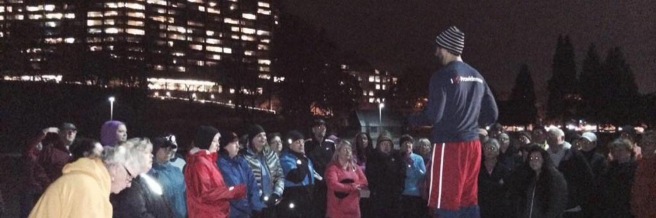
Dr. James Beckerman talks to one of his 'Heart To Start' groups in Portland
Cardiologist Dr. James Beckerman leads one of his ‘Heart To Start’ groups in Portland

by Carolyn Thomas    @HeartSisters

”  Physicians, get out your prescription pads and prescribe this book to every one of your heart patients. This encouraging, common sense and easy-to-read book deserves to be in the hands of all freshly-diagnosed heart patients and those who love them.”

That’s the little blurb I wrote for Oregon cardiologist Dr. James Beckerman’s book, Heart To Start.*  As explained in last week’s book excerpt published here, Dr. B believes that heart disease is essentially a sitting disease.  To rally against that, he embraces a profound belief that “exercise is medicine”  – and this is especially important for all of us heart patients. In fact, he believes that physical exercise is the least prescribed yet most effective heart treatment. Far too many of us, however, get little or no regular physical activity – particularly while recuperating from a cardiac event – and instead insist on doing something that just might be dangerous to our health: we sit.  

But Dr. Beckerman believes that what we most need to do is to move more. We were “born to walk”, he reminds us. And even if we weren’t born to walk, we sure weren’t born to be sitting around all day.   Continue reading “Were you “born to walk”?”

When we judge the poor the way we judge the chronically ill

by Carolyn Thomas    @HeartSisters

There’s an old joke about a woman who is successfully losing weight by following a very strict diet. But one day, her hubby returns home to find her sitting at the kitchen table finishing off a Hershey chocolate bar. He says to her: “Honey! You’ve been doing so great on your diet until now! How could you eat that chocolate bar?”

And her reply:

“You don’t know how many I wanted . . .”

That response sums up a profound message that goes beyond mere diet-cheating to how swiftly we rush to judgement based simply on what we see.  Mostly, we rush to judge other adults based on actions or behaviours that are none of our business (sometimes criticism is thinly veiled as “caring”I care about you so I have to mention the chocolate bar I see you eating. . . )  We judge others because they are not like us, because they make choices we wouldn’t, or because they make choices we might secretly want to make, too – but stop ourselves from doing.

Dr. Lisa Wade’s provocative essay on how we judge those living in poverty recently reminded me of how those living with a chronic illness diagnosis like heart disease can feel similarly judged.  Continue reading “When we judge the poor the way we judge the chronically ill”