Can “mental muscle” help us recuperate?

by Carolyn Thomas    ♥    @HeartSisters

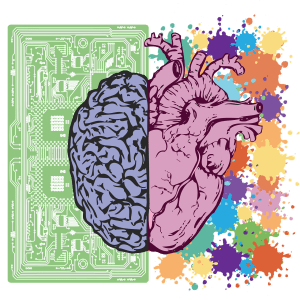
Dr. Amy Morin described her early career as a psychotherapist who“intended  to help others build mental strength”. She could never have imagined, however,  that she would soon need what she calls “mental muscle” to help herself. When Amy was just 23, her mother died of a brain aneurysm. Three years later, a heart attack killed Amy’s young husband, Lincoln – a tragedy that was followed by her father-in-law’s sudden death.

This is what she wrote about surviving the pain of those losses:

“I was a 26-year old widow with no Mom. Losing the most important people in my life sent me on a quest to learn how I could stay mentally strong.”  

Continue reading “Can “mental muscle” help us recuperate?”

Coffee: good or bad for our hearts?

  by Carolyn Thomas   ♥  Heart Sisters (on Blue Sky)

I love that first sip of the first cup of Americano every morning. In my kitchen, I have a vintage little Krups espresso machine that slowly builds up a thrilling WOOOSH of steam. That’s when I know that the magic is about to happen. The whole kitchen smells so wonderful!  It’s my favourite part of waking up early. I have two cups of coffee every morning: the first right after I wake up while reading my Globe and Mail, and the second later on with breakfast.

And despite the decisions of some heart patients to quit drinking coffee after being diagnosed, newer coffee research does seem to side with my favourite morning brew.   Continue reading “Coffee: good or bad for our hearts?”

Negative vs. positive experiences: what you remember may depend on emotions

  by Carolyn Thomas   ♥  Heart Sisters (on Blue Sky)

If I asked you about the exact moment you were diagnosed with heart disease, would you be able to remember that moment? Research suggests that most of us (whatever our serious diagnosis) can clearly recall, often in surprisingly precise detail, the exact words used by the physician who broke the news to us – even decades later.

But what if I asked you what you had for breakfast last Tuesday?

The difference between those two questions about remembering seems obvious, because hearing a frightening new diagnosis is fraught with emotion. A bowl of oatmeal?  Not so much.
Continue reading “Negative vs. positive experiences: what you remember may depend on emotions”

Implantable cardiac defibrillator shocks vs. “careful and kind” end-of-life care

by Carolyn Thomas    ♥    Heart Sisters (on Blue Sky)

Here’s how I defined implantable cardioverter defibrillators (ICD)  in my patient-friendly, jargon-free glossary:  small battery-operated electronic device that’s surgically inserted into the chest to treat life-threatening heart rhythm problems.  An implanted ICD is almost like having a tiny Emergency Department at the ready, right inside your own chest, capable of delivering a shock strong enough to restore a struggling heart’s normal rhythm, thus helping to prevent sudden cardiac arrest.

But what happens when the ICD patient is not dying from a heart rhythm problem – but from a terminal medical condition?     Continue reading “Implantable cardiac defibrillator shocks vs. “careful and kind” end-of-life care”