
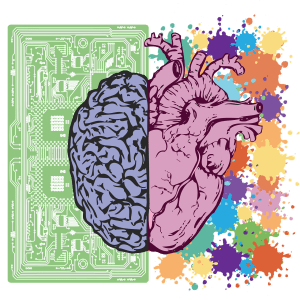
by Carolyn Thomas ♥ @HeartSisters
Dr. Amy Morin described her early career as a psychotherapist who“intended to help others build mental strength”. She could never have imagined, however, that she would soon need what she calls “mental muscle” to help herself. When Amy was just 23, her mother died of a brain aneurysm. Three years later, a heart attack killed Amy’s young husband, Lincoln – a tragedy that was followed by her father-in-law’s sudden death.
This is what she wrote about surviving the pain of those losses:
“I was a 26-year old widow with no Mom. Losing the most important people in my life sent me on a quest to learn how I could stay mentally strong.”
The more she learned about helping herself get through such dreadful times, the more convinced she was that to build up the mental muscle she needed, she had to also avoid unhealthy mental habits that could get in her way.
Developing mental strength, she reminds us, isn’t about acting tough or ignoring how we feel. No matter how bad our circumstances may be, this mental muscle is more about:
- learning how to regulate our thoughts
- learning how to manage our emotions
- learning how to behave productively
In Dr. Morin’s book, 13 Things Mentally Strong Women Don’t Do, three of her observations about people with mental muscle jumped off the page at me. The three observations (plus links to related Heart Sisters articles) are:
1. They Don’t Waste Time Feeling Sorry for Themselves:
“Mentally strong people don’t sit around feeling sorry about their circumstances or how others have treated them. Instead, they understand that life isn’t always easy or fair.” See also: There is no Fair Fairy in Life
2. They Don’t Waste Energy on Things They Can’t Control:
“You won’t hear a mentally strong person complaining over lost luggage or traffic jams. Instead, they focus on what they CAN control in their lives. They recognize that sometimes, the only thing they can control is their own response to what happens.” See also: Chronic Complaining: Don’t be Such a “Greiner Zanner”
3. They Don’t Dwell on the Past:
“Mentally strong people don’t waste time dwelling on the past and wishing things could be different now. They can realistically acknowledge what’s happened to them, and may even say what was learned from past experiences. They don’t, however, constantly relive bad experiences or fantasize about the glory days. Instead, they try to live for the present and plan for the future.” See also: Do You Think Too Much? How Ruminating Hurts Your Heart
It’s no surprise that those of us diagnosed with a chronic or progressive illness like heart disease often struggle to feel mentally strong. This is especially true during the early days as we desperately try to make sense out of a life-altering diagnosis. But asking “Why me?” is a crazy-making exercise. My Buddhist friends might simply answer that with:“Why NOT you?”
Most of us have trouble making sense out of medical crises that make no sense. That’s why ruminating about what tomorrow may or may not bring is so futile – because ruminating can feel seductively irresistible. Yet staying in a state of relentless fretting is linked to dangerously high levels of cortisol, the body’s artery-damaging stress hormone.
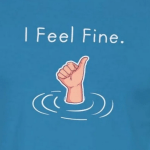 Before my own heart attack, I used to believe my own mental muscle was pretty stable, no doubt aided by decades working in the public relations field (in corporate, government and non-profit sectors over the years). This career choice, in my experience, required that even when running around with my hair on fire, I somehow seemed able to appear calm and unflappable, no matter how many impossible deadlines I was stick-handling. Along with my PR day job, I also taught Crisis Communications classes to public relations students at the University of Victoria – so they could practice responding to future workplace crises. I must have assumed during those years that I was permanently unflappable.
Fast forward to a misdiagnosed “widow maker” heart attack (and subsequent unplanned retirement). .Suddenly, I felt as if the least little setback would push me right over the edge. I was terrified that a second heart attack was imminent – probably tonight in my sleep, and probably fatal.
Ironically, it was NOT a second heart attack that knocked me flat, but a brand new diagnosis of osteoarthritis three years ago. By then, I’d somehow relaxed about another heart attack every night at bedtime. But ARTHRITIS?!? Whaaaaat? I like to quote the famous philosopher Bruce Springsteen, who sings: “You get used to anything. Sooner or later, it just becomes your life.” See also When Heart Disease Isn’t Your Biggest Problem
This osteoarthritis diagnosis hit me like a Mack truck. I had zero mental muscle to cope with this condition.
Overnight, it seemed that I could no longer recognize my own hands. My swollen and painful finger joints resembled gnarled claws. I was no longer able to tie shoelaces, open the bottle caps of my heart meds, or even crack an egg without sending eggshell fragments flying. (And by the way, why must arthritis symptoms bounce around the body willy-nilly from hour to hour? Just this morning, for example, my left knee was on fire, after which the three smallest toes on my right foot started screaming, followed by intractable pain in the base of my right thumb!)
But because I regularly nag my readers to “become the world expert on your diagnosis!”, I forced myself to sign up for two free educational workshops from the Arthritis Society.
 After those classes (led by two awesome physiotherapists, I must say), I put away my winter running shoes and bought red ankle boots with two side zippers – as recommended by the physios. Those shoelaces pictured are strictly decorative. No more frustrated fumbling with gnarly fingers! Pro tip: If you have trouble tying shoelaces, stop buying shoes with shoelaces.
I now sport a skookum Bauerfeind unloading knee brace during my longer walks, plus more recent wrist and thumb braces. I also asked my local pharmacist to use only easy-open bottle caps on my heart meds from now on, and for my April birthday, I’m hinting only for joint-friendly meal prep tools. . Each of these practical steps echoed Dr. Morin’s #2 basic recommendation (listed above) to focus on what I CAN control in my life, instead of all the things I can’t.
Behavioural scientists also tell us that learning to adapt to a new diagnosis means we need to embrace self-reflection:
“Self-reflection is a so-called ‘soft skill’ that requires us to ‘sit with ourselves, thinking about what has just happened, what worked, what didn’t, what can be done in the future, and what can’t. We can also become more aware of our inner experiences, and how they are impacting our responses’.”(1)
Whoah! That last sentence is deep. . .

My family and friends laugh when I say: “I write about what I need to learn!” – but in this case, that is so true. Until now, I’d never heard of Dr. Amy Morin, or read her books, or watched her TED talk – but for patients like me, her thoughts on learning to flex our mental muscle resonate completely.
And that makes sense to me. . .
1. Bailey J.R., Rehman, S. “Don’t Underestimate the Power of Self-Reflection”, Harvard Business. March 4, 2022.
Heart/brain image: Damian Niolet, Pixabay; I Feel Fine image: ChronicIllnessTees
♥
Q: How have you developed your own ‘mental muscle’ to help manage your diagnosis?
.
NOTE from CAROLYN: I wrote more about becoming a patient (especially with more than one diagnosis!) in my book, “A Woman’s Guide to Living with Heart Disease”. You can ask for it at your local library or bookshop, or order it online (paperback, hardcover or e-book) at Amazon – or order it directly from my publisher, Johns Hopkins University Press (use their code HTWN to save 30% off the list price).


One thought on “Can “mental muscle” help us recuperate?”