Get over yourself: how to stop boring others with your heart attack story

by Carolyn Thomas

I was a distance runner for 19 years, before a brutal case of plantar fasciitis dashed my Olympics dream forever.  I’m kidding about that last part.  My running group (motto: ‘No pace too slow, no course too short!’) had a useful running rule.  The first ten minutes of every training run were devoted to whining.

“My quads hurt. I’m so tired. I think I’m getting a blister.”

But at precisely the ten minute mark, the rule was: no more whining. Let’s face it, my heart sisters: nobody is that interested.

Upon ruminating on the wisdom of Dr. Martin Seligman‘s book Learned Optimism that I’ve been enjoying lately (see Even Heart Patients Can Learn to be Optimists), I can’t help but notice a proliferation of gloom, doom, pessimism, criticism, complaining, blaming and a whack of running negative commentary around lately. And other people besides me are grumpy, too . . .  Continue reading “Get over yourself: how to stop boring others with your heart attack story”

Deep thoughts about death and heart disease

red poppies

by Carolyn Thomas  @HeartSisters

This week, I’ve been reading Yale Medical School professor Dr. Sherwin Nuland’s amazing book How We Die – which is not nearly as grim as it sounds.  In fact, it’s an endlessly fascinating read. For heart attack survivors, the concept of death can become more interesting than we ever imagined it to be.

We live in a death-denying society. People don’t want to think about death, much less talk about it. As Dr. Nuland writes, death to most of us occurs “in sterile seclusion cloaked in euphemism and taboo”. We don’t even like using the ‘D’ word. Instead of ‘dying’, we prefer to “pass on”, or “pass away” or “go to be with Jesus”. Continue reading “Deep thoughts about death and heart disease”

In praise of the afternoon nap

cat nap green red

by Carolyn Thomas    @HeartSisters

I have learned a valuable skill since my heart attack.  I have learned how to take naps.

Because I’ve never been able to nap until now, I used to be envious of my son, Ben, who is a world-class napper.  That boy started sleeping 11 hours a night by the age of five weeks, and has been looking for opportunities to snooze ever since: anywhere, any time, sitting up, lying down, on the plane, or (his favourite) stretched out on the couch after Sunday brunch.

Ben has been on the right track all along, according to scientists reporting in the Journal of Applied Physiology.(1)  Their report on the cardiovascular benefits of the afternoon nap suggests that a siesta habit is associated with a remarkable 37% reduction in coronary disease mortality, possibly because of reduced cardiovascular stress associated with daytime sleep. Apparently, the initial period of time between lights out and sleep onset is associated with the largest acute reduction in blood pressure during afternoon siestas.

Like most mammals, humans experience two periods of what sleep scientists call ‘forceful, persuasive sleepiness’: around 2-4 am and then again at 1-3 pm. An afternoon nap, like the tradtional siestas of warm-weather countries, allows you to grab some of the benefits of the sleep cycle without committing to a full eight hours.

Continue reading “In praise of the afternoon nap”

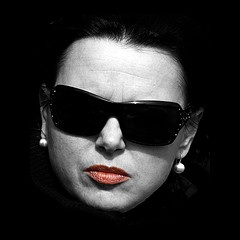
Forget Type A: a woman’s heart disease risk is higher for Type D personalities

woman sunglasses angry

by Carolyn Thomas  @HeartSisters

According to the Harvard Heart Letter, if you are the kind of person who . . .

  • tends to sweat the small stuff
  • sees the glass as half empty
  • keeps your feelings bottled up inside

… then you might well be termed a Type D (distressed or distant) personality, and be at increased risk for heart disease.

Type D people tend to be anxious, irritable, and insecure. They keep an eye out for trouble rather than pleasure. They may experience high levels of stress, anger, worry, hostility, tension, rudeness and other negative and distressing emotions. Even if they lack a strong support network of friends or family, they go to great lengths to avoid saying or doing things that others don’t like. As a result of biting their tongues to keep their negativity to themselves, they often feel tense and inhibited around other people.

Does this sound like it might be you?
Continue reading “Forget Type A: a woman’s heart disease risk is higher for Type D personalities”