
75 days – but who’s counting?

by Carolyn Thomas   ❤️   Heart Sisters (on Blue Sky)

A quotation I like a lot (thank you, Bruce Springsteen!) is this: “You get used to anything. Sooner or later, it becomes your life.”  As regular readers already know, I’ve been a heart patient for a long time, ever since surviving a misdiagnosed widow-maker heart attack in 2008 – enough time to really get used to the idea of living with heart disease.

In fact, that’s 17 years of getting used to saying things like “my cardiologist”. 

In 2009,  I launched this Heart Sisters blog.  That’s 16 years of getting used to Sunday morning deadlines and reader comments.

Then in 2017, Johns Hopkins University Press published my book “A Woman’s Guide to Living with Heart Disease”   That’s eight years of getting used to publishers, editors, book reviews – and one unhinged (now former) publicity manager.

But on April 1st, I learned that the lump I’d found on my right breast while showering was a malignant tumor (called invasive ductal carcinomathe most common form of breast cancer, accounting for 80 per cent of all breast cancer diagnoses).

So far, that’s only 75 days of getting used to being a cancer patient. That makes me a rank amateur.  No wonder I feel so utterly overwhelmed.  Continue reading “75 days – but who’s counting?”
Failure to inspire

by Carolyn Thomas   @HeartSisters 

Blogging sometimes feels like a cross between therapy (writing about what I’m obsessing over at any given moment) and planning a classroom lecture (getting emerging research, current journal references and my own thoughts in order about very specific subjects – mostly women’s heart disease and the experience of becoming a patient). 

But if you’ve been here before, you already know that one of my favourite parts of noodling away on this blog is the interactive response from my readers. This is always a two-way street. Your comments make me laugh, they make me cry, they almost always make me want to respond. My favourite kind of reader comment: “I thought I was the only one who felt this way. . . “

But what some of you may not know is that sometimes, reader comments can also make me feel tired and cranky.    Continue reading “Failure to inspire”

“To just be a person, and not a patient anymore”


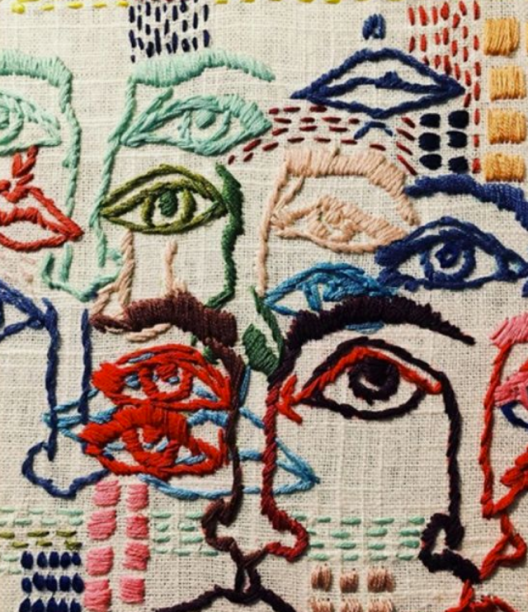
THIS Embroidery Tessa Perlow by Carolyn Thomas    @HeartSisters

New Jersey oncologist Dr. James Salwitz, in his blog post called Why Is The Doctor Angry?, tells the story of the day that one of his patients became very ill. Instead of calling Dr. Salwitz, however, his patient emailed a doctor 3,000 miles away in California as he became sicker and sicker. The California doctor forwarded the emails back to Dr. Salwitz, who immediately sent his patient to hospital with multiple system failures. Dr. S said that he felt angry about his patient’s behaviour, explaining:

“   Did I look him in the eye and tell him that I was upset, that he had neglected his own care by not reaching out and in doing so he violated the basic tenants of a relationship which said that he was the patient and I was the doctor?”

“Did I remind him what I expect from him and what he can expect from me?  You better believe it – I was really pissed!”

My own question to Dr. Salwitz was: “So did you ever find out from the patient WHY he did not reach out to you?”   Continue reading ““To just be a person, and not a patient anymore””

A perfectly ordinary workday. Unless you’re the patient…

by Carolyn Thomas  ♥  @HeartSisters

I’ve lived on both sides of this scenario. For many years, my workplace was a hospital where I worked as the Communications Coordinator on the hospice/palliative care unit. I’d arrive at the hospital for work early each morning and easily navigate the maze of hospital corridors leading up to my office. I’d chat happily over coffee with my nurse and physician colleagues arriving for shift change, and then unlock my office door to prepare for that day’s busy schedule. Showing up at the hospital became as routine for me as showing up for work had been during over three decades of my PR career in corporate, government and not-for-profit sectors in other workplaces.

Yet on some level, I always knew that my familiar hospital workplace was anything but familiar to people out there who were making their way into that same hospital – but as patients.

Continue reading “A perfectly ordinary workday. Unless you’re the patient…”