
Two big factors that can impact a patient’s loss of ‘self’

heart-VILUCA-PIXABAY-1205291_1280

by Carolyn Thomas    @HeartSisters

When California sociologist Dr. Kathy Charmaz studied the subject of suffering among those living with chronic illness, she identified an element of suffering that is often overlooked by health care providers.(1)  As she explained her findings:

”    A fundamental form of that suffering is the loss of self in chronically ill persons who observe their former self-images crumbling away without the simultaneous development of equally valued new ones.

“The experiences and meanings upon which these ill persons had built former positive self-images are no longer available to them.”

Dr. Charmaz also found that this profound sense of having lost the “self” you used to be before being diagnosed is generally the result of both external and internal influences on how we view ourselves.  Continue reading “Two big factors that can impact a patient’s loss of ‘self’”
Pregnancy complications strongly linked to heart disease

by Carolyn Thomas  ♥  @HeartSisters

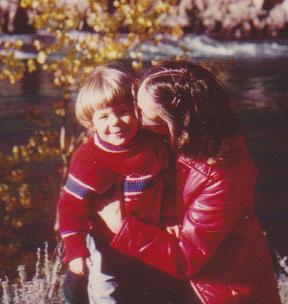
My pre-eclampsia baby Ben, age 2, with his Mum, visiting Yellowknife, NWT, Canada

When I was about eight months pregnant with Ben, my first baby, I was diagnosed with something called preeclampsia. This is a serious condition affecting about 5% of pregnant women, identified by symptoms like sudden spikes in blood pressure, protein in the urine, severe swelling and headaches or vision problems. It’s also women’s third leading pregnancy-related cause of death. Preeclampsia is clinically described as:

“…a disorder of widespread vascular endothelial malfunction and vasospasm that occurs after 20 weeks’ gestation”.

Whenever you see the words “vascular” or “endothelial” or “vasospasm” in the same sentence, you know you’re likely talking about the heart. And although preeclampsia typically goes away after pregnancy, its diagnosis may well be an early indicator of underlying heart conditions that may simmer for decades. In fact, studies now show that pregnant women who develop preeclampsia have more than twice the risk of having a heart attack or stroke later in life.

And that is what happened to me. Continue reading “Pregnancy complications strongly linked to heart disease”

As if fear of dying weren’t bad enough . . .

by Carolyn Thomas    @HeartSisters

In the astute words of the late Irish soccer star, George Best:

“People say you have to hit rock bottom, and I can tell you that almost dying is as rock bottom as it gets.”
Here at Heart Sisters World Headquarters, we have important news from the Department of the Bleedin’ Obvious: feeling terrified by the immediate possibility that you’re dying is “quite common among patients suffering a heart attack”, according to U.K. research published in the European Heart Journal.(1)
.
In fact, researchers observed that “although heart attack survival rates have improved tremendously over the last few decades, many patients remain quite frightened during the experience” (an understatement, by the way, that could only have been uttered by somebody who’s never actually experienced a frickety-frackin’ heart attack). 
.
But it turns out that the intense distress caused by this fear of dying in mid-heart attack is not only a common emotional response, but is also linked to actual biological changes during the weeks following a cardiac event – changes that are ironically associated with a higher risk of suffering yet another heart attack.

Continue reading “As if fear of dying weren’t bad enough . . .”

The surprising reasons heart patients don’t go to cardiac rehab

by Carolyn Thomas   @HeartSisters

Cardiologist Dr. Sharonne Hayes, founder of the Mayo Women’s Heart Clinic in Rochester, Minnesota, has this important advice for all heart patients:

 “If your doctor recommends cardiac rehabilitation, go. 

“If you’re not referred, ask.

“And if you ask, and are told ‘You don’t need it’ – find a new cardiologist!”

Based on what we already know about the shockingly low rates of physician referral to this life-saving treatment (as low as 20% of all eligible heart patients) we might expect a flurry of doctor dumping if heart patients follow Dr. Sharonne’s advice to seek out physicians who are more appropriately informed.   Continue reading “The surprising reasons heart patients don’t go to cardiac rehab”