Survey: how women (and our doctors) respond to early cardiac symptoms

by Carolyn Thomas    ♥   @HeartSisters

I have often written and spoken out about an alarming reality observed among women experiencing their first cardiac symptoms. Researchers call it “treatment-seeking delay behaviour”. One of several interesting studies on this particular tendency in female heart patients was published in The American Journal of Critical Care, for example. Oregon researchers reported that female heart patients are significantly more likely to delay seeking medical treatment compared to our male counterparts – yes, even in mid-heart attack. In fact, study authors identified six common patterns of decision-making delays between the time women first experience serious cardiac symptoms and the time when they go for help.(1)  Those six patterns range from “minimizing symptoms” to “reluctance to ask others for help”.

But just in case these studies seem to suggest that women are to blame for poor cardiac outcomes because we wait too long, let’s look at how prepared our physicians are to assess cardiovascular risks in their female patients. The landmark Women’s Heart Alliance survey asked both female heart patients and physicians for their own perspectives – with surprising results, especially this particular finding:

Physicians may not feel as prepared as you think.      .

Continue reading “Survey: how women (and our doctors) respond to early cardiac symptoms”
Cardiac research: more fun facts

by Carolyn Thomas    ♥   @HeartSisters

Do you have a book in your life that you keep opening just for the pure delight of reading it again? I am that obsessed with the book called The Exquisite Machine:  The New Science of the Heart, published by MIT Press. In fact, I keep this book beside my favourite red chair so it’s always handy for re-reading random chapters. I’ve been doing this ever since veteran cardiac researcher Dr. Sian Harding wrote the book in 2022, and I can also say I haven’t felt this way about other books I love.  So I can’t resist sharing with you some fun facts about our hearts and the research I’ve learned about from Dr. Harding’s work:    . Continue reading “Cardiac research: more fun facts”

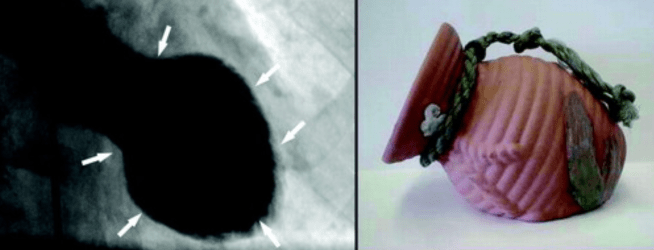
In 2000, only 2 studies published on this mystery heart attack; 10 years later: 300+

L:  X-ray of the heart during a contraction in a Takotsubo patient.   R:  Ceramic Japanese Takotsubo pot

by Carolyn Thomas    ♥   @HeartSisters   

Last week, we explored the love affair between researcher Dr. Sian Harding (a leading authority in cardiac science) and the tiny heart muscle cells called cardiomyocytes  that she first met over 40 years ago through the lens of her lab microscope.  Yes, a love affair! – as she writes in her wonderful book, The Exquisite Machine: The New Science of the Heart  published by MIT Press last year, in which she explains simply:

Once upon a time, I fell in love  – with a cell.”

This week, we’re exploring another chapter of her book, which has the curious title, “Can You (Not) Die of a Broken Heart?”  This chapter looks at a cardiac syndrome that Dr. Harding believes is actually far more widespread than our cardiologists first believed. And for me personally, it’s particularly intriguing during this particular week.        .     Continue reading “In 2000, only 2 studies published on this mystery heart attack; 10 years later: 300+”

Falling in love – with a tiny heart muscle cell

by Carolyn Thomas   ♥  @HeartSisters   

Her book starts off with a gripping description of the human heart:

“When I look at the human heart beating in the chest during surgery, or lying in a dish when removed for transplant, it just looks like a glistening lump of meat. It’s hard to associate that solid muscle with Valentine’s Day decorations, or the romantic literary description of hearts soaring, bursting, sinking and breaking.

But once upon a time, I fell in love  – with a cell.”

The object of Dr. Sian Harding’s affection was a cardiomyocyte, a single heart muscle cell, just 1/10 of a millimetre long, and about the width of a human hair.       .        Continue reading “Falling in love – with a tiny heart muscle cell”