Thirty heart-healthy ways to love your veggies (and fruit!)

by Carolyn Thomas

We’re supposed to eat 2-4 servings of fruit plus 3-5 servings of vegetables every day. It’s a full-time job, especially for those of us raised in Ukrainian families where dill pickles were considered an ideal veggie serving. Fewer than one third of us eat even those lower limits.

And we’re fussy eaters.

Potatoes, for example, represent 44% of our fresh vegetable diet here in Canada. That doesn’t includes a significant increase, according to Statistics Canada, in our consumption of processed potatoes in the form of potato chips and frozen potato products. But carrots, lettuce, onions and tomatoes represent just 27% of the Canadian diet of fresh vegetables, a decrease of 9% compared to 2005 numbers. On the other hand, we’re apparently eating three times more sweet potatoes now compared to 20 years ago. Wonder if that’s entirely due to the growing popularity of sweet potato fries . . .

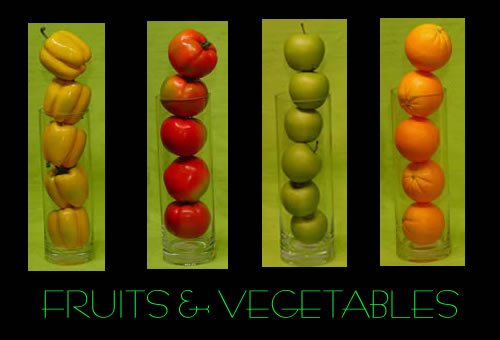
The editors of Consumer Reports Healthasked:How exactly are you supposed to get healthy produce servings into your life?” and then came up with these 30 great tips.   Continue reading “Thirty heart-healthy ways to love your veggies (and fruit!)”
Why a good breakfast is good for your brain – and your heart

breakfast bowl

“Breakfast is your brain meal!” claims Vancouver educator Terry Small, aka the Brain Guy. He once did a small and very unscientific two-week experiment on himself, just to test his theory that – as your mother always told you – breakfast is the most important meal of the day. If you still need convincing, you might want to try this experiment, too.

smart choices compared to whatFor Week #1, eat your normal low-fibre, low-protein, highly-processed breakfast every morning – like a gooey Maple Dip from Tim Hortons, for example. Or how about a nice big bowl of Froot Loops (the ones with that now-moribund Smart Choices healthy food symbol on the box)? The symbol apparently recommended this junk cereal to health-conscious American consumers until the entire program was yanked last month.
Dr. Eileen Kennedy, the Dean of Tufts University’s Friedman School of Nutrition Science and Policy, in a stupefyingly bizarre statement to the New York Times, defended the Smart Choices logo on Froot Loops because it was “based on government dietary guidelines and widely accepted nutritional standards”.  (Widely accepted on what planet, Dr. Kennedy?)  Continue reading “Why a good breakfast is good for your brain – and your heart”

“Wouldn’t I be silly to make it myself?”

soup campbells vintage

by Carolyn Thomas  ♥  @HeartSisters

“Go to all that bother.. when Campbell’s is so homey and nourishing?  Not me!”

“When I was a little girl, I remember we always made our own vegetable soup.  Mother used to devote just hours to to it. But one day when she was rushed, she tried Campbell’s Vegetable Soup.  My dad’s not so easy to please, but he ate a bowlful, and then another.  Since then, Mother has served Campbell’s… and Dad’s been as pleased as a kid!

“I’m married now myself and — well, we young-marrieds all feel that same way.  I mean why bother to make vegetable soup when Campbell’s Vegetable Soup is so wonderful — a grand-tasting beef stock and all those 15 garden vegetables.  Why, every time I serve it, my husband says: ‘Gosh, darling, this is really swell!’  And what better music can a wife hear than that?  Now I ask you!”

After I picked myself off the floor where I’d fallen down laughing, I pondered what effect this magazine ad from the 1940s actually must have had on women who read it.  And for those concerned about heart health, the widespread marketing of highly processed, high-fat, high salt, low-fibre, mass produced industrial food was a grim development. Continue reading ““Wouldn’t I be silly to make it myself?””

The fall of home cooking and the rise of heart disease

by Carolyn Thomas 

Chef and food activist Dan Barber, writing in The Nation recently, had a goofy, radical, off-the-wall idea:  we need to learn how to cook.  “A lack of technique behind the stove is as complicit in harming human health and the environment as the confinement pig or the corn-fed steer,” he boldly claimed. And author Michael Pollan (In Defense of Food), writing in the New York Times, notes the irony of our fascination with wildly popular celebrity chefs and TV cooking shows (even an entire food cable network!):

“How is it that we are so eager to watch other people browning beef cubes on screen but so much less eager to brown them ourselves? For the rise of Julia Child as a figure of cultural consequence — along with Alice Waters and Mario Batali and Martha Stewart and Emeril Lagasse and whoever is crowned the next Food Network star — has, paradoxically, coincided with the rise of fast food, home-meal replacements and the decline and fall of everyday home cooking. 

Continue reading “The fall of home cooking and the rise of heart disease”