Women choose between Mount Everest or the couch

cat couch

For most people, a calendar is just a place to keep track of your dental appointments and dinner parties.  But ever since I was given the Mayo Clinic calendar called The Road To Better Health, I’ve been spending more time reading the tips around the little appointment boxes than actually writing inside the boxes.

I especially liked the calendar page called “Mount Everest or the Couch”. This section reminds us that reducing our health risks for heart disease is not an all or nothing goal. Yet how many women are ready to head straight to the Häagen-Dazs after falling off the diet wagon, or to stop going to the gym entirely just because they’ve missed a few workouts?  My Mayo Clinic calendar reminds us:

“Your choice of destinations doesn’t have to be climbing Mount Everest or just sitting at home on the couch.”

Continue reading “Women choose between Mount Everest or the couch”

Don’t believe those probiotic yogurt health claims


pinocchio10

by Carolyn Thomas    @HeartSisters

No doubt you have seen those supremely annoying television commercials for Activia probiotic yogurt – the ones with the belly dancing midsections, promising some vaguely happy midsection outcome if we take the Activia challenge for 14 days in a row.  You may not be seeing those ads for much longer, however, because it’s been a very bad month for probiotic bacteria.

Activia is the superstar of yogurt brands, bringing in over $100 million in sales during its first year of release in North America alone. But last week, the European Food Safety Authority published its evaluation of Dannon’s Activia and DanActive yogurts, finding them lacking in scientific evidence to support their advertised health claims.

This comes hard on the heels of a $35 million settlement in a U.S. lawsuit for its massive false advertising campaign that convinced consumers to pay 30% more for their yogurt containing probiotic bacteria.

Probiotic bacteria are live bacteria that are supposed to not only help regulate your digestion, but also help improve your immune system. These bacteria can be found naturally in your intestinal tract, but scientists say that as you age, good bacteria such as probiotics will decrease. Dannon has claimed their yogurt will help replenish the good bacteria to your system, thus improving your health.

Not so fast, say the courts, that found even Dannon’s own studies failed to prove that Activia has health benefits superior to other brands of yogurt.

This decision may be significant for our heart health, because Dannon’s parent company, Danone Group of France, was – until this false advertising legal settlement – already planning to launch ad campaigns overseas that also claim Activia lowers cholesterol.

According to Dr. Bret Lashner, a gastroenterologist at the world-famous Cleveland Clinic, there are few credible studies showing that any probiotics actually work.

“Mostly anecdotal information is available. You won’t know if a probiotic works unless your symptoms go away. 

“Most studies have shown mixed results. In clinical trials for irritable bowel syndrome, some patients experienced improvement in symptoms, and some didn’t. In a study on upper respiratory infection, probiotics reduced the duration of the illness, but the results were not duplicated when a different probiotic was used.”

An exception, he says, appears to be using probiotics for infant colic, although the long-term effects of giving babies probiotics is unknown.

Read more about Activia’s false advertising campaign in The Ethical Nag.

NEWS FLASH! February 28, 2010:  Dannon has reached a settlement in a class action suit brought against it for falsely representing the health benefits of its yogurt. The company will pay up to $100 to individual consumers who have been misled by its “health claims”. Dannon must also remove the words “clinically”, “scientifically proven” and “immunity”  from product labels, as well as include a qualifier to its claim the yogurt “helps strengthen your body’s defenses” or “helps support the immune system.

Read Fooducate‘s report called “Yogurt Lovers Rejoice and Collect Your $100 Settlement”.


10 baby steps to improve women’s heart health

baby steps sand

Did you know that up to 80% of heart disease is entirely preventable?  Most of us know the basics of that prevention – healthy diet, more exercise, not smoking – but when you start thinking of how many big changes that might mean, it can look like a pretty daunting lifestyle makeover all at once.

The first change should be a baby step. You’re more likely to succeed by making small changes, according to Dr. Catherine Champagne, professor of research at the Pennington Biomedical Research Center, Louisiana State University System.

“If you totally overhaul your diet or start an ambitious exercise program, you’re less likely to stick with it.”

Start small, go slow, and before you know it, those baby steps will start adding up to better cardiovascular health. Micro-improvements do more than chip away at a larger objective — they accomplish plenty on their own. Some of these are cumulative; do several and you’ll see an even bigger benefit.  Here are 10 baby steps to get you started:   Continue reading “10 baby steps to improve women’s heart health”

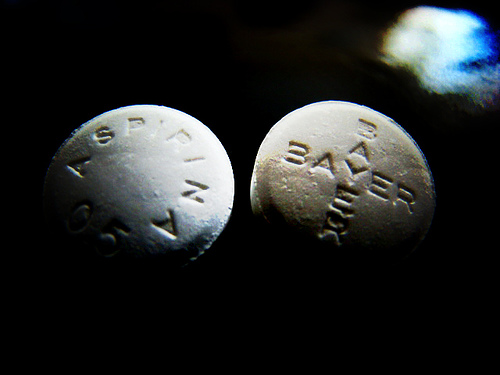
Should women take daily aspirin to prevent heart attack?

by Carolyn Thomas

Women of all ages often ask if they should be taking a daily low-dose (81 mg) of aspirin to improve their heart health.  Well, yes and no, depending on your age. Mayo Clinic cardiologist Dr. Sharonne Hayes, founder and director of the Mayo Women’s Heart Clinic, explains:

“Guidelines urge women to be more aggressive about cutting their heart disease and stroke risks. One of the common recommendations is for women over 65 years of age to consider daily aspirin therapy.

“The aspirin recommendation comes out of the ongoing Women’s Health Initiative study, the largest study of heart disease risk factors in women.  In 2005, the WHI group released a study showing that the most consistent benefit of aspirin for heart attack prevention was observed among women 65 years of age or older.  Women in this age group who took aspirin had nearly one-third fewer cardiovascular events (heart attack and stroke) than did women who took a placebo. However, the women taking aspirin had more gastrointestinal bleeding as well.  Continue reading “Should women take daily aspirin to prevent heart attack?”