When routine tasks trigger heart symptoms

by Carolyn Thomas  @HeartSisters

household-choresHeart disease is a strange animal indeed. Our very first symptoms can range from mild shortness of breath on exertion to sudden death – and almost every possible symptom in between.  My own were those of the textbook Hollywood Heart Attack (crushing central chest pain, nausea, sweating, and pain down my left arm) – yet I was sent home by Emergency Department staff with a misdiagnosis of indigestion – feeling very, very embarrassed for having made such a fuss over nothing.  It took two weeks to be finally correctly diagnosed with myocardial infarction (heart attack) caused by a 95% blockage of my Left Anterior Descending Coronary artery. And it took several more months – and another trip back to hospital – to figure out what was causing ongoing distressing symptoms that were ultimately diagnosed as Inoperable Coronary Microvascular Disease (MVD) or dysfunction of the smaller coronary arteries.

But MVD is very tricky to diagnose because most standard coronary artery disease diagnostic tests – the kind that work so well at  identifying big fat blockages in our larger arteries – may not be capable of catching it.  Continue reading “When routine tasks trigger heart symptoms”

Misdiagnosed: women’s coronary microvascular and spasm pain

by Carolyn Thomas  ♥  @HeartSisters

Findings from the federally funded Women’s Ischemia Syndrome Evaluation (WISE) study — a landmark investigation into ischemic heart disease (meaning reduced blood supply to the heart muscle) – are helping us to understand that, as the Harvard Women’s Health Watch puts it: heart disease – like cancer – is not one, but several disorders.

While I was at Mayo Clinic shortly after my heart attack, I also learned that at least two of these disorders are far more commonly seen in women than in men’s “Hollywood heart attacks”. These two heart conditions are coronary microvascular disease (MVD) and coronary artery spasm (CAS). Continue reading “Misdiagnosed: women’s coronary microvascular and spasm pain”

My love-hate relationship with my little black box

by Carolyn Thomas    @HeartSisters

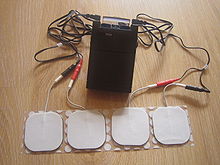
Every morning, I clip it onto my belt, or tuck it into a hip pocket.  I very carefully attach its sticky little electrode pads onto the skin just over my heart, tucking their long black wires under my clothing. Lately, I also have to hold the electrodes in place on my skin with surgical tape because they’re starting to lose their stickiness after so much daily wear. I turn on the black box at my waist, and adjust its two knobs to the correct power levels. I feel a prickly little buzz pulsating across my chest.

It’s called Transcutaneous Electrical Nerve Stimulation (TENS), and it involves electrical impulses called neuromodulation to treat the chest pain (angina) of Inoperable Coronary Microvascular Disease (MVD) – a disorder of the smallest of the coronary arteries (too small to stent, too small to bypass).

My portable TENS unit is about the size of an average cell phone. You may know the much larger version of this machine if you’ve ever had physiotherapy treatments following a muscle injury.  The only wounded muscle it’s working on for me now, however, are those in my heart. Emerging cardiac research is showing that, just as the TENS machine works on improving blood flow, reducing inflammation and speeding up healing for an injured shoulder or knee, it may bring the same benefits to heart patients with MVD like mine.

But I do have a love-hate relationship with my little black box.  Continue reading “My love-hate relationship with my little black box”

How women can have heart attacks without having any blocked arteries

by Carolyn Thomas  ♥  @HeartSisters

Turns out that the kind of heart attack that I had (caused by a 95% blockage in the big left anterior descending coronary artery) – the so-called widowmaker heart attackmay actually be relatively uncommon  in women. You might guess that fact by its nickname.  It’s not, after all, called the “widower-maker”.

While cardiologists warn that heart disease can’t be divided into male and female forms, there are some surprising differences. Cardiologist Dr. Amir Lerman at the world famous Mayo Clinic in Rochester, Minnesota, told the Los Angeles Times recently:

“When it comes to acute heart attacks and sudden death from cardiac arrest, women have these kinds of events much more often without any obstructions in their coronary arteries.”

Instead, it appears that a significant portion of women suffer from another form of heart disease altogether. It affects not the superhighway coronary arteries but rather the smaller arteries, called microvessels. These tiny arteries deliver blood directly to the heart muscle.

Ironically, I can now boast two diagnoses for the price of one – first, the widowmaker heart attack caused by a fully occluded coronary artery back in 2008, and then, after several months of puzzling, ongoing cardiac symptoms – like chest pain, shortness of breath, and crushing fatigue – a second diagnosis of inoperable coronary microvascular disease. Continue reading “How women can have heart attacks without having any blocked arteries”