Because I didn’t seem to fit the profile of a person who’d just survived a widow maker heart attack, every cardiologist and nurse I met in the CCU (the intensive care unit for heart patients) asked me the same questions:
.
“Do you have a family history of heart disease? Were you a smoker? Have you been diagnosed with diabetes?”
But not one person in the CCU asked me this question:
“Have you ever experienced complications during pregnancy?”
There’s an old saying about public speaking that I like: every planned presentation actually consists of three different talks:
1. the talk we plan to give
2. the one we actually give
3. the perfect one we give in the car on the way home
That’s how I felt as soon as I ended my recent one-hour Zoom session about women and heart disease for New York medical school students. It was only after our recorded session ended that it hit me: “Oh, no! I didn’t mention pregnancy complications!”
Elissa is a busy 32-year old professional violinist, a mother of three, and a violin teacher who also teaches part-time at her local university. Last year, the northern Utah resident began experiencing unusual symptoms that seemed to be heart-related: chest pain, shortness of breath and crushing fatigue.
These symptoms were so alarming that she knew she needed to seek medical help. See if you can spot the red flag as she tells her story . . .
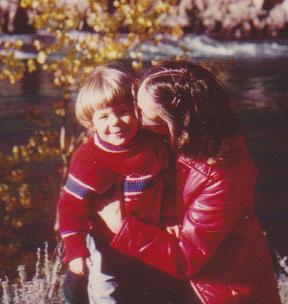
My pre-eclampsia baby Ben, age 2, with his Mum, visiting Yellowknife, NWT, Canada
When I was about eight months pregnant with Ben, my first baby, I was diagnosed with something called preeclampsia. This is a serious condition affecting about 5% of pregnant women, identified by symptoms like sudden spikes in blood pressure, protein in the urine, severe swelling and headaches or vision problems. It’s also women’s third leading pregnancy-related cause of death. Preeclampsia is clinically described as:
“…a disorder of widespread vascular endothelial malfunction and vasospasm that occurs after 20 weeks’ gestation”.
Whenever you see the words “vascular” or “endothelial” or “vasospasm” in the same sentence, you know you’re likely talking about the heart. And although preeclampsia typically goes away after pregnancy, its diagnosis may well be an early indicator of underlying heart conditions that may simmer for decades. In fact, studies now show that pregnant women who develop preeclampsia have more than twice the risk of having a heart attack or stroke later in life.


 Heart Sisters