Implantable cardiac defibrillator shocks vs. “careful and kind” end-of-life care

by Carolyn Thomas    ♥    Heart Sisters (on Blue Sky)

Here’s how I defined implantable cardioverter defibrillators (ICD)  in my patient-friendly, jargon-free glossary:  small battery-operated electronic device that’s surgically inserted into the chest to treat life-threatening heart rhythm problems.  An implanted ICD is almost like having a tiny Emergency Department at the ready, right inside your own chest, capable of delivering a shock strong enough to restore a struggling heart’s normal rhythm, thus helping to prevent sudden cardiac arrest.

But what happens when the ICD patient is not dying from a heart rhythm problem – but from a terminal medical condition?     Continue reading “Implantable cardiac defibrillator shocks vs. “careful and kind” end-of-life care”

Did you learn about CPR from TV shows like Grey’s Anatomy?

by Carolyn Thomas  ♥  @HeartSisters 

Before my heart attack, much of what I knew about CPR (cardiopulmonary resuscitation) was learned by watching TV medical dramas like Grey’s Anatomy.  Researchers who study how television has impacted public opinion suggest that TV actors following their cardiac arrest scripts are heroically brought back to life by another TV actor pretending to perform CPR over 70 per cent of the time. (1)  Pulse restored, smiles of relief all around, and the cheerful patient and family heading for home while waving in gratitude to the brilliant hospital life-savers.

For real-life heart patients, however, we know that most people whose hearts suddenly stop don’t survive. Only about one-quarter make it out of the hospital alive. Of those survivors, the American Heart Association reports that nearly one-third are seriously disabled.(2) Continue reading “Did you learn about CPR from TV shows like Grey’s Anatomy?”

A tale of two studies – 268 years apart

lemonsICEby Carolyn Thomas      @HeartSisters 

I wrote last week about patients who tend to believe medical studies whose findings they like – but not so much if they don’t.  Hardly surprisingly, many physicians may also tend to promote the results of studies when conclusions match their own clinical experience – and not so much if they don’t. That’s exactly what Dr. James Lind worried about, too – way back in the year 1753.  Dr. Lind’s story may have been one of the earliest examples of what’s often called the “bench to bedside” delay between research findings and the time they take to ultimately trickle down to alter actual patient care.   .    .     .  Continue reading “A tale of two studies – 268 years apart”

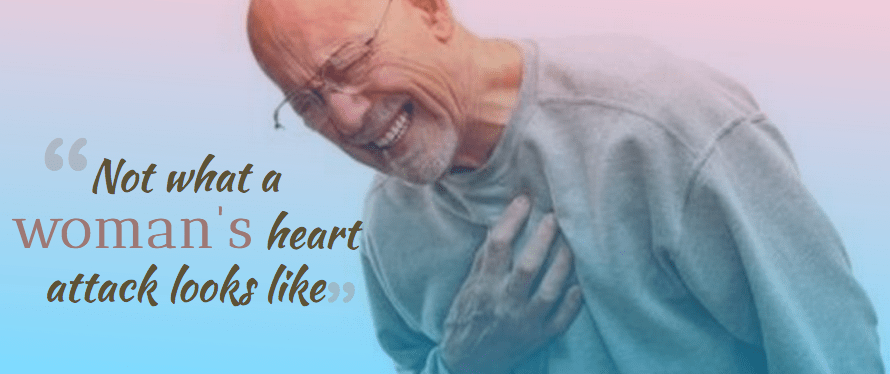
This is NOT what a woman’s heart attack looks like

View Post

thatguy2.png.This is a man told by the photographer to act like he’s having a heart attack.


by Carolyn Thomas    @HeartSisters

One of the reasons that I knew I wasn’t having a heart attack (even while I was actually having one) was my very inaccurate stereotype of what a woman’s heart attack can look like.

I used to think that heart attacks happen only to men. Old men. Mostly out-of-shape chain smokers and heavy drinkers.  Old, out-of-shape, smoking, drinking men, who one day out on the golf course suddenly clutch their chests in agony and keel over, unconscious. CPR. 911. Golf buddies yelling. Ambulance sirens. Paramedics. Defibrillator paddles. That’s a heart attack, right?

Wrong, my dear heart sisters. That’s NOT a heart attack.  Continue reading “This is NOT what a woman’s heart attack looks like”