
 by Carolyn Thomas ♥ @HeartSisters
Her book starts off with a gripping description of the human heart:
“When I look at the human heart beating in the chest during surgery, or lying in a dish when removed for transplant, it just looks like a glistening lump of meat. It’s hard to associate that solid muscle with Valentine’s Day decorations, or the romantic literary description of hearts soaring, bursting, sinking and breaking.
“But once upon a time, I fell in love – with a cell.”
The object of Dr. Sian Harding’s affection was a cardiomyocyte, a single heart muscle cell, just 1/10 of a millimetre long, and about the width of a human hair. .
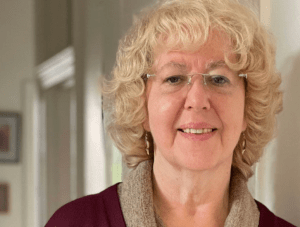
If you’re a person who has been diagnosed with heart disease, you might fall in love with her book, The Exquisite Machine: The New Science of the Heart, published by MIT Press last year. Dr. Harding, a respected cardiac researcher for over 40 years, tells us that most of these tiny cells that control the rhythmic beating of the heart will survive from the moment you’re born until you die. A barely visible cardiomyocyte can survive for 85 years or more. Compare that with your skin, where cells are shed continuously – or your liver, which can regenerate half its cells in just a few weeks, as Dr. Harding explains:
“The adult heart also has the ability to adapt without regeneration. It can change massively in size in a relatively short time – a few days or weeks – when the demands of the body change. The heart can double its volume during the enormous demands of pregnancy, or thicken its walls by 50 per cent if the aorta carrying blood out of the heart is narrowed. The heart wall of an elite athlete can be 20-30 per cent thicker than normal without any sign of heart disease. And after being damaged, the cardiac wall can thin and balloon out by greatly expanding its volume so the heart can magnify the effect of even a feeble beat.
She describes the amazing workload of our hearts like this:
“The heart beats 100,000 times every day. If you were to live to 100, that would be more than 3 billion beats across your lifespan. But if you miss more than four minutes together – or 240 of those beats – you will die.”
After being honoured with a prestigious Lifetime Achievement Award from the European Society of Cardiology, Dr. Harding was asked about her stellar career as a cardiac researcher with the National Heart and Lung Institute at Imperial College London – and what made her first fall in love with those little cardiomyocytes – a name that comes from Latin: cardio (heart), myo (muscle), and cyte (cell):
“I remember at primary school, when one of the dinner ladies asked what I wanted to do for a living, I answered: ‘Cut up dead bodies!’ But now, we can make human cardiac cells in the lab – genetically matched to the donor – by taking a tiny biopsy of skin and converting that to stem cells. They can then actually develop into beating cardiomyocytes – which might one day be transplanted back into a donor. In our lab, we made billions of these cells that would beat away in the petri dish for a year. We even had birthday parties for them!”
Still, all is not perfect in the party-filled world of cardiomyocytes. Dr. Harding explains that there are many ways for a heart muscle cell to die, including what she calls “controlled processes that smoothly absorb cells that are not needed, or catastrophic sudden death where a cell explosively loses its contents through a ruptured outer membrane.”
“In a heart attack, cell death is that catastrophic kind – up to two billion cardiomyocytes in the heart wall burst and shrivel with the sudden lack of oxygen. This is why a heart attack can be so disastrous. After this dramatic and wholesale cell death, the remaining cardiomyocytes may divide and increase in numbers slightly, but nowhere nearly enough to recreate the billion cells needed to repair the damage caused by the train wreck of severe cardiac disease. The body’s defenses can be overwhelmed by the massive destruction of a heart attack.”
But wait – Dr. Harding also has a slightly more positive take on this:
“The heart can adapt almost instantly to the challenges of everyday life. We think this is why it’s very rare to see cancer of the heart, since cancer is a disease where cell growth runs out of control. Instead, there is a takeover from cells like the fibroblasts which make up the connective tissue holding the heart together. Fibroblasts are the weeds of the cell world. They surge in growth to fill the gaps. They create scar tissue that is essential to hold the walls of the heart together as the cardiomyocytes die.”
It turns out that those little cardiomyocytes are protected and reinforced by their incredibly close connections with each other. As Dr. Harding coyly asked: “Why do cardiomyocytes hate to be alone?”
And then her own answer:
“We know they miss the continuous mechanical stimulation of the stretch and relaxation they experience in a living beating heart. And electrical buffering – which is a direct result of all of those connections on each cardiomyocyte – damps down most irregular heart beats. In fact, it’s not until many individual cells are arrhythmic (not beating regularly) that the heart muscle begins to feel the effects.”
In other words, the heart is effectively behaving as a single cell! A cell with one unwavering purpose: “to sustain the output of blood that the heart is pumping throughout the body.” Dr. Harding believes that this single-minded focus might explain the heart muscle cell’s resistance to repair. Cardiomyocytes do not divide and proliferate to mend damaged heart muscle – “because if a significant number of them started to all do this at the same time, then they are not contributing to the team effort!”
Any mention of heart muscle cell damage, of course, reminds me of the cardiac enzyme test that you’ve likely had if your doctors suspected a heart attack. It’s a simple blood test (typically taken twice, a few hours apart) that is considered a reliable indicator that heart muscle damage has occurred. The cardiac enzyme which the blood test looks for is called troponin, a protein that’s normally undetectable because it’s found only inside those tiny cardiomyocytes. So if troponin is released into the bloodstream, it’s likely because the heart muscle has been damaged by a heart attack or unstable angina (or possibly because you’re an elite Iron Man endurance athlete!)
See also: Women’s Heart Disease: Wrong Symptoms, Wrong Words or Wrong Diagnostic Tools? – for more from Vancouver cardiac researcher Dr. Karin Humphries who may have just solved the mystery of why I and so many other female heart patients are misdiagnosed in mid-heart attack – with troponin tests that are mistakenly interpreted as “normal”.
Speaking of troponins, Dr. Harding tells a compelling story about a U.K. study on troponin test results using the newer high-sensitivity troponin tests (Kaun et al. 2019, BMJ). Results showed a strong increase in troponin levels in patients with blocked coronary arteries as you might expect (because those endangered cardiomyocytes are in trouble) but they also showed that a troponin level only slightly raised above normal could predict which low-risk patients would die in the next two years. And most of the deaths in both high- and low-risk groups happened in the first few weeks after the test was done (yet that’s ironically the typical “watch and wait” period doctors often recommend before deciding what to do next). Dr. Harding summed up these alarming findings like this:
“Doctors have had a wake-up call to take ANY change in troponin very seriously!”
Dr. Harding’s book is such a terrific read – especially for heart patients who are curious about what’s going on behind the scenes. Here’s how she described her decision to write this unique heart book: “As a scientist, you must write in a very specific controlled way. You can’t use vivid language, and I wanted to learn how to write differently!” She certainly does write vividly – and differently than most cardiac researchers I’ve met (and you’d need to consult a patient-friendly glossary to translate the confusing medical jargon that most of them use). She adds that the way cardiac research is done now is also light years ahead of where it was when she was a junior researcher (and keep in mind that back when she married at age 18, the college she’d applied to did not accept married women!)
As she writes: “We have gone from looking out the window to see if it’s raining – to mapping global weather patterns!”
Researchers still have a considerable way to go to address ongoing disparities in women’s cardiac diagnostics, treatments and outcomes compared to our male counterparts, but meanwhile, Dr. Harding’s unique insights in this male-centric specialty would make a great Christmas gift for yourself!
And it all started because she fell in love with one little cell. . .
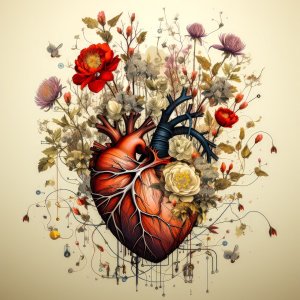
Heart image: JustDIY Team, Pixabay
♥
NOTE FROM CAROLYN: I wrote more about what happens to the heart during a cardiac event (admittedly not nearly as colourfully as Dr. Harding writes!) in my book, A Woman’s Guide to Living With Heart Disease (Johns Hopkins University Press). You can ask for it at your local bookshop (please support your favourite independent bookseller) or order it online (paperback, hardcover or e-book) at Amazon – or order it directly from my publisher, Johns Hopkins University Press (use their code HTWN to save 30% off the list price).
.
Q: Have you ever wondered about what’s happening inside our tiny heart muscle cells?
 Heart Sisters
Excellent post, thanks. Going to get this book!
Lori Turk
LikeLike
I recommend this unique book to everybody I know! ❤️
LikeLike
So glad you shared about this book. When I learned about it a year or so ago, I put in a request to our library and they purchased a copy.
Thinking it’s time to read it again. So valuable!
LikeLike
Hi Sara – I think it’s a great idea to request local libraries to order a book – so that other people can also enjoy it! Thanks for that reminder – I loved this book so much – and Dr. Harding’s “vivid language” – that I’m going to request my neighbourhood library order it too.
Take care – enjoy your second read! ❤️
LikeLike
I have quite an intimate relationship with my cardiomyocytes.
They are the center of attention and disturbance in HCM (Hypertrophic Cardiomyopathy). My understanding is that these cardiomyocytes exist in specific patterns within cardiac muscle fibers to allow the fibers to contract efficiently.
In HCM there is what they call “cardiomyocyte disarray”. The patterns of efficient contraction are disrupted and the heart tries to compensate by thickening its walls. Also some of the disrupted muscle cells can be replaced by fibroblasts causing scarring and stiffness in the heart and increased arrhythmias.
When I had open heart surgery to remove some of the thickened muscle that was obstructing blood flow out of my heart, I asked my surgeon, Dr Dearani, to take a picture of my heart.
It does look rather “meat-like”. But what was amazing to me was the picture of the pile of muscle and fibrotic tissue he removed from my heart. I keep that picture in my iPhone LOL
Also amazing is that the heart muscle that was cut did not scar and the obstructing cardiac muscle removed did not grow back. Very intelligent fellows those cardiomyocytes!
LikeLike
Hello Jill – you DO have quite an intimate relationship with those darling little cardiomyocytes of yours! I’m trying to imagine that pile of muscle and fibrotic tissue. It’s amazing how much cardiac surgeons can remove from the human heart – and yet the patient lives to tell about it!
In Dr. Harding’s book,she writes at length about fibroblasts which can cause that scarring. (I love her description of them as the “weeds of the cell world.” It’s a kind of good news/bad news feature though: the scar tissue is created by the fibroblasts specifically to help hold the damaged walls of the heart together, BUT you’re so right – that scarring can often cause a new whack of heart problems!
Those intelligent cardiomyocytes are “resistant to repair” – hence no surgical scars. Weird but wonderful. . .
Take care. . . Keep that post-op pic of your pile of scar tissue on your iPhone – a great conversation-starter at parties! 🙂
❤️
LikeLike
I emailed you a copy
LikeLike
Yoiks! Thanks for that, Jill! 🙂
LikeLike