
 by Carolyn Thomas ❤️ Heart Sisters (on Blue Sky)
When people like me (i.e. living with heart disease) catch a cold or flu bug, do we feel sicker longer, compared to people who don’t have heart disease – or does it just feel that way? Asking for a friend. . .
It turns out that the common cold, the flu (influenza), nasal allergies, sinus infections, RSV, and COVID can all share some similarly yucky symptoms. But whatever it’s called, we just want those symptoms to stop.
Back when I was a young Mum, I seemed to spend a remarkable amount of my life endlessly wiping snotty toddler noses while being mercilessly sneezed and coughed upon by my little darlings. But when I did catch their bugs back then, it would have typically been a simple 3-Day Cold, something like this:
- Day One: it’s coming on!
- Day Two: it’s peaking!
- Day Three: it’s going away!
Those carefree days of 3-Day Colds, sadly, seem gone forever. Just in the past decade, I not only feel sick whenever I catch a bug of any type, but I feel REALLY REALLY sick! Sick-in-bed-kind of sick. Right now, in fact, it feels like I’m approaching Day 42 of a truly horrid cold (I think it’s a cold – but it might be Ebola. . .)
I started wondering if what I was suffering might not be a garden-variety common cold after all. COVID tests were negative – but what kind of freakish monster sickness was this anyway? The confusing part was that I’d frequently start to feel much better, but would quickly relapse after a few hours when I’d feel even worse than before.
The mystery condition included coughing at first, and then a lot of sneezing. But not those delicate wet baby kitten “ah-choo” sneezes of pollen season. No, these were VERY LOUD world-class body-slamming sneezes, one after another after another. And by then, my poor nose was not just dripping, but running like a firehose.
According to the Cleveland Clinic, the consistency and colour of that “nasal discharge” running out of your nose can vary. For example:
“Allergies, eating spicy food or being in cold temperatures typically cause a more watery nasal discharge. But when you have a cold or other infection, your body usually makes thicker mucus.”
Good to know! Mine was definitely “watery nasal discharge” – every time I lowered my head even slightly, my nose would start dripping right onto the floor. I finally resorted to two big plugs of kleenex, one stuffed into each nostril to soak up the flood. Very attractive. . .
I knew that seasonal allergies cause sneezing, congestion, runny nose and postnasal drip (that’s the disgusting feeling of mucus trickling down your throat). *Gag*
I had a history of miserable early summer allergies as a teenager on our family farm near Niagara Falls. The allergist told my parents that I’d tested positive for allergies to a number of common farm grasses (June grass, crab grass, couch grass, orchard grass – all of which apparently thrived happily all over our 42 acres).
Then I grew up, got married, and we moved from Ontario to the beautiful west coast of Canada – where my allergies miraculously dwindled to almost nothing. It was heavenly!
Speaking of sneezing, this was another recent mega-symptom that seemed unlike any common cold symptom I’d experienced before. The definition of a cold-related sneeze, again according to Cleveland Clinic doctors, is this:
“An involuntary burst of air forced from your lungs through your nose and mouth when a virus irritates the mucous membranes lining your nose and throat. Sneezing can be alarming, but it usually doesn’t indicate a serious health condition.”
“Not a serious health condition?” Really, Cleveland Clinic doctors? I think one of my most “alarming” sneezes this past week may have cracked a rib on its way out of my body. . .
Worse, as San Diego allergist Dr. Eli Meltzer told an NPR interviewer:
“We actually blow out the sneeze at 40 miles per hour. The discharge can go 20 feet.”
“TWENTY FEET?!” That is absolutely revolting.
And even my Honeywell Air Purifier instruction booklet tells a scary story:
“A sneeze can send up to 40,000 tiny droplets from your mouth and nose into the air or onto nearby surfaces. Viruses and bacteria can live in these droplets. If someone else breathes in the droplets, they can get infected, too.”
Those living with a chronic medical condition like heart disease (or as in my case – chronic pain) may find that even a mild cold/allergy/sinusitis/whatever you call it can morph into a far more serious condition.
After my heart attack, I was diagnosed with a subsequent cardiac condition called coronary microvasculer disease, causing what doctors call refractory angina (chronic chest pain that generally does nor respond to usual treatments).
The University of Arizona physician Dr. Ann Marie Chiasson explains how chronic pain can affect the severity of our symptoms:
“When a virus like cold or flu shows up in a person living with chronic pain, they feel worse than someone else with the same infection because bodies suffering chronic pain tend to respond to the illness in a different way compared to someone who does not have chronic pain. Essentially, when you’re experiencing chronic pain, your system is already in overdrive.”
I didn’t want to expose my two darling grandkids to this virus, of course. So no visits, no walking home from school together, no Tuesday family dinners, no music class on Saturdays (plus daily cancellations of all plans with my walking/coffee buddies, appointments, anything that would require talking or being around other people). My grown kids did no-contact drop-offs of soup and groceries for me. Basically, my life has been reduced to mostly nose-blowing and fitful mouth-breathing naps on my red LaZBoy recliner.
There’s yet another independent demographic at risk for worsening cold symptoms: being older than 65.
The National Council on Aging tells us that as we get older, our immune system may no longer be able to fend off infections as robustly as in years gone by. That’s why the fall and winter cold/flu season can be a particularly dangerous time of year for older people – and even more serious if you’re over 65 AND also living with a chronic condition like heart disease. This is also why it’s important for over 65s to be up-to-date on their annual flu shots.
Even a seemingly mild cold can pose a surprising health threat to older people compared to people under age 65. And mild cold symptoms can also lead to pneumonia – a serious complication for heart patients. A mild cold can also intensify your ‘usual’ symptoms from other non-viral chronic issues like asthma, COPD or emphysema – even worsening for weeks after the viral symptoms have gone away.
Meanwhile, the basics of keeping yourself and others a bit safer when you’re suffering from cold/flu symptoms are steps you probably know already:
- avoid being around other people indoors
- wear a mask if you must be around other people
- keep hydrated
- cough into your sleeve, not your bare hands
- wash your hands with warm water and soap frequently (especially after using the toilet, blowing your nose, or coughing into your hands)
- try not to touch your eyes, nose or mouth with your bare fingers
- eat healthy!
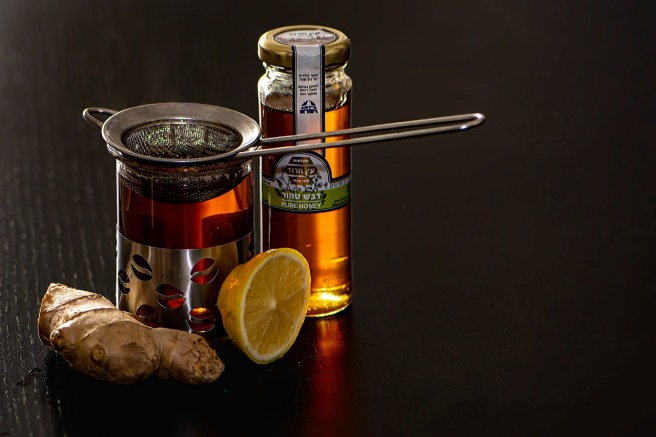
- drink lemon-ginger tea (with a big dollop of honey)
- wipe down surfaces frequently (door knobs, toys, countertops, elevator buttons) with disinfectant wipes
- get LOTS of rest
- try a steam humidifier to help ease congestion; if you don’t have one, leaning over a sink full of very hot water with a towel draped over your head can bring temporary relief
- seek medical help if your symptoms worsen over time
UPDATE: The good news (although I’m still red-nosed and congested) is that this week, I’m in that wonderfully optimistic phase where I’ve suddenly turned the corner and am no longer at death’s door. The sun is shining, the birds are singing, the crocuses are blooming – and I feel confident that I just might survive this.
P.S. to my dear heart sisters, before you decide to mention your own miserable cold symptoms to your family, watch and share this classic little video to learn the difference between your cold – and the dreaded MAN COLD.
♥
Lemon/ginger/honey tea image: Ri_Ya, Pixabay
.
Q: Have you felt much worse than usual during your last cold?
♥
NOTE FROM CAROLYN: I wrote about what other issues to watch out for when you’ve been diagnosed with heart disease in my book, “A Woman’s Guide to Living with Heart Disease” (Johns Hopkins University Press). You can ask for it at your local library or bookshop (please support your favourite independent neighbourhood booksellers, or order it online (paperback, hardcover or e-book) at Amazon – or order it directly from my publisher, Johns Hopkins University Press (use their code HTWN to save 30% off the list price).
 Heart Sisters
Very informative. . .
LikeLike
So sorry you’ve been down with this. I have learned that what I did as my younger self (tough it out, load up with decongestants, tylenol, cough syrup) is NOT a good strategy for my “mature” self.
Now, I tell myself that I’ve been thru some major stuff and need to take better care of myself. So, when I feel a cold coming on, I make myself stop – rest, read, drink hot beverages, etc. When I had pneumonia a few years ago I found warm showers – just a few minutes- helped very much. Then standing in the humid bathroom, and blowing my nose plus coughing out the crud helped immensely. Hot lemon and honey tea- add ginger if you like is great.
But those warm showers helped loosen the crud and helped me to relax and get better sleep.
LikeLike
Hi Helen – I wish I’d thought of those warm showers a couple weeks ago when I was really suffering. Loosening the crud is the goal!
I did find that even leaning over the bathroom sink, hot water running, big towel draped over my head like a steam tent provided some relief – very temporary, but at least something!
Thanks for that important advice, by the way, to make yourself just STOP and rest! That’s a luxury that retirement offers us – compared to, for example, being a young Mum with babies and toddlers when it doesn’t matter how sick we feel, we just keep on going!
Now, I started cancelling everything on my calendar in advance, just imagining how awful I’d feel if I compelled myself out the door to attend every outing on my calendar (not to mention exposing other people to my cold bugs) – my own younger self certainly would have doped myself up with OTC cold remedies and dragged myself into work every day!
Take care. . .❤️
LikeLike
Carolyn, thanks – and, just FYI – there are some updated pneumonia vaccines out there – we just this month updated ours along with a Covid booster. I was up on all my shots when I had pneumonia, but was underage for the vax – according to U.S. policy then.
LikeLike
YES! Good point, Helen! I’ve kept up with all available vax schedules (shingles, pneumonia, etc) because the vax is far preferable than enduring those serious diagnoses!
❤️
LikeLike
Hi carolyn I think you and I must have caught the same bug. I used to pride myself on dragging my sick self to work (didn’t want to let the rest of my team down knowing how crazy it can be when hospital nurses work short-staffed) but COVID cured us of that, we finally learned to stay away from sick people if we were sick ourselves. Big Change for the better. I now plan to recuperate fully before I head back. Thank you for these reminders. 🙂
LikeLike
Hello RN in NYC – I know what you mean! Your comment reminded me of my years working in a hospital (in Communications/Public Relations, not clinical). One day, I overheard our ward clerk on the phone trying desperately to fill in vacant shifts with every nurse on her on-call list. When she hung up, she sighed and said to me: “The nurse who is puking the least is the one who will say YES to working a double shift…”
That’s both crazy and dangerous – yet ironically not uncommon among such important staff who are counted on so much as caregivers and healers.
Take care and feel better…❤️
LikeLike
Oh dear, I’m so sorry you’ve been poorly.
What you’ve described is a vicious cold that is going around our fair city and has entered my charming abode inside my spousal unit (a nod to very early Saturday Night Live).
My husband started out with that sneezing too and included the lovely nose drippage. After the first symptoms it was, officially, a man cold. It’s also lasting longer in him than I’ve ever witnessed.
Today is Day 5 for him and he says he’s finally feeling better. You suggested lemon ginger tea with honey. We’ve gone one step further and had the lemon ginger tea with LEMON GINGER HONEY! Yes, it exists! We got it at that honey place on W Saanich Road.
Highly recommend. Hope you’re back to enjoying all those regular activities. They sound fun.
LikeLike
Thank you Deborah for your kind words. I think you’re right – every day I hear of yet another friend or neighbour who is at death’s door with a brutal bug (or that’s what it feels like!) So far, fingers crossed, I’ve been feeling a bit better every day. I’ve stopped smearing Vicks VapoRub on my nose. . . Hallelujah!
Thanks for that tip about the lemon ginger honey (which I’ve never heard of but is now on my shopping list). I’m guessing it’s at that wonderful little Country Bee Honey Farm on West Saanich Road? My ‘city kids’ love that place – especially in the summer when they have farm animals to feed and pet.
I hope you are feeling well and will successfully avoid catching your spousal unit’s cold bugs!
Take care. . . ❤️
LikeLike
Yes, Country Bee – a favourite of our family too.
LikeLike