
by Carolyn Thomas ♥ Heart Sisters (on Blue Sky)
I recently quoted an editorial in The Lancet (a medical journal that’s been publishing for over 200 years). The editors were revisiting a subject that’s been niggling at me – and apparently many other patients – namely words matter in health care – especially blame-ridden language, whichThe Lancet describes as “pervasive throughout medicine.”(1) And just this week, coincidentally, I experienced a bizarre phone conversation with a breast cancer nurse (who reminded me firsthand just how pervasive blame-the-patient attitudes can be).
Before sharing that story, I’ll offer this familiar question asked by The Lancet editors: why do doctors and nurses include chart notes like: “Patient claims her pain is 10/10”? Choosing the dismissive word “claims” implies that the patient is lying, or at the very least, the person writing the chart notes is not taking this patient seriously. In the real world, regular people would say: “This person is experiencing pain”. Not “claiming”. Not “lying”. Not “exaggerating”.
And when I worked in palliative care, I learned from our wonderful physicians and nurses almost every day that “pain is what the patient says it is.”
So why do so many healthcare professionals out there still view the worst experiences their patients are describing as if they don’t quite believe what those patients are telling them?
The breast cancer nurse had originally called me with instructions about my upcoming scheduled mastectomy on November 25th. But we never actually got into those instructions during her call. Instead, here’s how our chat unfolded:
It started out as a typical phonecall from one of the many doctors, nurses and hospital techs so familiar to cancer patients who are booking diagnostic scans, lab tests, oncology appointments, surgery, chemotherapy, radiation or other treatments that will dictate every waking moment of our cancer calendar.
The nurse began by reviewing some of the most distressing chemotherapy side effects listed in my medical chart so far – many of which I’d been suffering for months (you can scroll down for that list↓). One of the most toxic of my powerful chemo drugs is called docetaxel – widely listed as the culprit behind many of my worst symptoms.
Docetaxel and other chemotherapy drugs represent a two-edged sword: they are very good at killing off evil fast-growing cancer cells, but they’re also very good at killing off our fast-growing healthy cells – like hair follicles or skin cells or the cells lining our digestive tracts.
When I was first diagnosed with breast cancer, my only worry about chemotherapy side effects was nausea and vomiting. But because I was taking a daily fistful of anti-nausea prescription meds during chemotherapy cycles, I needn’t have worried at all about nausea or vomiting.
What I could have worried about instead included these brutal chemo-induced symptoms that had increasingly become quality-of-life issues, listed here in the approximate order these symptoms started to appear:
- painful mouth sores
- inflamed skin rashes (e.g. rosacea)
- constipation followed randomly by severe diarrhea
- constant crushing fatigue
- Hand-Foot Syndrome (painful peeling blisters on the soles of both feet – resulting in the need to use a walker on loan from the Red Cross)
- Metal Mouth (everything I ate or drank – including water – tasted disgustingly metallic – this dreadful side effect is commonly linked to both chemotherapy and radiation treatments, more often suffered by female cancer patients compared to males(2)
- bone and joint pain (caused by frequent injections of filgrastim/Nypozi® – a drug meant to promote production of white blood cells in my bone marrow to replace the white blood cells damaged by chemotherapy. White blood cells are what fight off deadly infections – so they’re pretty important.
- peripheral neuropathy (swollen, numb, or painful feet). Unlike some chemo-induced side effects that ease up after the final dose of chemotherapy, neuropathy symptoms due to nerve damage apparently worsen 3-5 months after that last chemo treatment in what’s known as the “coasting effect” – meaning I could realistically anticipate painful walking all winter, long after my last Chemo Day. So far, I have no feeling in all 10 toes and I’ve had to purchase men’s extra-wide slippers to fit my alarmingly swollen feet. How much worse can I feel?
- fingernail damage (although this sounds like a pretty minor side effect, for me it has brought the most misery. My oncologist had already warned me during a few of our visits: “Your nails will turn black, fall off – and it will be painful.”
In my case, my nails did not “fall off”. Instead, they basically rotted off.
My blackened fingernails began to “lift”, allowing pseudomonas bacteria to infect the nail beds. I could watch pus seeping out from under each nail when touched. The smell of the rotting nails was appalling – like a dead animal. I’m not a doctor – but even I could identify a severe infection when I see (or smell) it.
We went immediately to a local Urgent Care Clinic where I was prescribed a month-long cycle of antibiotics. On that visit, I also had the first of the worst affected fingernails surgically removed under local anaesthetic, with scheduled follow-up appointments booked every two weeks since then. Meanwhile, the pain in my fingers makes it a daunting challenge to button up sweaters, open jars, pick up small items, make the bed, crack an egg, turn lamps on or off, turn pages in my grandson’s story books, or handle countless routine tasks – like using this keyboard.
Now, back to my conversation with the breast cancer nurse: while reviewing her list of my chemo-induced side effects, she casually mentioned that, while some of her patients do suffer severe side effects like mine, other patients can “manage” their symptoms.
Manage?!
MANAGE?!
The dictionary definition of “manage” is to skillfully handle, direct, or control one’s actions. The trouble with choosing words like “manage” if you’re a nurse listening to a breast cancer patient describing cancer treatment side effects is that few if any breast cancer patients boast a skill in deciding whether or not to suffer. We don’t “direct” our own treatment. We have no “control”. Throw in what’s known as Chemo Brain Fog (yes, it’s real, and it is awful!) and a cancer patient becomes the most vulnerable person in any room.
That word “manage” is also yet another example of what The Lancet editorial meant by blame-ridden language throughout medicine. Why on earth am I, a dull-witted patient – expected to be able to MANAGE worsening and cumulative toxic effects of systemic chemotherapy treatments on each Chemo Day – and every day following that day?
Before I hung up the phone (and also because that Lancet editorial was still relatively fresh in my chemo-addled brain) I politely suggested to the breast cancer nurse that, whenever she is speaking to breast cancer patients in the future, she might want to reconsider using words like “manage” when talking about our debilitating side effects – as if breast cancer patients who try hard enough can magically choose whether or not to suffer.
The nurse’s initial response to my word choice suggestion was a dismissive: “Oh, I didn’t mean that!”
But then she continued to repeat, word for word, three separate times during our brief phone conversation, the same messaging, implying that good patients can “manage” their severe side effects well. Each time she repeated that word “manage”, I asked her again to reconsider using unhelpful words when speaking to patients (or at least, to stop using that word when speaking to ME!
There’s a big difference between speaking to a patient and speaking to anybody else, and it starts with identifying which person has “skin in the game”. One of those two people in our phone conversation, for example, has not been diagnosed with breast cancer, is not overwhelmed by debilitating symptoms, and is not facing plans to have her right breast cut off.
That person by default is the one who gets to do the most listening – and the least interrupting. That person doesn’t get to offer up a non-apology (as our breast cancer nurse did when she concluded: “I’m sorry you took what I said the wrong way.” )
Because I’ve learned how utterly exhausting it is to waste my very limited energy on strangers who are not listening, I knew I needed to hang up on this call – but I also needed to know important details of my upcoming surgery that had necessitated the breast cancer nurse’s call in the first place. So I made this final request to that nurse:
“The next time you need to call me about any surgery details, could you please approach one of your nurse colleagues and ask that person to call me instead?”
I’m relieved to report that she must have approached a colleague, because two days ago, I had a call from a different breast cancer nurse who did not interrupt, who not even once used the word “manage”, and who used clear and thoughtful language while updating me on what I needed to know before my surgery.
As I keep insisting, and as The Lancet editorial authors confirm, words do matter in health care.
When can we stop pretending they don’t?
And for more examples of why words matter so much in health care, read my British Medical Journal editorial called “Heart Failure: It’s Time to Finally Change the F-word“
.
Q: Have you experienced blame-ridden language in health care?
1. Editorial, “Patient First, Person First”. The Lancet. Volume 24, Issue 10, P1053, October 2023.
2. Jpma, I. et al. “Metallic Taste in Cancer Patients Treated with Systemic Therapy”. Nutrition and Cancer, 69(1), 140–145.(2016)
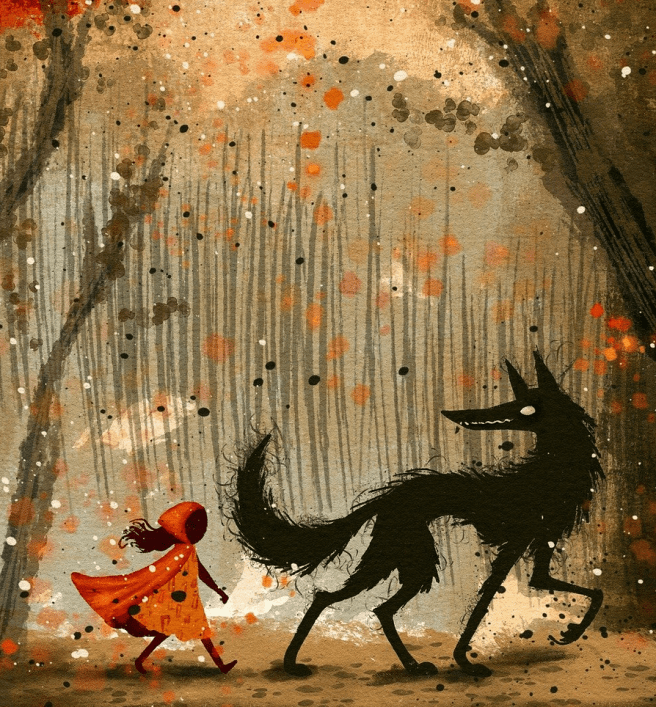
Little Red Riding Hood image: bettidraws, Pixabay
NOTE FROM CAROLYN: In my book, “A Woman’s Guide to Living with Heart Disease“ (Johns Hopkins University Press), I wrote much more about the importance of communication – especially when communicating with patients, no matter the diagnosis. You can ask for this book at your local library or bookshop (please support your favourite independent booksellers!) or order it online (paperback, hardcover or e-book) at Amazon, or order it directly from Johns Hopkins University Press. Use their code HTWN to save 30% off the list price when you order.


I am putting myself at risk writing this to you because you suffer both heart disease and cancer, but I have always felt as a heart patient, survivor of three heart attacks by age 61, that the medical community and society blame heart patients for their disease and treat them like garbage – whereas cancer patients get treated like gold even if they did all kinds of things in life like heavy smoking to actually cause their cancer.
Now I, a vegetarian, healthy lifestyle, yoga/Tai chi/ water drinker, trying to do everything right person, gets heart disease and shockingly diabetes and there is nothing for me.
My husband, a smoker, a pound of candy a day, only drinks soda, fried greasy fast food lover, gets cancer and he is fawned over, free massages, free Tai chi classes he won’t go to, free meditation and classes of all sorts and he still goes and sneaks cigarettes while I go to physical therapy I pay for, and beg him to take walks with me on my severely arthritic hip and one replaced – while his bones are perfect.
What’s wrong with this picture? I don’t want cancer and I’m glad people get all that great stuff. But heart disease is no joke. It’s painful, the meds are horrible, you’re always dealing with tests, hospitals and and medication changes and your heart keeps getting worse, going into various tachycardia, getting invasive treatments, other meds, nearly dying and it takes a big toll on you every time, including on your mind alertness, depression, working through it. I hate that word “Manage” too, as if I have any say in it. But the parts I do have a say in I do try to help myself, but the medical community blames me for heart disease and that makes managing nearly impossible.
I just had to say this. Heart disease is the Number One killer but we sure don’t get treated like that.
LikeLike
Hello singhawk – you may be surprised to know that about six years ago, I wrote an article here on HEART SISTERS expressing similar opinions about the considerable differences between two groups of female patients – heart patients and breast cancer patients (minus of course your unfortunate personal experiences comparing your husband’s unappreciated perks with your cardiac care). For example, I wrote:
“I worked in the field of public relations for well over three decades, and I can tell you that my colleagues working in breast cancer fundraising have done a remarkable job of raising both awareness and money for their cause. So remarkable, in fact, that women have been mistakenly convinced that breast cancer is our biggest health threat – which, of course, is not true. It was only after surviving my own misdiagnosed ‘widow-maker” heart attack that I learned heart disease kills six times more women than breast cancer each year. Yet heart disease is still perceived by many to be self-inflicted.”
Basically, cancer fundraising organizations that raise money to increase awareness, buy expensive hospital equipment, and pay for cancer patient care have more money to spend because their donors give more money. Here’s just one example: because I’m a breast cancer patient now, I have access to free 90-minute Patient & Family counselling appointments (normally around $200/hour)! As a heart patient, I’ve never had anything like that free luxury benefit in over 17 years – but I’m sure appreciating every minute of those appointments as a breast cancer patient now!
That free program probably drives you crazy, but that is the reality – and boy, am I thrilled about that option! This should not ever be viewed as a spitting contest between who suffers more from which disease. Before surviving my own heart attack, I’d been a fit, healthy non-smoker with perfect cholesterol numbers, no family history, a lovely life with family and friends close by – plus I’d been a distance runner for 19 years – none of which, by the way, saved me from heart disease.
The harsh truth seems to be that there is “no fair fairy in life”. . .
Take care. . . ❤️
LikeLike
I am sorry you mistook my comment. I never meant it to be a “spitting contest” or a comparison of who has it worse, just saying I agree that “Managing” our care is a ridiculous phrase. AND that it is a lot harder when we heart patients are given no tools to help us do so while we are also being blamed unfairly for our own illness. It would be a lot nicer/kinder/aware if the medical community and society would treat heart patients with the same compassion/seriousness and offer the same services it does cancer patients.
I hope you do well in both cases.
LikeLike
Well done my friend, it sounds as if by the end of the call she’d “started listening”. You may have done her a big favour by opening her mind to how she chooses her words.
LikeLike
Hello Gail! I hope you’re right – or else she may have gone straight home for a glass of wine while she complains about the pain-in-the-neck patient she had to endure! I’m hopeful (because although I responded every time she kept repeating the word “manage”, I tried to be polite while doing so (as polite as you can be with a person who is not listening to you!)
Take care. . . ❤️
LikeLike
I’m with you all the way, Carolyn. Words matter. Professionals need to use them with care and sensitivity. People do not take aboard your message if the messenger does not present it in a way that the receiver hears and understands it. The first duty of the messenger is not only to give information but to ensure that it is understood.
Using accurate and clear language to deliver a message is critical but awareness of how the information is being understood, the need for clarification and the listener’s response to it—emotional reactions included—is part of the duty too.
Thanks for your Sunday column, Carolyn – I’m sorry that you had this experience but I’m glad that you have taught someone out there a lesson in sensitivity and that you have reminded the rest of us of the importance of our words in giving messages to others.
LikeLike
Hello Maxine – thank you for your kind words (and understanding!)
I suspect that deciding on which words will work best depends mostly on being a good listener first – and we could even go beyond that moment to what you call “the listener’s response to a message” – we have to consider both: pay attention to how the listener is responding to the words – sometimes listeners can shut right down because they’re tired or distracted or sick while we’re still starting off our message! Feeling seen and heard are two big gifts from any conversation, aren’t they?
Take care. . . ❤️
LikeLike