
by Carolyn Thomas ♥ @HeartSisters
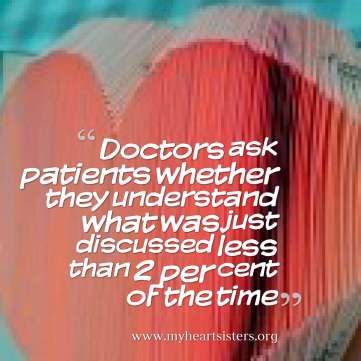 The cardiologist was called to the ER, and told me that he could tell by my T-waves and other diagnostic test results that I had “significant heart disease.” From that moment on, I could see his lips moving. I could hear sounds coming out of his mouth. I think I also may have signed something before I was urgently moved upstairs to have what turned out to be a blocked left anterior descending coronary artery unblocked. I was so stunned and overwhelmed, however, that I simply could not comprehend anything that was happening around me once I realized I was in fact having a heart attack. He may have been speaking Swahili. . .
Yet I’m now pretty sure that the fact I signed a piece of paper somehow meant that I had participated in the informed consent process required of hospital patients who are about to receive treatment.
Does informed consent actually mean that it’s informed at all? Continue reading “Informed consent: more than just a patient’s signature”
 When
When  Having a heart attack felt nothing like how I thought it would feel. For one thing, unlike
 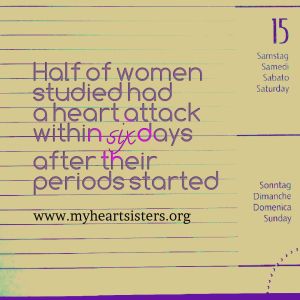 Most of you throughout your adolescent and adult lives have no doubt observed that hormone fluctuations during a menstrual cycle can affect certain body parts on certain days of that cycle. These fluctuations cause symptoms ranging from bloating to cramps, vivid dreams, fatigue, acne breakouts, food cravings, or irritability. (That word ‘irritability’ is doctor-speak to describe the act of threatening spouses with strangulation if they leave that freakin’ toilet seat up one more time…)
 Heart Sisters