
The day I made peace with an errant organ

by Carolyn Thomas    ♥  @HeartSisters

Here’s my theory: few health crises in life are as traumatic as surviving a cardiac event. I developed this theory while I was busy having my own heart attack in the spring of 2008.

For starters, cardiac symptoms often come out of the blue (in fact, almost two-thirds of women who die of coronary heart disease have no previous symptoms.(1)  Having a heart attack can feel so unimaginably terrifying that almost all of us try desperately to dismiss or deny cardiac symptoms. And according to a report published in Global Heart, the journal of the World Heart Federation, women are twice as likely to die within one year even if they do survive a heart attack compared to our male counterparts.(2)

So if – and each of these is still, sadly, a great big fat IF for too many women – we survive the actual cardiac event, and if we are near a hospital that’s able to provide an experienced team of cardiologists/cardiovascular surgeons/cardiac nurses, and if we are correctly diagnosed, and if we receive timely and appropriate treatment, and if the resulting damage to our oxygen-deprived heart muscle is not too severe, we get to finally go home, safe and sound.

And that’s where the real trauma starts.   Continue reading “The day I made peace with an errant organ”

What women need to know about pregnancy complications and heart disease

 by Carolyn Thomas     @HeartSisters

“I’d love to speak about the patient’s perspective at your Toronto conference in June,” I said last winter in response to an invitation from Dr. Graeme Smith, a Canadian obstetrician who teaches at Queen’s University in Kingston and specializes in high-risk pregnancies. “But traveling halfway across the country is just too hard on me these days.”

As the unofficial poster child for the well-documented link between pregnancy complications and premature cardiovascular disease, I was already very familiar with Dr. Smith’s work.  See also: Pregnancy complications strongly linked to heart disease

Shortly after I turned down his kind invitation to speak, he invited me again (hey, he’s persistent!) – but this time he offered the irresistible option of speaking to the Toronto audience via teleconference:

“Does this mean I can stay in my jammies, drink coffee at my kitchen table, and just speak to your group over the phone?!”

Continue reading “What women need to know about pregnancy complications and heart disease”

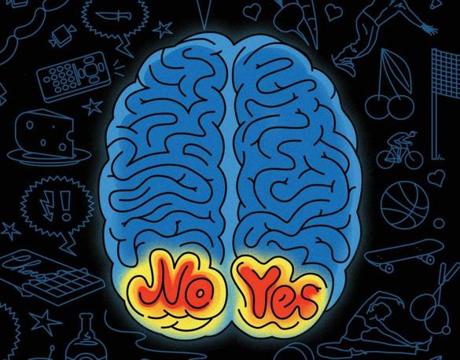
We know we should do ____, but instead we do ____

FinalBrain-1400

by Carolyn Thomas   ♥  Heart Sisters (on Blue Sky)

I read this on the side of a Starbucks coffee cup. Seriously. It was written by Harvard psychologist Dr. Daniel Gilbert, who said:

“The fact that we can make disastrous decisions even as we foresee their consequences is the great unsolved mystery of human behaviour.

“When you hold your fate in your hands, why would you ever make a fist?”

Why, indeed?  Sometimes I think of Daniel Gilbert’s words when I make decisions of varying levels of potential disaster even when I know perfectly well that I will most definitely NOT like the consequences of doing so.  Continue reading “We know we should do ____, but instead we do ____”

Erin Gilmer: “Us” vs “them”: the under-served patient speaks up

by Carolyn Thomas  ♥  @HeartSisters

 I’m very sad to report that Erin Gilmer died on July 8, 2021. Rest in peace, Erin.

.

I asked permission to republish this letter written by patient advocate and health policy attorney Erin Gilmer, who has lived in poverty brought about by debilitating chronic illnesses.

Erin offers a unique patient perspective in this letter to the organizers of the annual Medicine X conference at Stanford University.  After writing her letter, she was subsequently invited to speak at Medicine X 2014.  Although not well enough to travel to California in person after recovering from spinal surgery, she was thrilled when Medicine X organizers offered to put together an edited recording of her presentation to be shown to both live and online audiences on September 5th, 2014.  (Sadly, her video presentation is no longer available on the Stanford site, but this is a copy she sent me of the  letter to Medicine X organizers):

“Dear Medicine X Conference organizers,

“Your upcoming healthcare conference forum on under-served populations brings up a concern for me that I hope you will consider in the next few months.  The best way I can explain my concern is through this example:   Continue reading “Erin Gilmer: “Us” vs “them”: the under-served patient speaks up”