
Why you should hug your cardiologist today

by Carolyn Thomas     @HeartSisters

hugI like to tell my women’s heart health presentation audiences that, if you’re going to have a heart attack, you should really try to have one here in Victoria, British Columbia – or in any other city that boasts a healthy ratio of cardiologists-per-square-city-block.

My theory on this is that cardiologists, just like the rest of us, want to raise their families in a charming historic town with good schools, good restaurants, good shopping, fun night life, live theatre, sports teams, 200 km of cycling trails, a symphony orchestra, picture-postcard ocean/forest/mountain scenery, and a near-perfect coastal climate allowing them to garden or play golf 12 months a year. If this town also has a major university and a good-sized teaching hospital that attracts both students and cardiac researchers, that’s also going to go a long way in appealing to cardiologists.  You’re welcome, Tourism Victoria . . . Continue reading “Why you should hug your cardiologist today”
Convalescence: the forgotten phase of illness recovery

by Carolyn Thomas     @HeartSisters

I love the work of U.K. philosopher Alain de Botton, an explorer of the  ‘philosophy of everyday life.’  He once wrote:

“People can accept you sick or well. What’s lacking is patience for the convalescent.”  

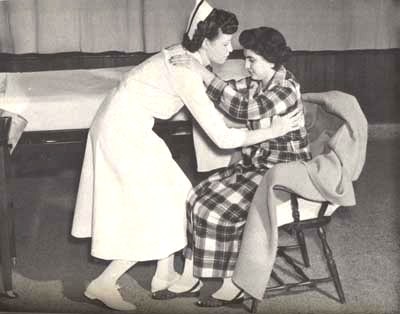
Convalescence. It’s the gradual return to health while you still need time to recover from illness or medical treatment, usually by resting. For patients, it’s that fuzzy grey area in between feeling acutely ill and feeling 100% healthy again. The term comes from the Latin convalescere: to grow fully strong.”

Most garden-variety convalescence is mercifully short. After spending a few days in bed with a flu bug, for example, you might feel a bit weak or shaky for a while. Not exactly sick anymore, but not yet 100%. Other forms of convalescence, however, may take weeks, months or even years of recuperation. And with some chronic and progressive disease diagnoses, everyday life can start feeling like one long endless period of convalescence – with good health merely a dim memory.  The difference: unlike the historical practice of viewing convalescence as a distinctly separate and important stage of illness recovery, today’s convalescents may simply feel like they’re being forced to very quickly adjust to the “new normal” of life. Continue reading “Convalescence: the forgotten phase of illness recovery”

How having a wife shortens time to heart attack care

by Carolyn Thomas     @HeartSisters

Help-by-LiminalMikeHere’s a news flash from the Department of the Bleedin’ Obvious . . .  Medical researchers tell us that married men suffering heart attack chest pain get to the hospital far quicker than single men do.  In my admittedly non-scientific opinion, this reality is entirely due to the fact that these married men have wives.

As Dr. Ralph Brindis, past president of the American College of Cardiology, once told a Wall Street Journal interviewer: 

“Thank God we have spouses. I can’t tell you how often, if it was left up to the patient, they never would have sought care.” 

According to one study, for example, a Canadian research team out of Toronto’s Institute for Clinical Evaluative Sciences found that the odds of men showing up at the hospital more than six hours after the onset of cardiac chest pain were a relative 65% lower in men who had spouses compared to their single male counterparts. (1)

In a spectacularly understated explanation for these findings, researchers reported in the Canadian Medical Association Journal:

“We surmise that, in general, women may be more likely than men to take the role of caregiver and to advise their spouses to seek early medical assessment.”

This early medical assessment during a heart attack is crucially important, because we know that half of the deaths from a heart attack occur in the first 3-4 hours after cardiac symptoms begin. Now here’s the interesting – and utterly maddening – part of this surmising from the Canadian study: a similar association was not seen in married women.  In other words, being married did not mean that women were more likely than their single peers to seek faster help in mid-heart attack. Continue reading “How having a wife shortens time to heart attack care”

Misdiagnosis: is it what doctors think, or HOW they think?

As a heart attack survivor who was sent home from the E.R. with a misdiagnosis of indigestion despite presenting with textbook symptoms (central chest pain, nausea, sweating and pain radiating down my left arm), I’m pretty interested in the subject of why women are far more likely to be misdiagnosed in mid-heart attack compared to our male counterparts.

Dr. Pat Croskerry is pretty interested in the subject of misdiagnosis, too. He’s an Emergency Medicine physician, a patient safety expert and director of the critical thinking program at Dalhousie University Medical School in Halifax. In fact, he implemented at Dal the first undergraduate course in Canada about medical error in clinical decision-making, specifically around why and how physicians make diagnostic errors. Every year, he gives a deceptively simple critical thinking quiz to his incoming first-year med students.*

So here’s your chance to practice thinking like a doctor. Try answering these yourself, but as Dr. Croskerry advises, don’t think too hard. If you were an Emergency Department physician, paramedic or first responder, he warns, you’d have only seconds to size things up and make a decision. Don’t read ahead to peek at the answers! Now, here are your questions:   Continue reading “Misdiagnosis: is it what doctors think, or HOW they think?”