False hope vs. real hope for patients

by Carolyn Thomas      Heart Sisters (on Blue Sky)

My former colleagues in palliative care often spoke about the concept of hope as being a fluid, ever-changing state of being for patients and their families, meaning that hope can change over time. When we’re suddenly face-to-face with a frightening medical crisis,  we hope at first that maybe the diagnostic tests were wrong. When the diagnosis is confirmed, we hope that this treatment/this procedure/ this drug will be the cure. But if we’re not cured, we hope that our symptoms can be managed so we don’t suffer. If we do get worse, we hope that our suffering won’t become a burden to our families. Then we hope that after we’re gone, our loved ones will be taken care of.

There was never talk about “no hope”.  There is always hope.  But our hope changes.  Continue reading “False hope vs. real hope for patients”

Patients, twisted thinking and cognitive distortion

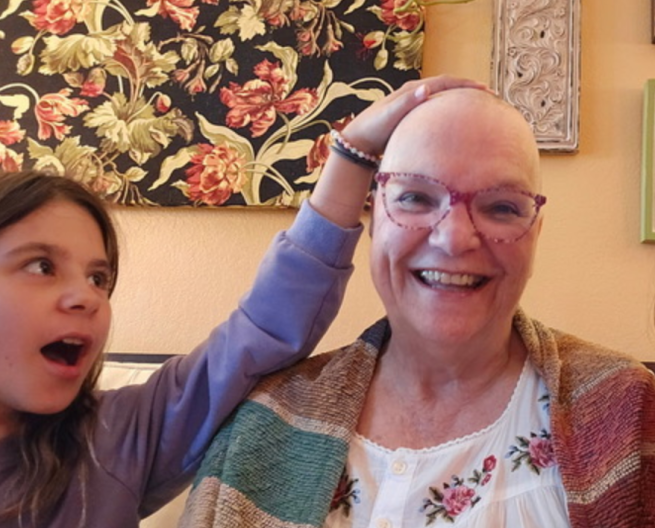
.                         .      My granddaughter Everly Rose – and her Baba’s newly bald head!
.

The freshly-diagnosed patient has plenty of opportunity to start thinking thoughts that are bizarre and often frightening. Any new life-altering medical condition (like the misdiagnosed widow-maker heart attack I survived back in 2008) can throw us off-balance, both physically and emotionally.

And hearing yet another new diagnosis will likely feel worse than any others.  We rarely if ever see it coming. I’ve been learning this first-hand ever since April 1st when I was diagnosed (surprise!) with a malignant tumor in my right breast.

Learning about that new diagnosis (invasive ductal carcinoma) felt utterly surreal at first – mostly because cancer is so different from other diagnoses in two important ways:

Continue reading “Patients, twisted thinking and cognitive distortion”

When the nursing staff forget about you. . .

by Carolyn Thomas   ❤️   Heart Sisters (on Blue Sky)

I was recently introduced to the new-to-me concept called The Window of Tolerance (originally described by Dr. Dan Siegel at UCLA School of Medicine over 25 years ago). This concept basically describes an optimal zone in which we’re best able to function and thrive in everyday life, while dealing pretty effectively with our day-to-day stress.

Most people, Dr. Siegel believes, deal with the demands of everyday life without too much difficulty. But for some of us – especially those facing a serious diagnosis, undue stress, anxiety, pain or trauma, it can often be difficult to stay in the optimal zone of our own Window of Tolerance.
Continue reading “When the nursing staff forget about you. . .”

Is numbness our new normal?

by Carolyn Thomas   ❤️   Heart Sisters (on Blue Sky)

We don’t need bigger lives – we need to feel more present in the ones we already have.”

That’s how Los Angeles physician and author Dr. Alona Pulde opened her column last month in Psychology Today.

I could immediately relate while reading these words:

“We move through our routines. We do what’s expected. We check the boxes. We keep going. But over time, something inside starts to ache. It’s faint at first. Easy to ignore. We call it ‘normal’.
Continue reading “Is numbness our new normal?”