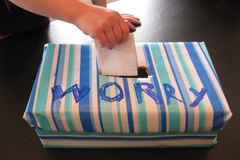
Do you think too much? How ruminating hurts your heart

by Carolyn Thomas  @HeartSisters

Before my heart attack, I was a champion ruminator. Give me an ugly little problem to worry about, and I’d thrash it to death before finally flinging it aside in a fit of exhaustion, usually after some sleepless nights, a few extra grey hairs, and incalculable damage to my poor coronary arteries.

The late Yale University professor Dr. Susan Nolen-Hoeksema’s research(1) has revealed some interesting facts about ruminating:

“When people ruminate about problems, they remember more negative things that have happened to them in the past, they interpret situations in their current lives more negatively, and they are more hopeless about the future.”

Research also links the habit of rumination with dangerously high levels of the body’s artery-damaging stress hormones like cortisol.      .       .
Continue reading “Do you think too much? How ruminating hurts your heart”
How expecting recovery can help heart attack survivors

by Carolyn Thomas  @HeartSisters

Because I’m a ridiculously early riser most days, I often find myself in the kitchen listening to those pre-dawn overseas radio broadcasts from the BBC or Deutsche Welle or Radio Australia while making my morning coffee. The latter gripped my bean-grinding attention at about 4:45 one morning recently when host Natasha Mitchell was interviewing clinical psychologist Dr. Richard Bryant.

Their conversation aired on her award-winning program on mental health issues, All In The Mind. Their topic, psychological debriefing to help Australia’s traumatized flood victims, contained many unexpected  gems for those of us who have gone through other forms of traumatic events – like surviving a heart attack.

Continue reading “How expecting recovery can help heart attack survivors”

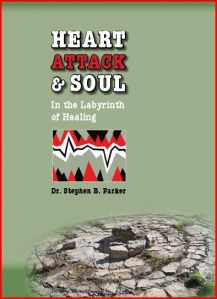
‘Heart Attack & Soul’: the perfect gift for the heart attack survivor

“A heart attack is a deeply wounding event.” So starts Dr. Stephen Parker‘s new book called Heart Attack & Soul: In the Labyrinth of Healing.

The Alaskan cardiac psychologisthas a unique perspective: he is also a heart attack survivor himself. His words will ring true for both heart patients and their families. It’s the story – both in images and words – about the journey of healing after his own 2005 heart attack. He describes how, “in desperation from depression”, he began drawing and painting as he wrestled with how to express how the heart attack had affected him.

Although, amazingly, he had no previous experience making art, his impressive drawings morphed into a blog in which he spent 40 days reviewing the paintings and writing a daily observation. The blog paintings and comments became a well-praised public art exhibit, and that has now at last become a book.  Continue reading “‘Heart Attack & Soul’: the perfect gift for the heart attack survivor”

Are you too hard on yourself?

by Carolyn Thomas  @HeartSisters

I'm the little blonde standing up...
   I’m the little blonde with the funny haircut

When I was a little girl in the 1950s, my parents were stingy with praise and magnanimous with criticism. To be otherwise would result in a child developing a “swelled head”, which, as all parents knew back then, would be the worst possible thing that could ever happen to any child.

“She really thinks she’s SOMEBODY!” was a phrase delivered with withering contempt by my mother in describing any person whose sense of self-esteem seemed even remotely healthy.

Nobody, according to my parents, likes a kid with a swelled head. The only way to prevent that catastrophe was to be tough on your children, and in turn teach them to be equally tough on themselves. You could thus help them avoid growing up to be spoiled and self-indulgent adults who acted like they were “SOMEBODY!”

But Dr. Kristin Neff, who teaches at the University of Texas at Austin, now believes that children who grow up like this end up experiencing little self-compassion when life’s difficulties hit them. Her book Self-Compassion: The Proven Power of Being Kind to Yourself will  sound reassuring to those of us living with a heart disease diagnosis.  Continue reading “Are you too hard on yourself?”