

Doc chat: in the cath lab with a “radial evangelist”

by Carolyn Thomas    @HeartSisters

Like most heart patients who get their blocked coronary arteries opened up (or revascularized) at Victoria’s Royal Jubilee Hospital, my stent was implanted by inserting a slim catheter into an artery in my wrist and threading it up, up, up into my heart, a procedure known in the cath labs of the world as a Transradial Intervention (TRI).

But if I had been in an American hospital, my cardiologist would have more than likely threaded that catheter through the larger femoral artery in my upper thigh instead of my wrist, despite growing evidence suggesting significantly safer results, less bleeding, fewer complications, superior outcomes, and resounding patient preference for the radial approach.(1) In fact, while cardiologists across Canada, Europe and Asia are moving towards using radial as a default access, American cardiologists lag behind. 

I just don’t get it. Canadian coronary arteries simply cannot be that much different from those of American heart patients. Continue reading “Doc chat: in the cath lab with a “radial evangelist””
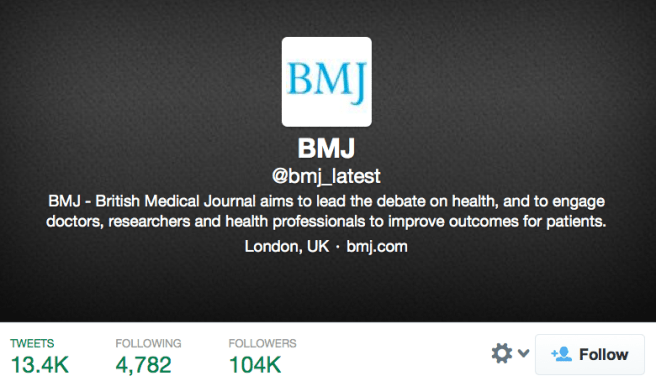

My blog post in the British Medical Journal!

Allow me to share with you this thrilling sight, dear heart sisters!  It’s the Twitter page of the British Medical Journal (BMJ) plus its Tweet about my BMJ blog post called Why Physicians Must Stop Saying: “We Are All Patients that was published today. 

A big “thank you” for this goes to Dave de Bronkart (some of you know him better as ePatient Dave). Dave is a sneaky sort of guy who, unbeknownst to me, sent the BMJ editors a link to my recent Heart Sisters post called “We Are All Patients.” No, You’re Not. The editors then contacted me to ask if I’d also write something for them, and here we are!

Can I just say – – – WOW!!      🙂

.

“Everybody has plans ‘til they get punched in the mouth.”

by Carolyn Thomas    @HeartSisters           .  

When Edward Davies was with the British Medical Journal, he attended the Lown Institute conference in Boston, where he was reminded of some unlikely wisdom from boxer Mike Tyson. In the run up to a big fight, he explained, Iron Mike was being bombarded with media questions about how he intended to deal with his powerful challenger. Did he have a strategy?  What was his plan? The boxer’s response was simple:

“Everybody has plans ‘til they get punched in the mouth.”

In boxing terms, as Davies wrote in the BMJ, this is completely literal sound advice, but as a figurative metaphor for life, it’s not bad, either:

“Listening to a patient panel here at the Lown Institute conference, I was reminded that this is a worldview that doctors might do well to remember.”

Most patients diagnosed with a life-altering diagnosis can readily identify with what that metaphorical punch in the mouth feels like.  Continue reading ““Everybody has plans ‘til they get punched in the mouth.””

When doctors can’t say: “I don’t know”

Mimi and Euniceby Carolyn Thomas     @HeartSisters

Pity the poor Emergency Department physician who first studied the results of my cardiac diagnostic tests. Despite my textbook heart attack symptoms of central chest pain, nausea, sweating and pain radiating down my left arm, all of my test results that day appeared to be “normal”. So instead of admitting this puzzling discrepancy, the doc seized upon an alternative hypothesis as he pronounced confidently to me:

“You are in the right demographic for acid reflux!”

I was sent home from hospital that morning (feeling very embarrassed about having made a fuss over nothing) with his directions to make a follow-up appointment with my family physician to get a prescription for antacid drugs (to treat what turned out to be a misdiagnosis of indigestion).

Part of the problem with this scenario is the reluctance of some physicians to admit that they just do not know. Continue reading “When doctors can’t say: “I don’t know””