“School’s in!” every day for heart patients

by Carolyn Thomas  @HeartSisters

Annette is a 42-year old Pennsylvania artist, teacher and mother of two kidlets (10 and 6 years of age). In August of 2010, after returning home from a run, she suffered her first cardiac symptoms: “a tired I never felt before along with shortness of breath, chest tightness/pain, low blood pressure and low heart rate.”  Since then, she’s been volleyballed about by cardiologists, an infectious disease specialist and a rheumatologist – until finally arriving at the diagnosis of Coronary Microvascular Dysfunction.

Annette’s now being treated for this small vessel disease by specialists at the University of Pittsburgh Medical Center, and considers this diagnosis to be her “major health issue.” She admits:

“It feels like life as I am used to is a memory. So I am trying to use my time to learn the practice of meditation and use the time (during the day when I have energy) wisely.”

I’m sharing this recent back-to-school essay from Annette today – with her kind permission:   Continue reading ““School’s in!” every day for heart patients”

Why doctors shouldn’t call it the “waiting” room

by Carolyn Thomas  @HeartSisters

At least once a year, my family heads out to the world-famous Butchart Gardens, about a half hour drive from our home here in Victoria. We spend a magical Saturday evening enjoying the summer gardens, a picnic supper on the lawn, live entertainment and especially the eye-popping summer fireworks extravaganza at dusk.  We are joined by approximately a zillion other visitors from around the globe, and the minute those last fireworks have fizzled, the zillions stand up and shuffle en masse to the vast parking lot to exit.

A little secret that our family has learned over the years, however, has saved us a lot of late night aggravation trying to get out of that tour bus-clogged  traffic jam – and it also confirms social scientists’ theory that Occupied Waiting Time feels far shorter than Unoccupied Waiting Time – a profound lesson for those of us who spend way too much time cooling our heels in doctors’ waiting rooms.  Continue reading “Why doctors shouldn’t call it the “waiting” room”

How women can tell if they’re headed for a heart attack

by Carolyn Thomas  @HeartSisters

When nurse-researcher Dr. Jean McSweeney from the University of Arkansas for Medical Sciences interviewed hundreds of heart attack survivors, she discovered something surprising: 95 percent of the women she interviewed actually suspected something was very wrong in the months leading up to their attack.

But even these early warning prodromal symptoms didn’t necessarily send women rushing to the doctor, as reported in Dr. McSweeney’s study published in the medical journal, Circulation.(1)  And for those women who did seek help early, doctors often failed to identify their problems as being heart-related.

If you experience the warning symptoms listed below – especially if the feelings are new, worse, unexplained, or you have other heart disease risk factors – call your doctor.  And if they’re severe, or you have any signs of an impending heart attack, call 911Continue reading “How women can tell if they’re headed for a heart attack”

ICD warning: defective defibrillator leads recalled

by Carolyn Thomas  @HeartSisters

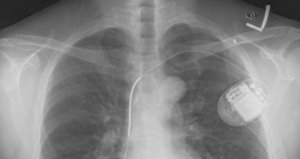
It’s nail-biting time for hundreds of thousands of patients worldwide who have had a Riata defibrillator implanted next to their hearts (79,000 in the U.S., 5,300 in Canada, 4,000 in Australia – just for starters). The recent news about the Riata recall might feel like being told you now have a ticking time bomb inside your chest. Trouble is, you just don’t know if that time bomb will start firing when it shouldn’t, or fail to fire in time to resuscitate your heart when it should.

And worse, neither does your doctor.

In December 2011, following reports of premature erosion of the insulation around the electrical conductor lead wires in these devices, the FDA ordered an urgent Class 1 recall (the most serious type of recall) of all Riata and Riata ST Silicone Endocardial Defibrillation Leads manufactured by St. Jude Medical Inc.  Here is the FDA recommendation to all patients with these Riata devices implanted in their bodies:*    Continue reading “ICD warning: defective defibrillator leads recalled”