

How does your province rank among heart-healthy Canadians?


Well, since February is Heart Month, I was pretty darned chuffed to read that my own westernmost province of British Columbia has placed first overall in the Heart and Stroke Foundation’s annual Canadian report card this year. We were also first in the Smoke Free and Healthy Weight categories. We took second place in Physical Activity  just behind those rugged fitness freaks of the Yukon, and we tied for second with Alberta in the Fruit & Veggie Consumption category (the Quebecois ranked first here, despite that poutine et tarte au sucre stereotype!)  

And who fared worse?  Alas, the 30,000+ citizens of Nunavut, Canada’s largest territory high in the Arctic, were 13th overall out of 13 combined health behaviours, including 13th in Smoke-Free, Physical Activity and Fruits & Veggies.   This is a very serious concern for health care professionals, and here’s why:

The Heart and Stroke Foundation warns that this report card is a “perfect storm” of heart disease looming on our horizon, not only for Nunavut but for all Canadians.

“In a very short time, the face of heart disease in Canada has changed to include groups that have historically been immune to the threats of heart disease,” says Dr. Beth Abramson, cardiologist and spokesperson for the Heart and Stroke Foundation. “But the combination of new groups at-risk of heart disease and the explosion of unhealthy habits across Canada have accelerated the impact of these threats which are now converging and erasing the progress we’ve made in treating heart disease over the last 50 years.”   Continue reading “How does your province rank among heart-healthy Canadians?”
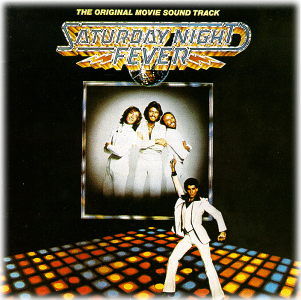
How the Bee Gees can save your life during a cardiac arrest

The Bee Gees’ disco smash hit ‘Stayin’ Alive is more appropriately titled than anyone could have realized. Did you know that this 1977 song’s beat is apparently the ideal speed at which to perform chest compressions in cardiac arrest victims? Having practised cardiopulmonary resuscitation (CPR) with the song, research study participants could maintain the ideal rhythm weeks later by simply thinking about the tune as they performed the procedure.

Research from the University of Illinois, presented during an American College of Emergency Physicians’ scientific assembly in Chicago, found that at 103 beats per minute, the song Stayin’ Alive is almost the same pace as the recommended 100 chest compressions per minute for hands-only CPR.   Continue reading “How the Bee Gees can save your life during a cardiac arrest”

12 cardiac symptoms women must never ignore

  by Carolyn Thomas    @HeartSisters

Did you know that women generally fare far worse than men after experiencing a cardiac event? One possible reason is that it can be confusing to make sense of warning symptoms when they do hit. Women are also less likely than our male counterparts to seek immediate help at the first sign of cardiac symptoms. Instead, we end up:

  • toughing them out
  • waiting to see if they go away
  • blaming them on stress, muscle soreness, indigestion or other less serious non-cardiac causes

If the following 12 potential heart attack symptoms occur – alone or in combination, and especially if they feel unusual for you, you must act immediately:   Continue reading “12 cardiac symptoms women must never ignore”

WomenHeart: “Still gender disparities in treating women’s heart attacks”

February is Heart Month!  Watch this compelling video for shocking updates on how women’s heart attack symptoms are often not taken seriously by medical professionals. Please help to increase awareness of women’s heart disease – our #1 killer – by spreading the word to as many women as possible.  For more information, visit WomenHeart: The National Coalition For Women With Heart Disease.


Add to FacebookAdd to DiggAdd to Del.icio.usAdd to StumbleuponAdd to RedditAdd to BlinklistAdd to TwitterAdd to TechnoratiAdd to Yahoo BuzzAdd to Newsvine