The Grinch’s Guide to Women’s Heart Attacks (with apologies to Dr. Seuss)

by Carolyn Thomas     ♥    Heart Sisters (on Blue Sky)

(with apologies to Dr. Seuss)

.

Chest pain!? This can make women worry a lot,

Yet when women seek help, some are told they should not:

“Your tests all look fine!” (No one quite knows the reason).

“You’re probably just feeling stressed by the season!”

It could be that these tests weren’t researched on them.

(And, really – aren’t women just small little men?)

It could be that Grinch docs think women are lying

Or making up symptoms, without even trying.

Continue reading “The Grinch’s Guide to Women’s Heart Attacks (with apologies to Dr. Seuss)”
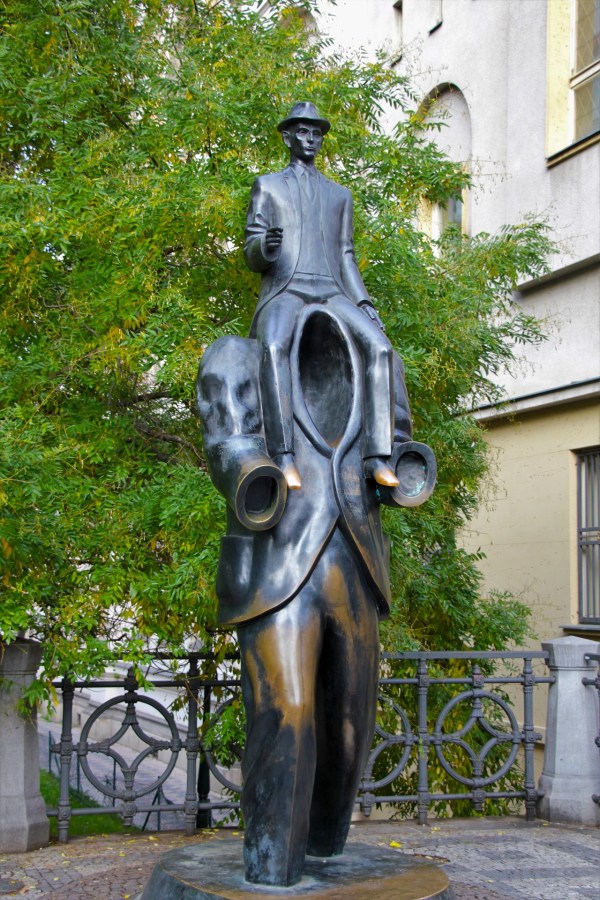
The word ‘Kafka-esque’ means nightmarish or strange – like a frightening new diagnosis

by Carolyn Thomas    ♥    @HeartSisters

Have you ever had the same nightmare more than once about the same impossibly unlikely scenario? My own recurring nightmare:  I’m walking into Mrs. Webster’s Grade 13 math class (Ontario high schools went up to Grade 13 in those days). I’m about to write my final math exam – until I suddenly remember that I’ve somehow forgotten to go to math class – ALL YEAR!

That’s the kind of dream described as “Kafka-esque”, named for the writer Franz Kafka. Dr. David Pickus explains that word:

“Kafka-esque is primarily a synonym for ‘nightmarish’ or ‘inexplicably bad’ events – especially if they take the form of a strange interruption of everyday life.”

It also struck me that this“strange interruption of everyday life” is precisely how hearing an “inexplicably bad” medical diagnosis so often feels.   Continue reading “The word ‘Kafka-esque’ means nightmarish or strange – like a frightening new diagnosis”

In 2000, only 2 studies published on this mystery heart attack; 10 years later: 300+

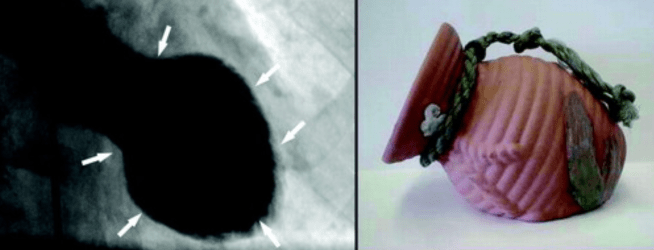
L:  X-ray of the heart during a contraction in a Takotsubo patient.   R:  Ceramic Japanese Takotsubo pot

by Carolyn Thomas    ♥   @HeartSisters   

Last week, we explored the love affair between researcher Dr. Sian Harding (a leading authority in cardiac science) and the tiny heart muscle cells called cardiomyocytes  that she first met over 40 years ago through the lens of her lab microscope.  Yes, a love affair! – as she writes in her wonderful book, The Exquisite Machine: The New Science of the Heart  published by MIT Press last year, in which she explains simply:

Once upon a time, I fell in love  – with a cell.”

This week, we’re exploring another chapter of her book, which has the curious title, “Can You (Not) Die of a Broken Heart?”  This chapter looks at a cardiac syndrome that Dr. Harding believes is actually far more widespread than our cardiologists first believed. And for me personally, it’s particularly intriguing during this particular week.        .     Continue reading “In 2000, only 2 studies published on this mystery heart attack; 10 years later: 300+”

Falling in love – with a tiny heart muscle cell

by Carolyn Thomas   ♥  @HeartSisters   

Her book starts off with a gripping description of the human heart:

“When I look at the human heart beating in the chest during surgery, or lying in a dish when removed for transplant, it just looks like a glistening lump of meat. It’s hard to associate that solid muscle with Valentine’s Day decorations, or the romantic literary description of hearts soaring, bursting, sinking and breaking.

But once upon a time, I fell in love  – with a cell.”

The object of Dr. Sian Harding’s affection was a cardiomyocyte, a single heart muscle cell, just 1/10 of a millimetre long, and about the width of a human hair.       .        Continue reading “Falling in love – with a tiny heart muscle cell”