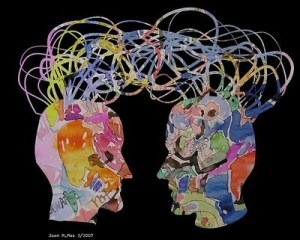
How to be a “good” patient

good-1122969_1280

by Carolyn Thomas     @HeartSisters

.
Here’s how to be a “GOOD PATIENT”:

  • Get sick (preferably with a short-term acute ailment).
  • Get an appointment to see your doctor.
  • Get diagnosed.
  • Get a prescription.
  • Get better.
  • Thank your brilliant doctor.

Now, here’s how to be a “DIFFICULT PATIENT”:         .          .    
Continue reading “How to be a “good” patient”

Patient privacy, modesty, and staff burnout

by Carolyn Thomas

Resume As a heart attack survivor with an accordion file of ongoing complications, I’ve become a frequent flyer with my cardiologist, my longtime family physician, related specialists, the Pain Clinic, our local hospital, and in countless diagnostic labs. Many cardiac procedures involve stripping to the waist and putting on that  flimsy paper gown. In the case of a stress echocardiogram, for example, it means having the opening at the front instead of the back to allow 12 EKG leads to be attached to your bare torso during the test.

Not a big deal for male patients, but let me assure you – this can be a very big deal for many women.  Continue reading “Patient privacy, modesty, and staff burnout”

How to communicate your heart symptoms to your doctor

by Carolyn Thomas

Here’s a news flash from the Prepared Patient forum of the Center For Advancing Health: your doctor is not a mind reader. And how you describe your symptoms can be just as important as what you describe. Physicians – and experienced heart patients – say you must be as detailed and descriptive as possible. For example:  Continue reading “How to communicate your heart symptoms to your doctor”

When doctors become patients

by Carolyn Thomas  @HeartSisters

hospital corridor FOUNDRY CO PIXABAYIn his online essay called This Won’t Hurt A Bit, cardiologist Dr. Eric Van De Graaff tells his own story of being a hospital patient after surviving a motorcycle accident while he was in med school. His experiences as a patient will sound very familiar to heart patients, and the lessons he learned while on the other end of the stethoscope may very well have made him a far better doctor.  For example:   Continue reading “When doctors become patients”