
 by Carolyn Thomas ♥ @HeartSisters
I typically spend about one hour per year checking in with my wonderful cardiologist (barring setbacks that may send me back into the hospital) but like many/most heart patients, I spend 8,765 hours per year managing the day-to-day reality of cardiac symptoms, concerns and meds on my own.
I learned long ago while participating in my free Pain Self-Management classes (thank you Canada, commie-pinko land of socialized medicine!) that I needed a basic understanding of how the heart functions – not a medical-jargon-med-school-textbook-understanding, but a solid patient-friendly one. I wish I’d had this helpful and jargon-free overview back then describing the heart-as-a-house – from the Toronto-based resource (more free stuff!) called Cardiac College for Women. For example: .
♥
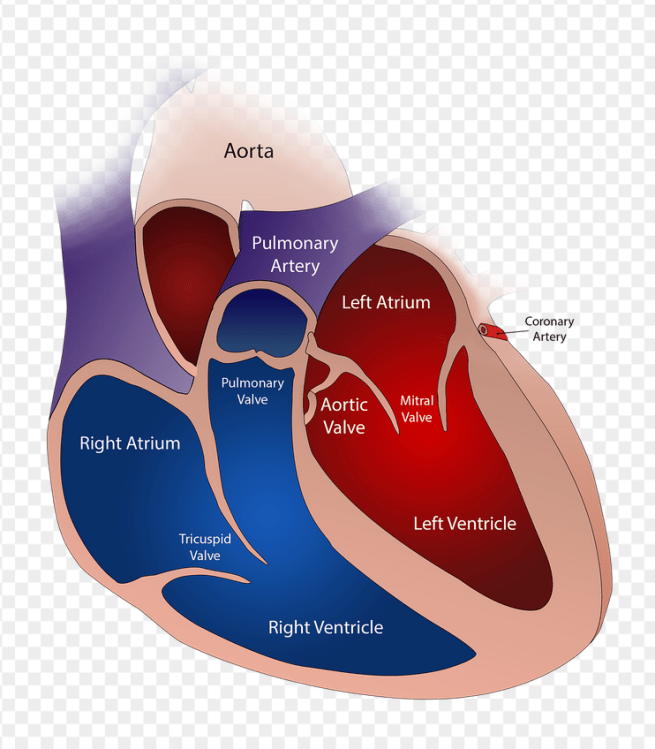
“Your heart is like a house.”
- It has rooms. There are 4 rooms (called chambers) in the heart:
- 2 small ones (called atria)
- 2 larger ones (called ventricles)
- It has doors. There are doors (called valves) between the rooms that open and close to allow blood to flow through the heart.
- It has electricity. The heart’s electrical system has a built-in pacemaker.
- It has plumbing. The heart has small pipes (called coronary arteries) carrying fresh blood to the heart muscle.
- Everything works together to keep it functioning.
- The rooms (chambers) and doors (valves) work together as a pump. The heart is a muscle that pumps blood to the lungs and to the body. Each time the heart contracts (beats), this pumping action is felt in the large arteries of the body as a pulsing sensation. This is what you feel when you take your pulse.
- The electricity allows the heart to pump 24 hours a day, 7 days a week.
- The pipes supply oxygen-rich blood to the heart muscle.
♥
Absolutely brilliant in its simplicity! And not one word of jargon.
Cardiac College for Women also offers what seem like endless heart patient resources, including ‘A Guide to Help You Live and Thrive with Cardiovascular Disease’, consisting of nine booklets:
“The booklets can help answer your questions about heart disease, what happened to you, and the tests and treatments you may have received.”
Their Self-Management Toolbox is another handy tool for managing your heart condition – both preparing for any changes and keeping track of those changes.
And check out their long list of free Women With Heart Online classes – ranging from webinars on the “Effects of Breast Cancer Therapies on Your Heart” to “The Heart Truths About Health Behaviour Change” to fun Cardio Dance classes.
I can’t say enough good things about Cardiac College – and it’s especially good for the freshly-diagnosed. And we know that healthier emotional wellbeing can affect heart patients’ quality and length of life, so the Feel Well articles are particularly useful for newbie heart patients.
Those early days, weeks and months of becoming a heart patient are often the most overwhelming for us. I recall lying in the CCU (the intensive care unit for heart patients) and watching my cardiologist’s lips move, and hearing sounds coming out of his mouth, but I suspected he must be speaking Swahili or some other language that I just could not comprehend.
If you’re a freshly-diagnosed heart patient, this sense of overwhelm is common. And often frightening. And usually temporary! Most patients report that by their first “Heartiversary” (one year since their diagnosis), they’re feeling considerably less overwhelmed. If you’re not feeling better, or if concerning cardiac symptoms seem worse, call your doctor.
You may have already started seeking out cardiac rehabilitation classes (if you haven’t been referred, ask your doctor for a referral today), or patient support groups (like the online group hosted by WomenHeart: The National Coalition of Women With Heart Disease) or other practical resources to help you manage that overwhelm. This is all good – because the more you learn, the better you can manage those 8,765 days of the year.
Knowledge is power!
If this Heart Sisters site is also one of your first stops – “WELCOME!” And while you’re here, read my series on the four stages of recovery, based on the terrific work of cardiac psychologists Dr. Wayne Sotile:
- Stage 1: Surviving The Crisis – Illness strikes, and patient and family begin the journey.
- Stage 2: Creating a Coping Strategy – Everyone starts to grasp what heart illness is, what’s involved in treatment and recovery, and that the patient and family must work as a team.
- Stage 3: Handling the Homecoming Blues – You’re suddenly on your own; reality sets in and the team must adapt to its new normal.
- Stage 4: Learning to Live With Heart Disease – Patient and family have accepted the diagnosis and committed themselves to living with the illness, not in spite of it.
♥
Cardiac College for Women is an important project of University Health Network (UHN), Canada’s top medical research hospital. It’s affiliated with the University of Toronto and includes Toronto General, Toronto Western, Princess Margaret, Toronto Rehab and Michener Institute.
♥
NOTE FROM CAROLYN: I wrote more about the profound experiences women encounter with a cardiac diagnosis in my book, “A Woman’s Guide to Living with Heart Disease” (Johns Hopkins University Press). You can ask for it at your local library or favourite bookshop (please support your independent neighbourhood booksellers) or order it online (paperback, hardcover or e-book) at Amazon – or order it directly from my publisher, Johns Hopkins University Press (use their code HTWN to save 30% off the list price).


Hi Carolyn!
I truly enjoyed how you compared the human heart to a house. It really gives more credence to the phrase, “The home is where the heart is.”.
Also, thank you for sharing that the feeling of being overwhelmed passes. That’s inspiring to know.
LikeLike
Hello Jackie – I too liked that ‘heart-as-a-house’ explanation from Cardiac College for Women. It’s so simple, and so understandable.
Being overwhelmed DOES pass, even though at the time, we might feel like we’ll be overwhelmed forever! Researchers call this ‘the loss of self’ – that sense of knowing the person that we’ve always been has been suddenly disrupted, and we may not have replaced that former self-image with a new useful one. Time can help us adapt and move on.
Take care. . .❤️
LikeLike
Hello Carolyn,
Like Jill, I am associated with Mercy Health, in which all my doctors see test results and visit notes. It really helped me find out exactly what my 3 blockages were.
I also can e-mail and even order medicine if I need a refill. 2 yrs now after my open heart surgery, I see my cardiologist still every 6 months. Not much is said, How you doing? Great!– Any problems? No! Any questions? No! Good – see you in 6 months!
My insurance has a lot of different programs for heart patients. I have been involved with 2 of them. They were quite helpful. I still feel new to this, but finding your blog has really eased some of my fears and questions.
Thank you!
LikeLike
Hello Susan! Thanks for your kind words – I’m so glad you found my Heart Sisters blog useful at such an overwhelming time.
I had to laugh at your doctor-patient “chats” every six months! 🙂 When you say that you still feel “new” to all this, what I’m thinking is that during the past two years, you’ve been learning and thinking a lot – and are likely miles ahead of where you were when you first found out you had to have cardiac surgery! Taking advantage of those two different patient programs was a wise decision. I like to say that a heart patient’s only job now is to become the world expert on their diagnosis! Knowledge really is power!
Take care Susan . . . ❤️
LikeLike
I find in the USA our “healthcare system” now is not trustworthy. It is mainly to serve corporate profits.
My caregivers told me repeatedly that my chest pain was all in my head. Four days later, they admitted it wasn’t when I was infarcting. HCA is chronically short-staffed, care is difficult or impossible to obtain, and the cost is huge.
We need change desperately.
LikeLike
Hello Mary – corporate profits are also what seem to drive the American system of health insurance. Insurance companies don’t make money by approving patient claims. They make money by denying those claims.
And I also hear from doctors frustrated by what they call “cubicle docs” – physicians/nurses hired by insurance companies to question/delay/deny prior authorization approval applications – which hurts patients despite a doctor’s recommendation that a specific treatment or drug is what’s needed!
I agree – change is desperately needed.
Take care. . . ❤️
LikeLike
I see my cardiologist once a year and have a cordial invitation to come in sooner if I feel I’m not doing well.
I am with Kaiser Medicare HMO insurance here in the USA. They have a system with a dedicated cardiac phone line and a portal where I can email my doctors and pharmacists and physical therapists with 24-48hr replies as well as see all my blood work.
It is this email system that I rely on to get answers to non-urgent questions, and I use the nurse phone line if I am not sure whether a symptom is urgent or not.
This system helped me to build confidence in both my knowledge and decision-making in the early days of multiple cardiac procedures and med changes.
Now I am very stable and I may email 3-4 times between yearly appointments with questions.
P.S. I don’t think nationalized health care is commie pinko and I hope that the idea that it is fades away very soon!
LikeLike
Hi Jill – I really like that description of your Kaiser experience. Being able to contact (and more importantly, hear back from!) your healthcare team members can automatically reduce anxiety when/if weird symptoms or problems pop up.
I’m glad you mentioned that this access “helped to build confidence in both my knowledge and decision-making in the early days”. It’s the difference between feeling alone and scared vs feeling alone yet confident that somebody is there to help us!
Here on the west coast of Canada, we also have a free 811 line to access help from registered nurses, dietitians or pharmacists. I use 811 for non-cardiac questions (like when I spent a MONTH in bed with influenza last year and developed a close-and-personal relationship with my 811 nurse!) My GP handles my regular cardiac med refill prescriptions (although we do have expanded scope of practice for pharmacists who can now refill our usual prescriptions).
P.S. During my first trip to Mayo Clinic, I was the only Canadian in our group of 45 women, all living with heart disease – everybody else was American. One of them came up to me one evening, shuffled me off to a dark corner and whispered: “What’s it like to live with SOCIALIZED MEDICINE?!?!” as if this were a forbidden topic that should not be mentioned! 😉
Take care . . . ❤️
LikeLike
RE:Health Insurance: Kaiser Permanente is a not for profit Foundation as opposed to a for-Profit health insurance company.
I think that makes for a difference in attitude from top management down to the MDs.
Many MDs I have spoken to left private practice and joined Kaiser HMO because they were so tired of the drive to make a profit and the hassle of private health insurance companies. At Kaiser, they are salaried and have nothing to do with billing, pharmacy reps, health insurance companies etc.
When I was a hospital RN, we used to say that nurses that worked for private health insurance companies worked for the “Dark Side”. Then I actually went over to the “Dark Side” for 4 years! I was a quality control nurse for United Health Care, a for-profit health insurance company.
I’d like to say I brought knowledge and compassion to my work in getting patients what they needed efficiently, enhancing rather than interfering with the quality of care needed for their best recovery. However, I can’t say that everyone in health insurance is like that.
Decades ago there was a large amount of waste in health care. People would check their elderly relatives into a hospital for a month while they went on vacation and doctors allowed it.
In the reaction to this waste, the pendulum of efficiency has swung way out in the other directions as Corporations capitalized on the inefficiencies. Forcing hospitals to become more efficient meant profits for the hospital and the insurance companies! I’m sure there are glitches in socialized medicine too. But not as obtuse as the systems in America.
Somewhere, Somehow, Someone will figure out the balance of providing health care as a human right. As our Love of all Humanity outweighs our personal desires!
LikeLike
Although the majority of Canadians surveyed liked our medical system here (2/3 reported last year that they were happy with health care), there are some areas that since the pandemic are now in severe crisis, as in many countries: understaffing in hospitals and longterm care homes, long waits in Emergency Departments, an alarming shortage of GPs who are accepting new patients.
What we all cling to is the knowledge that we won’t get billed for our hospital stays, doctor visits, diagnostic tests, etc. The bill for my own heart attack care (in a world-class cardiac unit) including all procedures, all tests, all medical/nursing care, entire hospital stay (and lifetime follow-up appointments with a cardiologist) was $0.
But I met a number of American women during my Mayo training who had lost their homes, their business, their life savings after their own cardiac hospitalizations. I was just reading earlier this week that medical expenses directly cause over 65% of bankruptcies in the US, making them the leading cause for bankruptcy. And (something I hadn’t expected): medical problems that lead to work loss cause 44% of US bankruptcies. That’s so frightening for those who don’t have insurance. And about 1/3 of Americans with medical debt say it’s unlikely they will EVER be able to pay off their medical debt.
I too hope that the “love of humanity” kicks in soon. And I’m very sure that you certainly brought that compassion and knowledge to your patients while at United.
Take care, Jill . . . ❤️
LikeLike