How do patients know if their docs “will never be good”?

by Carolyn Thomas    @HeartSisters

It all started when cardiologist Dr. William Dillon of Louisville, Kentucky made this observation on his Twitter page about doing cardiac catheterization procedures:

As a two-time veteran of transradial (wrist) caths*, I felt just a wee bit alarmed by the last line of his tweet. We heart patients tend to get a wee bit alarmed by implications that those we trust may “never be good” at what they’ve just done to us, as described by the very people who work alongside them – those known as interventional cardiologists.

I felt similarly alarmed, by the way, during the recent FDA recall of defective Riata cardiac defibrillator leads when Dr. Laurence Epstein of Harvard’s Brigham and Women’s Hospital told Heartwire interviewers that ICD leads  are sometimes “implanted poorly”, bluntly adding:

“You can’t account for knuckleheads putting them in. Some lead failures are going to be expected . . . Others fail because people put them in in horrible ways.”   Continue reading “How do patients know if their docs “will never be good”?”

A rock drummer’s take on atrial fibrillation

l

The incidence of atrial fibrillation increases as we age, so be on notice, you Baby Boomers. It’s the most common heart rhythm condition, and it’s also the most common heart-related reason for hospital admission. And as shown in this 90-second Heart and Stroke Foundation film (featuring Toronto musician and former Our Lady Peace drummer Jeremy Taggart, author of Canadianity: Tales from the True North Strong and Freezing), we should all know more about this heart rhythm condition which can triple our risk of stroke.  Continue reading “A rock drummer’s take on atrial fibrillation”

Misdiagnosed: women’s coronary microvascular and spasm pain

by Carolyn Thomas  ♥  @HeartSisters

Findings from the federally funded Women’s Ischemia Syndrome Evaluation (WISE) study — a landmark investigation into ischemic heart disease (meaning reduced blood supply to the heart muscle) – are helping us to understand that, as the Harvard Women’s Health Watch puts it: heart disease – like cancer – is not one, but several disorders.

While I was at Mayo Clinic shortly after my heart attack, I also learned that at least two of these disorders are far more commonly seen in women than in men’s “Hollywood heart attacks”. These two heart conditions are coronary microvascular disease (MVD) and coronary artery spasm (CAS). Continue reading “Misdiagnosed: women’s coronary microvascular and spasm pain”

What sudden cardiac arrest looks like

by Carolyn Thomas  ♥  @HeartSisters

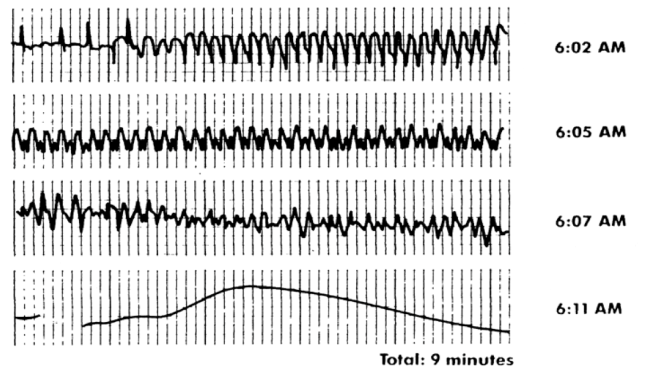
24 Hour Holter Monitor via Dr. John Mandrola

This EKG* belongs to a person who died of Sudden Cardiac Arrest on the golf course, approximately nine minutes after his heart went into a state of ventricular fibrillation (VF).  Sudden cardiac death almost always results from VF – a rapid and disorganized activation of the heart’s ventricles. The best way to stop VF is to defibrillate the heart to try to restore regular rhythm and restore normal contractions through the use of electric shock.  Continue reading “What sudden cardiac arrest looks like”