Top 10 posts from Heart Sisters for 2010

2010 has been quite the year here at Heart Sisters! The little blog that began in 2009 after my heart attack simply as “cardiac rehab for my brain” has now published 257 articles, attracting over 100,000 visitors. New articles arrive here about every four days, depending on my health, and I never run out of emerging news about women’s heart disease, cardiac research, heart-smart recipes or heart-related trivia to write about!

The Toronto-based magazine More interviewed me this year for a February 2011 feature about Canadian women who have launched health-related websites, and a number of essays here have also been picked up by other much larger health sites, herehere or here, for example. Hundreds of people now follow Heart Sisters on Twitter, repost my links on their Facebook sites, or subscribe directly via email to receive updates on new postings.   Continue reading “Top 10 posts from Heart Sisters for 2010”

The days are long, but the years are short: being present is good for your heart and your life

by Carolyn Thomas    @HeartSisters

New York City writer Gretchen Rubin is author of the Happiness Project, an account of the year she spent test-driving every imaginable published study or popular theory about how to be happier.

She also created this short yet touching film, part exquisite photo tour of New York City, but part important life lesson as well. It’s the simple yet profound story of a mum taking her little girl to school on the bus.  Like me, you’ll want to forward this to every parent you know.

The life lesson here, however, is not just important for parents.

As a woman living with ongoing cardiac symptoms, I’ve had to learn and re-learn this lesson the every day, over and over. More than mere ‘stop and smell the roses’ sentiment, Rubin’s tiny slide show urges us to be present for even the smallest task of daily life – yes, even the ones we dread doing.

Please watch The Days Are Long, But The Years Are Short

(Originally published on Heart Sisters on December 22, 2009)

NOTE FROM CAROLYN:   My book, A Woman’s Guide to Living With Heart Disease is available at your local library or favourite bookstore (please support your local neighbourhood shops!) You can also order it online (paperback, hardcover or e-book) at Amazon – or order it directly from Johns Hopkins University Press (and use their code HTWN to save 30% off the list price).

.

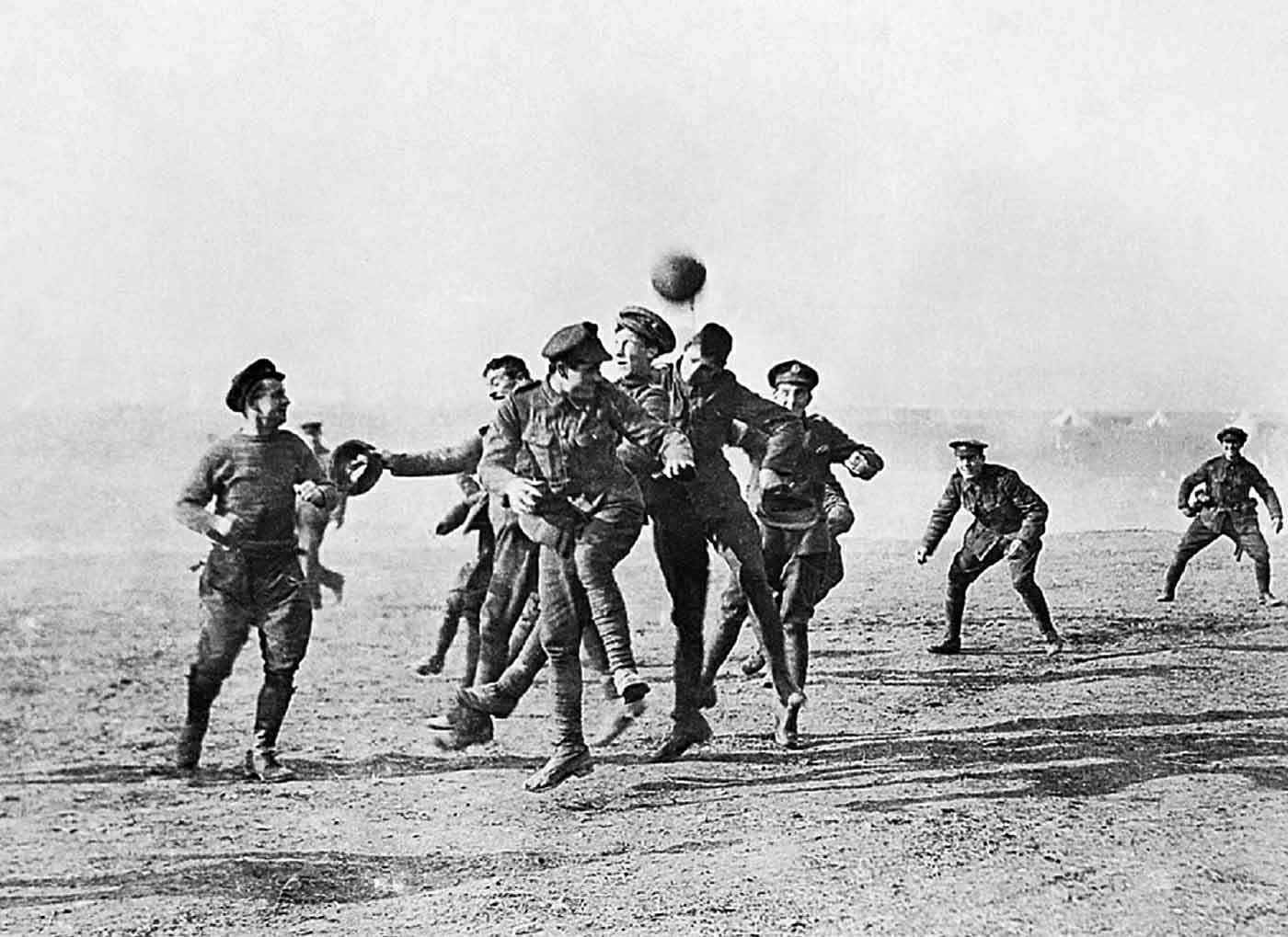
The Christmas truce – 1914

by Carolyn Thomas 

As World War I raged on in the trenches of Europe in 1914, Christmas Eve arrived cold and bleak. But German soldiers put up Christmas trees, decorated with candles, on the parapets of their trenches. Although their enemies, the British soldiers, could see the lights, it took them a few minutes to figure out where they were from. Could this be a trick? British soldiers were ordered not to fire but to watch closely. Instead of trickery, however, the British soldiers heard the Germans singing carols and celebrating. One young soldier wrote home about this remarkable event:

“Time and again during the course of that day, the Eve of Christmas, there were wafted towards us from the trenches opposite the sounds of singing and merry-making, and occasionally the guttural tones of a German were to be heard shouting out lustily, ‘A happy Christmas to you, Englishmen!’ Only too glad to show that the sentiments were reciprocated, back would go the response from a thick-set Clydesider, ‘Same to you, Fritz, but dinna o’er eat yourself wi’ they sausages!’ They finished their carol and we thought that we ought to retaliate in some way, so we sang ‘The First Noël’, and when we finished that they all began clapping; and then they struck up another favourite of theirs, ‘O Tannenbaum’. And so it went on. First the Germans would sing one of their carols, and then we would sing one of ours, until when we started up ‘O Come All Ye Faithful’ and the Germans immediately joined in singing the same hymn to the Latin words ‘Adeste Fidéles’. And I thought, well, this was really a most extraordinary thing – two nations both singing the same carol in the middle of a war.Continue reading “The Christmas truce – 1914”

When your artery tears – Spontaneous Coronary Artery Dissection

by Carolyn Thomas  @HeartSisters

.

Laura, a 40-year old American heart attack survivor, told me this story of her own cardiac event:

“I was asleep and my symptoms woke me up. I had several simultaneous symptoms, but the first one seemed to be chest pain in the centre-left, somewhat under my left breast area. I’d never felt anything like it, so sometimes it’s hard to describe – it wasn’t sharp or crushing or burning, more like a dull pressure. I also had pain down the inside of my left arm that radiated up into the left side of my jaw and my left ear.

“I was very overheated, and I felt like I was going to throw up. The nausea and overheating faded, but the pain – chest, arm, jaw – stayed. In hospital, I was diagnosed with a heart attack caused by SCAD – spontaneous coronary artery dissection, treated with six stents.”

It used to be seen as a deadly condition that was only correctly diagnosed post-mortem.  In fact, the condition was first identified during an autopsy in 1931 after a woman in her 40s had died during a SCAD heart attack. Continue reading “When your artery tears – Spontaneous Coronary Artery Dissection”