“Alcohol Helps Heart Bypass Patients!” – good news or bad reporting?

“Light alcohol consumption was associated with a 25% reduction in additional heart procedures, heart attacks or strokes in a study by Italian researchers, presented at the annual meeting of the American Heart Association in Chicago.”

This report was distributed around the world by Reuters*, the venerable U.K.-based news agency. Trouble is, after the health journalism watchdog Health News Review got finished with their assessment of this news reporting, they awarded Reuters a rare score of zero on their six-point quality scale.  For example, their pet peeves:   Continue reading ““Alcohol Helps Heart Bypass Patients!” – good news or bad reporting?”

Pregnancy complications strongly linked to heart disease

My pre-eclampsia baby Ben with his Mum

by Carolyn Thomas    @HeartSisters

When I was about eight months pregnant with Ben, my first baby, I was diagnosed with something called preeclampsia. This is a serious condition affecting about 5% of pregnant women, identified by symptoms like sudden spikes in blood pressure, protein in the urine, severe swelling, and headaches or vision problems. It’s also women’s third leading pregnancy-related cause of death. Preeclampsia is clinically described as:

“…a disorder of widespread vascular endothelial malfunction and vasospasm that occurs after 20 weeks’ gestation”.

Whenever you see the words “vascular” or “endothelial” or “vasospasm” in the same sentence, you know you’re likely talking about the heart. And although preeclampsia typically goes away after pregnancy, its diagnosis may well be an early indicator of underlying heart conditions that may simmer for decades. In fact, studies now show that pregnant women who develop preeclampsia have more than twice the risk of having a heart attack or stroke later in life.

And that is what happened to me.   Continue reading “Pregnancy complications strongly linked to heart disease”

Yes, Virginia, there is such a thing as a broken heart

by Carolyn Thomas  ♥ @HeartSisters

After the first attack of severe chest pain, the 61-year old woman spent the night in the hospital’s Emergency Department hooked up to a heart monitor, felt better after a few hours, and was discharged in the morning.  Even though she had no cardiac risk factors, her blood tests showed that her cardiac enzymes were somewhat elevated, she described a “too-much-adrenaline” feeling, and she had also failed a cardiac treadmill stress test because of heart rate arrythmias.  No positive diagnosis was made at the time, although a condition called myocarditis was suggested.

Then nine uneventful years later, a second attack occurred, this one during a very traumatic period in her life, in hospital for a colon resection operation due to cancer. She describes it like this:   Continue reading “Yes, Virginia, there is such a thing as a broken heart”

Denial and its deadly role in surviving a heart attack

by Carolyn Thomas       @HeartSisters

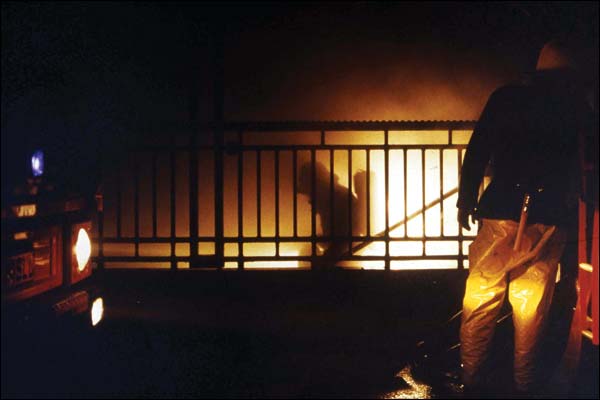
Dr. John Leach is one of the world’s leading experts on what’s known as survival psychology. He likes to tell a story about London’s King’s Cross underground station fire in 1987. As the fire spread, trains kept on arriving in the station, and hurried commuters headed right into the disaster.

Officials unwittingly directed passengers onto escalators that carried them straight into the flames. Many commuters followed their routines despite the smoke and fire, almost oblivious to the crush of people trying to escape – some actually in flames! Thirty-one people perished in the King’s Cross fire, and incredibly, the Underground staff never sprayed a single fire extinguisher or spilled a drop of water on the fire.

Dr. Leach, who teaches at Lancaster University, has a name for this phenomenon. It’s called the incredulity response. He explains that people simply don’t believe what they’re seeing. So they go about their business, engaging in what’s known as normalcy bias which is incredibly powerful and sometimes even hazardous. People can act as if everything is okay, and they underestimate the seriousness of danger. Some experts call this analysis paralysis.

What he’s describing is precisely how I felt while undergoing two weeks of increasingly debilitating cardiac symptoms before being finally hospitalized. Although all signs clearly pointed to a heart attack – crushing chest pain, nausea, sweating and pain radiating down my left arm – I seemed fatalistically determined to go about my life acting as if everything was fine, just fine until – when symptoms became truly unbearable – I finally returned to the Emergency Department that had sent me home two weeks earlier with an acid reflux misdiagnosis. Continue reading “Denial and its deadly role in surviving a heart attack”