My favourite recipe for heart-healthy lasagna

food lasagna

by Carolyn Thomas @HeartSisters

Is there anything better on a nippy evening than a pan of cheesey, gooey homemade lasagna bubbling away in the oven? For many of us heart attack survivors, however, lasagna may now seem but a dim memory of past high-fat, high-carb, low-fibre dinners.

But thanks to Bonnie Stern and her wonderful cookbook, HeartSmart™ Cooking For Family and Friends, even those wanting a heart-healthy version of this family favourite can rejoice, especially when fresh veggies are so plentiful in our markets.  I’ve made some minor changes here and there to suit our own family’s preferences, but I think you’ll be amazed at how deceptively healthy – and easy – this casserole-style vegetarian version is. You can make this up to two days ahead of time and refrigerate, or a few weeks ahead and freeze it.  And if you have any leftovers (you won’t!) – you can follow the frittata recipe at the end to create one more hearty meal.  Continue reading “My favourite recipe for heart-healthy lasagna”
Should women take daily aspirin to prevent heart attack?

by Carolyn Thomas

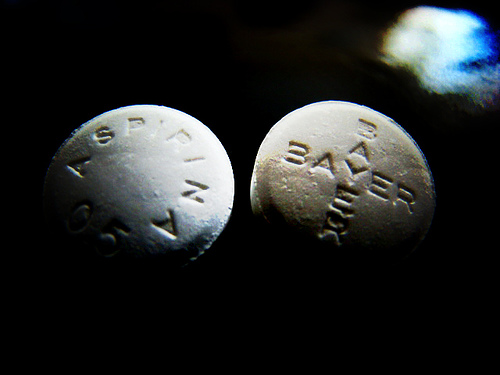
Women of all ages often ask if they should be taking a daily low-dose (81 mg) of aspirin to improve their heart health.  Well, yes and no, depending on your age. Mayo Clinic cardiologist Dr. Sharonne Hayes, founder and director of the Mayo Women’s Heart Clinic, explains:

“Guidelines urge women to be more aggressive about cutting their heart disease and stroke risks. One of the common recommendations is for women over 65 years of age to consider daily aspirin therapy.

“The aspirin recommendation comes out of the ongoing Women’s Health Initiative study, the largest study of heart disease risk factors in women.  In 2005, the WHI group released a study showing that the most consistent benefit of aspirin for heart attack prevention was observed among women 65 years of age or older.  Women in this age group who took aspirin had nearly one-third fewer cardiovascular events (heart attack and stroke) than did women who took a placebo. However, the women taking aspirin had more gastrointestinal bleeding as well.  Continue reading “Should women take daily aspirin to prevent heart attack?”

Why wouldn’t you call 911 for heart attack symptoms?

by Carolyn Thomas  @HeartSisters

The other evening, I was out for our regular pre-sushi walk with my friend, Patty.  She told me a dramatic story of a co-worker whose husband had just suffered a heart attack. Turns out that this co-worker had attended one of my workplace presentations about heart health at their office just a couple months ago, yet when her husband phoned her at work to tell her of his distressing cardiac symptoms, she did not call 911 for him (as I continually harp on to my audiences!)  Instead, she left work and drove all the way home to pick him up, loaded him into her car, and then drove him all the way back into town to the hospital.

When Patty heard this story from her co-worker later, she wondered:

“Why didn’t you call 911 for your husband like Carolyn told us to do?”

But it seems that this co-worker, like many of us, had acted purely on impulse: just get home and get him to the E.R.  Unfortunately, her decision to drive hubby to the E.R. instead of calling 911 for help is not at all uncommon. 

Continue reading “Why wouldn’t you call 911 for heart attack symptoms?”

Three-quarters of unused medicines are just tossed or flushed

toilet seats

by Carolyn Thomas  @HeartSisters

Do you have partly-empty containers of unused or expired drugs in your medicine cabinet?  When you do your next tidy-up of this cabinet, what are you going to with these old drugs?  If you’re like most people, you flush them down the toilet so that you won’t have toxic medications lying around the house posing a danger to pets or children. Some estimates suggest that up to three-quarters of all drugs eventually get tossed this way.

Bad ideaContinue reading “Three-quarters of unused medicines are just tossed or flushed”