Why you should hug your cardiologist today

by Carolyn Thomas     @HeartSisters

hugI like to tell my women’s heart health presentation audiences that, if you’re going to have a heart attack, you should really try to have one here in Victoria, British Columbia – or in any other city that boasts a healthy ratio of cardiologists-per-square-city-block.

My theory on this is that cardiologists, just like the rest of us, want to raise their families in a charming historic town with good schools, good restaurants, good shopping, fun night life, live theatre, sports teams, 200 km of cycling trails, a symphony orchestra, picture-postcard ocean/forest/mountain scenery, and a near-perfect coastal climate allowing them to garden or play golf 12 months a year. If this town also has a major university and a good-sized teaching hospital that attracts both students and cardiac researchers, that’s also going to go a long way in appealing to cardiologists.  You’re welcome, Tourism Victoria . . . Continue reading “Why you should hug your cardiologist today”

Learning to live with heart disease: the fourth stage of heart attack recovery

by Carolyn Thomas  ♥  @HeartSisters

Let’s consider today the last of The Four Stages of Heart Illness as outlined by Dr. Wayne Sotile, a cardiac psychologist from North Carolina and author of the highly recommended book called Thriving With Heart Disease.  This book is a helpful guide for both survivors and their families on “how to heal and reclaim your lives”.

One important way to do this is to review the heart patient’s journey through a series of four “separate, identifiable stages” that may help you know what to expect along this journey.  (Links to the first three stages can be found at the bottom of this post).

Stage 4:  Learning to Live With Heart DiseasePatient and family have accepted the diagnosis and committed themselves to living with the illness, not in spite of it.

Dr. Sotile reminds us that most survivors take between 6-12 months to get somewhat comfortable with their new, heart-healthy way of life (that may not mean totally comfortable, but on the way to comfortable).

But even after that first year, you won’t be completely adjusted to your new way of life. As heart disease lasts a lifetime, so does its adjustment period for both patients and their families.

It’s a big transition to your new normal. Remember that a large part of the transition is learning to talk to the people you love and live with about what you’re going through, what you feel for one another, and what life is really about.  Continue reading “Learning to live with heart disease: the fourth stage of heart attack recovery”

Women’s heart health advice: “Walk often, walk far!”

by Carolyn Thomas  @HeartSisters

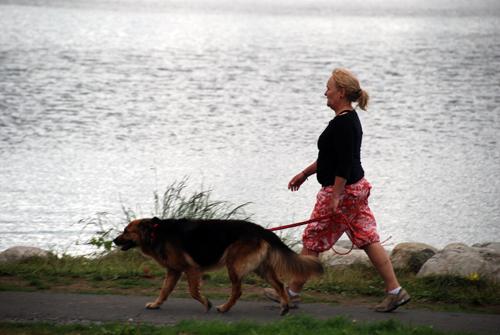
If you are one of those misguided sods who still believe in the exercise axiom: “No pain, no gain”  – you can stop reading right now.  The rest of you – rejoice!  According to the National Heart, Lung, and Blood Institute, taking a long daily walk may be a better way to improve heart health, lose weight and feel better compared to shorter periods of more strenuous  exercise.

A randomized controlled clinical trial funded by the NHLBI compared two exercise programs for heart attack survivors:

  • 1.  Standard cardiac rehab exercise:  25-40 minutes of exercise three times per week at approximately 65-75% peak aerobic capacity. This included 25 minutes of treadmill walking and 8 minutes on 2 to 3 ergometers: cycle, rowing, or arm.
  • 2.  High-calorie expenditure exercise: longer duration but lower intensity,  more frequent exercise (45-60 minute sessions, but at just 50-60% peak aerobic capacity, 5-7 times per week).

Walking, rather than weight-supported exercises (such as cycling or rowing), was preferred to maximize calorie expenditure, which was targeted at 3,000-3,500 calories per week. The protocol was essentially to “walk often and walk far.”  All heart patients studied were considered overweight before starting the program. Each subject  also received 16 hours of group dietary counseling, and were given a target goal of consuming 500 calories per day less than their predicted maintenance calories.

What did their results show?  Continue reading “Women’s heart health advice: “Walk often, walk far!””

Why aren’t female heart attack survivors showing up for cardiac rehab?

by Carolyn Thomas  @HeartSisters

After a cardiac event, a 2-6 month program called cardiac rehabilitation can help survivors gradually improve their physical fitness, learn about nutrition, meet other heart patients, and get support to quit smoking,  lose weight or make other heart-healthy lifestyle changes to improve heart health. Cardiac rehab can reduce mortality by 25-40%, reduces angina symptoms, increases functional capacity, improves lipid (cholesterol) levels, reduces smoking by 25%, enhances psychological well-being, and improves exercise tolerance for all – including the elderly, frail or people with congestive heart failure.

Cardiac rehabilitation really works!  We know that completing a program of cardiac rehab can be very effective in reinforcing improved habits.  A 2001 University of Calgary research team lead by Dr. Kathryn King found that six months after finishing cardiac rehab, participants demonstrated higher health maintenance expectations and overall behaviour performance scores – and these indicators continued to improve over time.

But when I did a 4-month stint at cardiac rehabilitation after my own heart attack, I was vastly outnumbered by male participants, and was also one of the youngest in the group by at least two decades. Where did all the women go?  Continue reading “Why aren’t female heart attack survivors showing up for cardiac rehab?”